Showing posts with label UK. Show all posts

19.4.25

Artists discuss how they turned the queen into an icon


When Chris Levine, a Canadian artist, was commissioned to make a holographic portrait of Queen Elizabeth II, who died in Scotland on Thursday, he took an unusual approach to getting her to relax.

Levine burned incense in the Yellow Drawing Room in Buckingham Palace where the shoot was taking place, and installed a light sculpture to gently pulse soothing colors around the space. Later, he encouraged the queen to shut her eyes between shots and focus on her breathing as if she were in a meditation class.

“Looking back, it was quite surreal,” Levine said in an interview in February. “I was trying to get beyond the persona of the queen, through to the essence of her being,” he recalled of his meetings with the monarch. “That’s where the real beauty is.”

Levine’s methods may be unorthodox, but they produced several celebrated images of the queen, particularly “Lightness of Being,” which depicts her with her eyes closed, as if caught in a moment of spiritual reflection.

According to Levine, when Mario Testino, the fashion photographer, saw “Lightness of Being,” he said: “People need to see this. It’s the most beautiful image.” Levine said he expected the image to be shared widely on social media after the queen’s death.

Queen Elizabeth sat for hundreds of official portraits like Levine’s during her seven decades on the British throne. But what was it like for artists to meet her, and try to make a distinct image? We spoke to three artists behind key portraits of the queen to find out.


‘Prince Philip, Duke of Edinburgh and Queen Elizabeth II,’ 2011
Thomas Struth, photographer

I did much more preparation than I normally would for a family portrait.

I looked at a ton of photographs that exist of her — hundreds — and thought, “People don’t look at her as a person, as a woman.” I wanted to show the queen and Prince Philip as an elderly couple who’re very close to each other and used to each other.

One of my requests was that I needed to choose the queen’s dress, because I didn’t want the danger that she’d show up in a bright yellow one that would make it impossible for me to make a good picture. When I’d looked at other portraits, so many had her wearing something bright, and it just makes her chest the dominant signal and her face look small.

Becoming queen. Following the death of King George VI, Princess Elizabeth Alexandra Mary ascended to the throne on Feb. 6, 1952, at age 25. The coronation of the newly minted Queen Elizabeth II took place on June 2 the following year.


A historic visit. On May 18, 1965, Elizabeth arrived in Bonn on the first state visit by a British monarch to Germany in more than 50 years. The trip formally sealed the reconciliation between the two nations following the world wars.


First grandchild. In 1977, the queen stepped into the role of grandmother for the first time, after Princess Anne gave birth to a son, Peter. Elizabeth’s four children have given her a total of eight grandchildren, who have been followed by several great-grandchildren.


Princess Diana’s death. In a rare televised broadcast ahead of Diana’s funeral in 1997, Queen Elizabeth remembered the Princess of Wales, who died in a car crash in Paris at age 36, as “an exceptional and gifted human being.”


Golden jubilee. In 2002, celebrations to mark Elizabeth II's 50 years as queen culminated in a star-studded concert at Buckingham Palace in the presence of 12,000 cheering guests, with an estimated one million more watching on giant screens set up around London.


A trip to Ireland. In May 2011, the queen visited the Irish Republic, whose troubled relationship with the British monarchy spanned centuries. The trip, infused with powerful symbols of reconciliation, is considered one of the most politically freighted trips of Elizabeth’s reign.


Breaking a record. As of 5:30 p.m. British time on Sept. 9, 2015, Elizabeth II became Britain’s longest-reigning monarch, surpassing Queen Victoria, her great-great-grandmother. Elizabeth was 89 at the time, and had ruled for 23,226 days, 16 hours and about 30 minutes.


Marking 70 years of marriage. On Nov. 20, 2017, the queen and Prince Philip celebrated their 70th anniversary, becoming the longest-married couple in royal history. The two wed in 1947, as the country and the world was still reeling from the atrocities of World War II.


Losing her spouse. In 2021, Queen Elizabeth II bade farewell to Prince Philip, who died on April 9. An image of the queen grieving alone at the funeral amid coronavirus restrictions struck a chord with viewers at home following the event.


On the day, my feeling was they were surprised everything was so well prepared. The queen’s dresser said, “You may touch the queen if necessary,” and after two or three exposures I realized a pillow behind her back was lining up badly, so I walked to her, moved her forward and changed its position. She found that somewhat surprising.

I exposed 17 plates and then knew I was done. I just sensed I had the image. I had 15 more minutes left, but I gave them that as a gift — some unprogrammed time.

I heard later that when they saw the picture in a museum, they stood in front of it for a long time. It’s quite big — eight feet wide and maybe six feet high — and it’s very, very sharp. You can see all her veins. Prince Philip said, “How did he do that?”


Credit...Justin Mortimer; Royal Society for the Encouragement of Arts 
Manufacturers & Commerce; Bridgeman Images


I was 27 and I think they chose me because they were keen to modernize the public’s view of the monarchy, since they were being lambasted at the time as these inward-looking, irrelevant people.

It was a little overwhelming at the first sitting. When she walked in, I instantly addressed her the wrong way!

I started by taking some photos. She had a very, very straight gaze, and she never blinked, even though I was going closer and closer with my Polaroid camera. When I pulled back from her, I realized I’d shot all these Polaroids straight into her lap, which was embarrassing, but she was, like, “Don’t worry, dear. Lord Snowden used to shoot me all the time on these.”

I just remember thinking: “I’m in the presence of this human being who has met all the iconic people of the 20th century. Just down the corridor, she would have met Jackie and J.F.K., and Churchill and Idi Amin. Everyone from heroes to criminals.”

In my studio, the only way I could approach it was to paint her in the context of my other works at the time, and I did have these figures with disjoined limbs and slightly dismembered heads, so I ended up basically taking out her neck. It was a bit cheeky. I knew people would bring ideas, like, “Cut off her head!” to it.

I didn’t go in as a raging republican. I just wanted to suggest this vein of unease about the royal family at the time.

After it appeared, I had newspapers all around the world calling me and interviewing me, and people seemed really affronted by what I’d done. But the fact it’s still remembered shows the work has an almost iconic status.

I don’t know what the queen thought of it. But funnily enough, I was asked to do another portrait for the Royal Collection of Lord Chamberlain, who was this very grand old gentleman in the royal household. I’m wondering if that gives you an inkling of the queen’s sense of humor, getting me to “do the business” on this fellow.


Credit...Chris Levine (artist) and Rob Munday (holographer); Jersey Heritage Trust

I was going to make a holographic portrait of her and was originally thinking of making a pulse laser hologram, which would have involved exposing Her Majesty under laser light. But I got nervous on health and safety grounds, that someone was going to say, “You’re kidding, aren’t you? You want to fire lasers at the queen?”

So we came up with a different approach, where we have a camera move along a track taking a series of 200 stills from left to right, and then making a hologram from each still.

I had an idea in my mind from the beginning — to get beyond all the noise and reduce her to a kind of essence. I wanted to make it really iconic, something that would resonate.

At the time, I was really getting into meditation and was almost evangelical about it. So when the camera had finished a run and was resetting, I asked Her Majesty to breathe. I had another camera in the middle of the track, and took the image that became “Lightness of Being” while she was resting.

I called the first portrait I made “Equanimity,” and I do think she developed this mechanism of being equanimous and not giving anything away, to protect herself almost.

I showed her the work in progress at Windsor Castle — just me, her and her corgis — and asked what she felt about the title and she said, cryptically, “Well, things aren’t always as they seem.”

We did talk about meditation, yes. She said her meditation was gardening at Balmoral.

Whatever indifference I might have had about the queen up until the commission, I felt a real affection for her by the end.

Alex Marshall is a European culture reporter, based in London

1.5.23

The Coronation Weekend : All about King Charles III


King Charles III, formerly known as The Prince of Wales, became King on the death of his mother Queen Elizabeth II on 8 September 2022.

In addition to his official and ceremonial duties in the United Kingdom and overseas as The Prince of Wales, His Majesty has taken a keen and active interest in all areas of public life for decades. The King has been instrumental in establishing more than 20 charities over 40 years, including The Prince's Trust, The Prince's Foundation and The Prince of Wales’s Charitable Fund (PWCF).

His Majesty has worked closely with many organisations, publicly supporting a wide variety of causes relating to the environment, rural communities, the built environment, the arts, healthcare and education.

Biography
Early Life

The Prince of Wales, eldest son of The Queen and Prince Philip, Duke of Edinburgh, was born at Buckingham Palace at 9.14pm on 14 November 1948. A month later, on 15 December, Charles Philip Arthur George was christened in the Music Room at Buckingham Palace, by the Archbishop of Canterbury, Dr Geoffrey Fisher.


The Prince's mother was proclaimed Queen Elizabeth II at the age of 25, when her father, King George VI, died aged 56 on 6 February 1952. On The Queen's accession to the throne, Prince Charles - as the Sovereign's eldest son - became heir apparent at the age of three.

The Prince, as Heir to the Throne, took on the traditional titles of The Duke of Cornwall under a charter of King Edward III in 1337; and, in the Scottish peerage, of Duke of Rothesay, Earl of Carrick, Baron Renfrew, Lord of the Isles, and Prince and Great Steward of Scotland.

The Prince was four at his mother's Coronation, in Westminster Abbey on 2 June 1953. Many who watched the Coronation have vivid memories of him seated between his widowed grandmother, known as Queen Elizabeth The Queen Mother, and his aunt, Princess Margaret.
Education

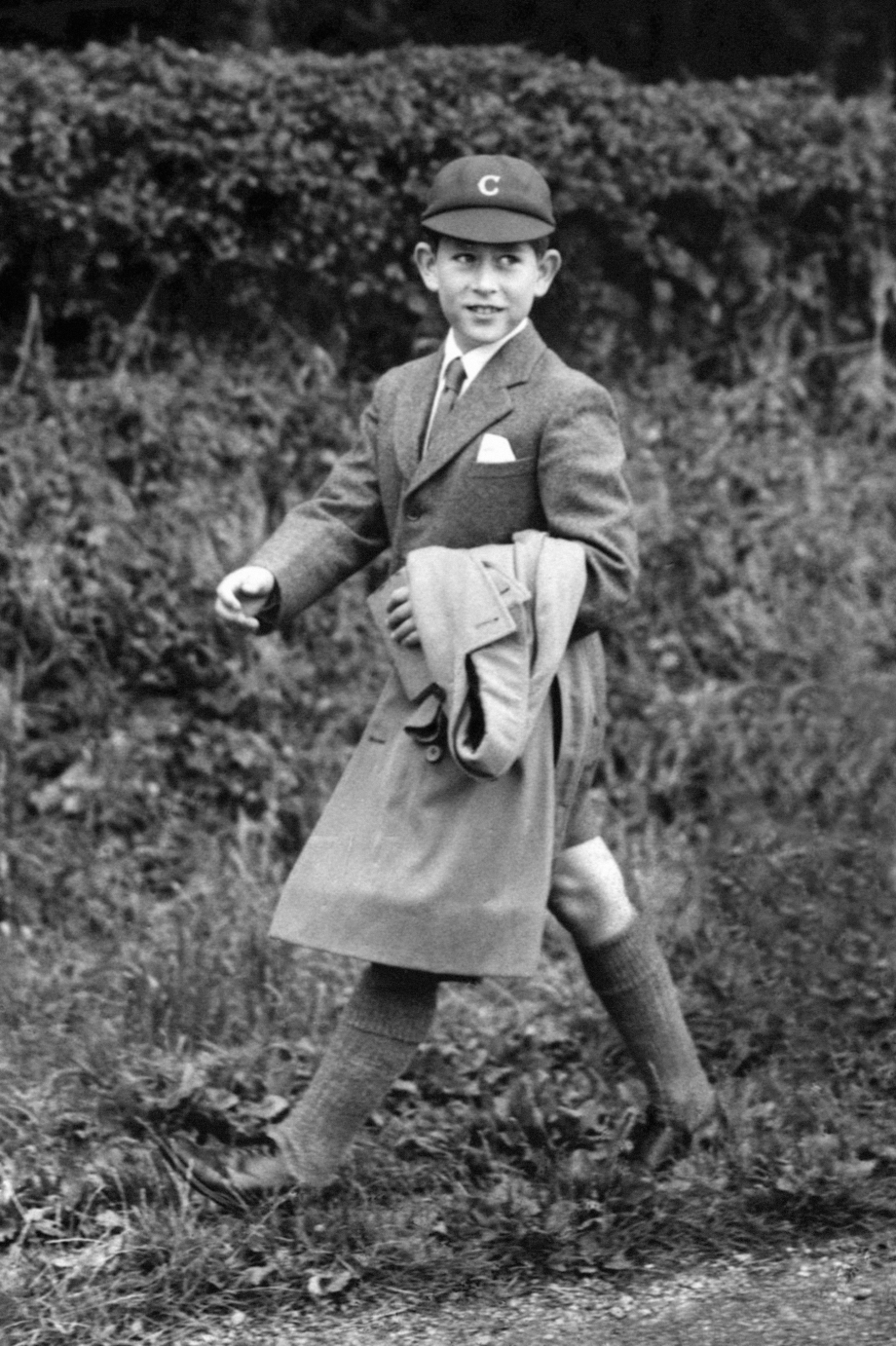
The Queen and The Duke of Edinburgh decided that The Prince should go to school rather than have a tutor at the Palace. The Prince started at Hill House school in West London on 7 November 1956.

After 10 months, the young Prince became a boarder at Cheam School, a preparatory school in Berkshire. In 1958, while The Prince was at Cheam, The Queen created him The Prince of Wales and Earl of Chester. The Prince was nine-years-old.


In April 1962 The Prince began his first term at Gordonstoun, a school near Elgin in Eastern Scotland which The Duke of Edinburgh had attended.

The Prince of Wales spent two terms in 1966 as an exchange student at Timbertop, a remote outpost of the Geelong Church of England Grammar School in Melbourne, Australia.

When he returned to Gordonstoun for his final year, The Prince of Wales was appointed school guardian (head boy). The Prince, who had already passed six O Levels, also took A Levels and was awarded a grade B in history and a C in French, together with a distinction in an optional special history paper in July 1967.


The Prince went to Cambridge University in 1967 to read archaeology and anthropology at Trinity College. He changed to history for the second part of his degree, and in 1970 was awarded a 2:2 degree.
Investiture and military career

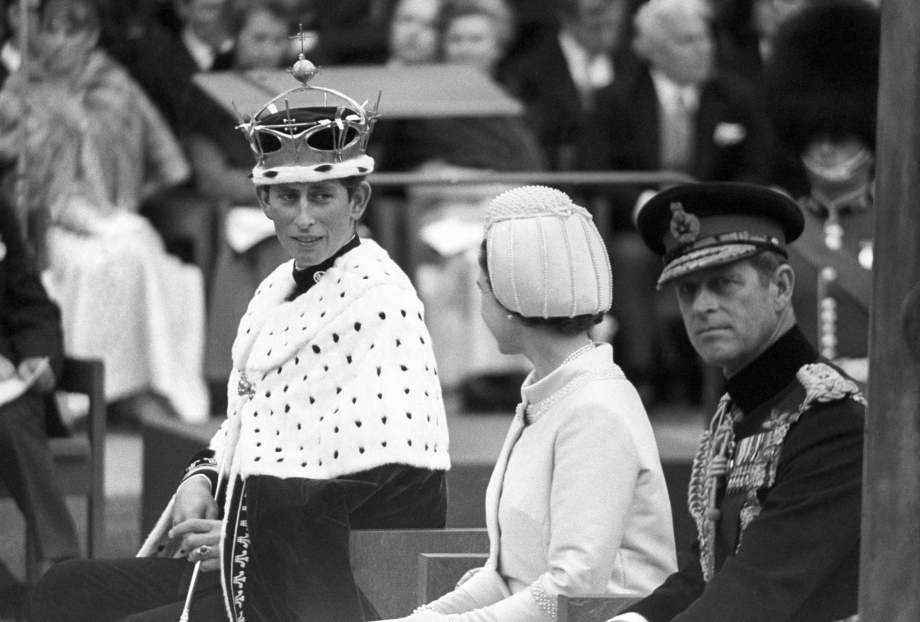
His Royal Highness was invested as Prince of Wales by The Queen on 1 July 1969 in a colourful ceremony at Caernarfon Castle. Before the investiture The Prince had spent a term at the University College of Wales at Aberystwyth, learning to speak Welsh.


On 11 February 1970, His Royal Highness took his seat in the House of Lords.

On 8 March 1971 The Prince flew himself to Royal Air Force (RAF) Cranwell in Lincolnshire, to train as a jet pilot. At his own request, The Prince had received flying instruction from the RAF during his second year at Cambridge.

In September 1971 after the passing out parade at Cranwell, The Prince embarked on a naval career, following in the footsteps of his father, grandfather and both his great-grandfathers.


The six-week course at the Royal Naval College, Dartmouth, was followed by service on the guided missile destroyer HMS Norfolk and two frigates.

The Prince qualified as a helicopter pilot in 1974 before joining 845 Naval Air Squadron, which operated from the Commando carrier HMS Hermes. On 9 February 1976, The Prince took command of the coastal minehunter HMS Bronington for his last nine months in the Navy.
Family and Married Life

On 29 July 1981, The Prince of Wales married Lady Diana Spencer in St Paul's Cathedral.

Lady Diana's father, then Viscount Althorp and later the eighth Earl Spencer, had been an equerry to both George VI and The Queen. Her maternal grandmother, Ruth, Lady Fermoy, was a close friend and Lady-in-Waiting to The Queen Mother.

The Prince and Princess of Wales had two sons: Prince William, born on 21 June 1982; and Prince Harry, born on 15 September 1984.


From the time of their marriage, The Prince and Princess of Wales went on overseas tours and carried out many engagements together in the UK.

On 9 December 1992, The Prime Minister, John Major, announced to the House of Commons that The Prince and Princess of Wales had agreed to separate. The marriage was dissolved on 28 August 1996. The Princess was still regarded as a member of the Royal Family. She continued to live at Kensington Palace and to carry out her public work for a number of charities.

When The Princess was killed in a car crash in Paris on 31 August 1997, The Prince of Wales flew to Paris with her two sisters to bring her body back to London.

On the day of the funeral, The Prince of Wales accompanied his two sons, Prince William, aged 15 and Prince Harry, aged 12 at the time, as they walked behind the coffin from The Mall to Westminster Abbey. With them were The Duke of Edinburgh and The Princess's brother, Earl Spencer.

The Prince of Wales asked the media to respect his sons' privacy, to allow them to lead a normal school life. In the years that followed, Prince William, who is now heir to the throne, and Prince Harry accompanied their father on a limited number of official engagements in the UK and abroad.

On 9 April 2005, The Prince of Wales and Camilla Parker Bowles were married in a civil ceremony at the Guildhall, Windsor. After the wedding, Mrs Parker Bowles became known as HRH The Duchess of Cornwall.

The Prince of Wales and The Duchess of Cornwall were joined by around 800 guests at a Service of Prayer and Dedication at St George’s Chapel, Windsor Castle.

The Service was followed by a reception at Windsor Castle hosted by Her Majesty The Queen.

Work as The Prince of Wales

The Prince of Wales supported Queen Elizabeth II as the focal point for national pride, unity and allegiance and bringing people together across all sections of society, representing stability and continuity, highlighting achievement, and emphasising the importance of service and the voluntary sector by encouragement and example.


Military Duties

His Majesty The King is a strong supporter of the Armed Services and saw them as one of the most important parts of his role as Heir to The Throne. The Prince of Wales’s relationship with the Armed Services consisted of three main activities:Promoting the role of the Armed Services within national life, through operational visits, ceremonial duties, and commemorative activity across the UK and around the world.
Supporting the welfare and interests of Service personnel, Veterans, and their families.
Maintaining the history and heritage of the Armed Services through links with Regiments, Units and Formations both in the U.K. and around the Commonwealth.


Working in the United Kingdom
Wales

Becoming The Prince of Wales at the age of nine, The King had a long and enduring relationship with Wales and that relationship remains today. As The Prince of Wales, The King was Patron of a number of Welsh Charities and organisations such as The Royal Welsh College of Music and Drama, Ty Hafan and the children’s hospice in Wales.


Scotland

His Majesty The King shares a fondness for Scotland. The Duke of Rothesay spent time in the country both carrying out public engagements and privately at Birkhall on the Balmoral estate in Aberdeenshire. His Majesty is Patron of a number of Scottish organisations such as the Scottish Chamber Orchestra, the Royal Conservatoire of Scotland, Scottish Wildlife Trust, Aberdeen Angus Cattle Society, Glasgow School of Art and the Gordon Highlanders Museum.


Northern Ireland

His Majesty The King has visited Northern Ireland regularly and many of his charities such as The Prince's Trust and Business in the Community are active in the province. The King is also Patron of charities such as The Royal Ulster Constabulary GC Foundation and the Ulster Watercolour Society. As The Prince of Wales, His Royal Highness took particular interest in the redesign of the house and gardens at Hillsborough, and has helped Historic Royal Palaces in their work to make the castle into one of the most significant tourist attractions in Northern Ireland.


England

As well as conducting many of their engagements each year in England, The King has attended a number of important national occasions in England. His Majesty is Patron of a number of specifically English organisations such as the Royal Shakespeare Company (RSC), the Safer London Foundation, the Mary Rose Trust, the Sussex Cattle Society, the Turner Society, Yorkshire Dales Millennium Trust, Age Concern England, the Elgar Foundation and Taste of the West which promotes produce from the South West of England.


Working Overseas

As The Prince of Wales, His Royal Highness travelled abroad every year at the request of the Foreign and Commonwealth Office to further British diplomatic interests, raise the UK’s profile in the country visited and promote British excellence. Royal Tours provided an opportunity for the Heir to familiarise himself with a wide range of international issues and to meet many Heads of State and senior officials.


Promoting and Protecting

As well as supporting The Queen in fulfilling her role as Head of State and acting as a charitable entrepreneur, The Prince of Wales also seeked to promote and protect the country’s enduring traditions, virtues and excellence.

Among other things, this work involves:Highlighting achievements or issues that, without his support might otherwise receive little exposure;
Supporting Britain’s rural and farming communities;
Promoting tolerance and greater understanding between different faiths and communities;
Protecting the Arts and championing traditional craft and heritage skills.


Sustainability

For over fifty years, The Prince of Wales used his unique position to champion action for a sustainable future.

In the context of global challenges that include the climate crisis, deforestation, and ocean pollution, The Prince promoted sustainability to ensure that the natural assets upon which we all depend among other things soil, water, forests, a stable climate and fish stocks endure for future generations.


Over the decades, The Prince of Wales launched a number of sustainability initiatives aimed at delivering practical outcomes. In late 2019, His Royal Highness launched the Sustainable Markets Initiative. As well as addressing environmental challenges, The Prince promoted a more sustainable approach to planning and designing homes and communities in ways that enhance and add to the social, natural and built environment.

Charities and Patronages

Following His Majesty The King’s Accession, the Royal Household is conducting a review of Royal Patronage. The review will cover the organisations of which Her Majesty Queen Elizabeth II was Patron and those organisations to which The King and The Queen Consort were connected through Patronage or Presidency as Prince of Wales and Duchess of Cornwall.

9.9.22

Queen Elizabeth II


Your Majesty,
I was deeply saddened to learn of the passing of Your Majesty's mother, the late Queen Elizabeth II. Allow me to express to Your Majesty, to the Royal Family, and to the British people my most sincere condolences on behalf of the United Photo Press - Artists.
Her passing leaves a sense of loss in the lives of many in the United Kingdom, in the Commonwealth and throughout the world. Our thoughts and prayers are with all those who mourn and remember her.
Her courage and devotion to serving her country was a source of great strength to many and an anchor of stability in the hardest times. The Queen’s steadfast dedication to her country, love of family and of her people informed every day of her long reign. Her empathy and ability to connect with every passing generation, while remaining rooted in the traditions that truly mattered to her, was an example of true leadership.
Her reign defined the history of your nation and our continent. She symbolised the best of the United Kingdom, its people and its values. She meant so much to so many and, on a personal note, has been an inspiration throughout our lifes.
Our hearts and minds are with Your Majesty, and we wish Your Majesty and the people of the United Kingdom strength and wisdom in carrying on her work, knowing that we will all continue to find inspiration in the unique legacy she has left us.
I avail myself of this opportunity to renew to Your Majesty the assurances of our highest consideration.
United Photo Press - Artists

8.9.22

The Life and Reign of Queen Elizabeth


From wartime princess to elderly monarch, the magazine’s writers captured the Queen at milestone moments across the decades.

Queen Elizabeth II, the longest-reigning monarch in British history, died on Thursday at the age of ninety-six. During her eventful life, her country’s role in the world transformed, and so did her own place within the United Kingdom. 

For more than eighty of those years, Elizabeth appeared in the pages of The New Yorker, as a wartime princess, as a young bride, and, later, through her many iterations as a ruler, matriarch, individual, and symbol. We’ve collected some of those pieces below.


The Rise of Princess Elizabeth
A new queen may be mounting England’s ancient throne.


A Ringside Seat at the Wedding


Princess Elizabeth, Heiress Apparent
Her calm performance as deputy for her father struck the crowds—and the papers, all of a heap.


London Salutes the New Queen
The news of Elizabeth II’s accession reaches a population that no longer believes it is all roses being a queen.


The Coronation of Queen Elizabeth II
It seemed that everyone in the world was here.


The Elder Daughter—I
The business of being queen.
The Queen’s Touch
How far is it worth travelling to have dinner with Her Majesty—and Prince Philip, of course (you can’t forget Prince Philip)?


Elizabeth II’s Fine-Tuned Feelings
In time for her Golden Jubilee, two biographies show how the Queen came to rule from the heart.


Elizabeth II, the Brexit Queen
For the British monarch, the Brexit vote marks an almost Shakespearean turn.


The Passing of Prince Philip
What must he have thought when he reflected upon the accomplishments and the travails of the family and institution of which he was long the patriarch, if not ever the head?

#unitedphotopress

20.5.22

High End 2022: Rogers LS5/9


Most card-carrying audiophiles understand the BBC developed the LS3/5A loudspeaker in the early 1970s and, early on, licensed the design to several manufacturers. What they may not be aware of is that, British engineers being British, the nomenclature for BBC-designed equipment was anything but arbitrary. In the case of the iconic LS3/5A near-field monitor, “LS” stands for “loudspeaker” and the “3” that follows indicates that the transducer was for “outside” use, a non-critical application designated as Grade I by the Beeb. They were intended for monitoring a non-studio performance from a broadcast van or some other location where listening with headphones might not be ideal.

The “5” after the slash is the model number and the “A” indicates the one and only revision this long-lived design has ever had. Take ten minutes at a holiday party to explain the code to a stranger who didn’t ask. It can be pretty much guaranteed that you won’t be invited back to that party next year.

This information isn’t especially hard to come by, but it was new to me when explained by Andy Whittle, for the past four years the head design consultant at Rogers Audio, historically the most prolific licensee of BBC loudspeakers. Whittle had worked at Rogers as technical director in the early 1990s. When, under new ownership, manufacturing relocated to Asia, Whittle moved on, most recently to a nearly 13-year stint at Audio Note, UK. After the production of Rogers speakers overseas petered out, Andy Whittle was recruited to re-introduce the BBC designs, and with the stipulation that the loudspeakers would again be manufactured in Great Britain, he agreed. For several years, Rogers has been building Classic and Classic Special Edition versions of both the LS3/5A and the larger LS5/9 loudspeakers. Priced at $7495, the SE version of the latter, is the subject of this review. (The standard Classic is a thousand bucks less.) An updated version of the active LS5/8 is also in the works.

The LS5 designation indicates that the BBC considers the speaker suitable for Grade II applications, such as determining microphone placement and balances; the LS5/9 model was introduced in 1983. While the LS3/5A is a sealed-box design with acknowledged low-frequency and loudness compromises, the two-way LS5/9 Classic and Classic SE are bass-reflex loudspeakers with a front-facing port. The speakers will not be winning any international design awards; they won’t be mistaken for a product from Estelon or Sonus faber. But the “fit ’n’ finish” (an endearingly quaint term favored by some audio writers) is top-notch. The cabinet is meticulously fabricated from pieces of 9mm Russian birch plywood, the standard veneer finishes being olive and amazique—that last one a beautiful African hardwood. The inner walls of the enclosure are damped with bituminous damping panels. The grille fabric is black Tygan, a heavyweight woven material used largely for audio products that further adds to the utilitarian appearance of the speakers. These loudspeakers are designed to be played with the grilles in place, but tugging firmly on rather indiscreet fabric handles will remove them if you’d care to experiment. Around back, the only thing to see, other than a metal plate identifying the product and providing the serial number, is a pair of 4mm silver-plated receptacles that accept banana plugs—your only option when it comes to speaker-cable connection. “We tend to shy away from big, chunky terminals made from pot metal as they don’t sound any good,” Andy Whittle explained matter-of-factly during an email exchange.

With the grille removed, you’re looking at what is probably the most important upgrade implemented in the LS5/9 Classic SE, as compared to the LS5/9 Classic. That’s the front baffle, which in the SE is made from Panzerholtz, also known as tankwood, as in “built like a….” Panzerholtz is a composite of hardwood and a phenolic resin that can be used as a metal substitute. It offers some definite advantages over metal materials, both in its electroacoustic behavior—there’s less potential for hysteresis—and its mechanical properties, which are also leveraged by Rogers with the Panzerholtz stands available for both the LS3 and LS5 models. Panzerholtz is notoriously difficult to work with, which helps explain the surprisingly high price of the stands, $2195 for those made for the LS5/9 models—nearly 30% the price of the loudspeaker itself.

So long as we have the grille off, note the front-firing port in the baffle’s upper left corner and the two drivers themselves. The tweeter is a Rogers-modified version of a 34mm Audex dome that incorporates a phase-correction plate to provide more even dispersion (in a studio setting, LS3 and LS5 speakers were typically placed firing directly forward). The original design of the LS5/9 woofer was a joint effort of Rogers and the BBC. “What is special about it is the cone profile, developed by the BBC, that uses a PVC material for the surround,” Whittle told me. “The PVC gives the correct termination for the polypropylene cone, vital for natural vocal/midband performance. Practically all woofers these days use rubber or foam surrounds which don’t terminate correctly.” Whittle himself reverse-engineered the woofer from the original; a third-party manufacturer produces the drivers for Rogers.

One last element visible on the front baffle is a vertically oriented tag strip that, in the original studio application, allowed for adjusting tweeter sensitivity. In this version, there’s no user-adjustability, so that precise pair-matching is maintained. Both LS5/9 Classic models employ a third-order crossover for woofer and tweeter, with the handoff centered at 3kHz. The network for the Classic SE version represents an upgrade over the Classic’s, with a wax-dipped, iron-dust-core inductor.

With the two speakers set up to form a nine-foot-per-side equilateral triangle with the listening position in my 225 square foot room, I was ready to rock ’n’ roll. And rock ’n’ roll I did.

During the six weeks the Rogers LS5/9 Classic SEs were the only loudspeakers I listened to in my system, the Tom Petty documentary Sometime, You Feel Free was released for streaming on YouTube after a brief theatrical run. The film, which utilizes recently discovered, archival, 16mm footage shot during the creation of Petty’s highly regarded 1994 Wildflowers album, is a poignant tribute to the great singer/songwriter/guitarist who died in 2017. The soundtrack naturally includes lots of Petty and his musical collaborators playing in a recording studio. Via the Rogers loudspeakers, the unadorned acuity of this artist’s musical and production style comes through clearly. No surprise here: When heard through the kind of speakers that have served engineers and artists so well for so many years, the sonic character of a movie about the making of a great pop record is bound to register as authentic.

In general, if part of the pleasure you derive from listening to recorded music comes from understanding how a song has been realized in the studio, how it’s been shaped into something of lasting value, the Rogers speakers could be just what you’re after. I really don’t especially like mainstream country music but somehow found myself listening all the way through Brandy Clark’s 12 Stories, unexpectedly captivated by the totally predictable narrative and musical tropes. This could have been because the Classic SEs, while never “analytical,” presented the singer’s heartfelt delivery and the every-note-in-place support from her accompanying players with a sense of soul-satisfying completeness. We’re not being honest with ourselves as audiophiles if we can’t own up to the truth—that the ability of our gear to effectively deliver the engineering values of a good recording can sometimes eclipse the importance of musical substance.

My more usual reference selections—orchestral recordings with an especially rich tonal palette, such as the Haitink/Concertgebouw performance of Shostakovich’s Symphony No. 15 on the RCO Live label—were reproduced in their full glory. The entire point of Tone Poems, the 1994 collaboration of Tony Rice and David Grisman playing 17 duets on 17 different pairs of vintage guitars and mandolins, is that a receptive listener can learn to distinguish among the instruments. The LS5/9 Classic SE facilitated this quite well. Perhaps most critically, reproduction of the human voice across the board—individual singers, small groups, small choruses, large choruses—was exceptional. For 1865: Songs of Hope and Home for the American Civil War, Anonymous 4 was joined by multi-instrumentalist Bruce Molsky, who also episodically contributed his bass voice as a foundation for the hymn-like arrangements. The album’s first track, “Weeping, Sad and Lonely” is typical, composed of four verses and four iterations of the chorus. The melody is unchanging, but the four women (plus Molsky) keep things interesting by varying the harmonization and registration. The Rogers speakers reveal all the subtle changes in blend and density as clearly as I’ve ever heard.

So long as your demands as a listener are reasonable—no railroad trains or lightning strikes, please—dynamic musical sounds possess an immediacy reminiscent of the real thing. Well-recorded electric bass plus kick drum, as with Kevyn Lettau’s Songs of the Police, has gratifying punch, if not the gut-wrenching impact you’d get standing 30 yards away from the stage at an outdoor concert. Piano music of all sorts fares quite well. With exceptional recordings like “Professor” Keith Johnson’s Nojima Plays Liszt, the most thunderous passages are rendered with authority and, when the soloist is playing quietly, nuances of touch are exquisitely resolved. Extroverted music for two pianos—Christian Ivaldi and Noel Lee performing Darius Milhaud’s Scaramouche, for instance—is reproduced by the Classic SEs with complete intelligibility.

The Rogers LS5/9 Classic SE presents detailed spatial information when it’s on the recording. With one favorite example, Paavo Järvi’s reading of L’histoire du soldat for PentaTone, each member of the septet occupies his or her own specific real estate on the capacious stage of the Großer Sendesaal in Stuttgart; yet, they are clearly playing together in real time, breathing the same air of a large room. The scaling of the seven disparately sized instruments is entirely believable. With the RCO Live Shostakovich symphony recording noted above, the continuity of the soundstage from one side to the other is as good as I’ve experienced, and depth was also good.

Viscerally experienced bass is not to be expected from relatively small boxes, and miracles do not occur with these Rogers stand-mounts. In a medium-sized room, at sensible playback levels, low-frequency information of consequence rarely seems to be missing. You can, of course, try adding a subwoofer, which I did (a Magico S-Sub), but this must be undertaken with care. With popular music and jazz, where “bass” usually means an electric bass or acoustic double bass, complementing low frequencies with a subwoofer does risk creating a jukebox-at-the-corner-bar sort of bass that isn’t terribly appealing. Often, I left the sub off with these musical genres. On the other hand, with classical music, the subwoofer was very helpful in restoring orchestral weight and providing more of a sense of a large venue. If the musical program is orchestral “power music,” full-bore Romantic organ repertoire, or grand opera, dialing in a good sub could be a very worthwhile undertaking.

A word regarding amplification. For most of my listening, I employed a pair of Pass XA 60.8 monoblocks, the amps I know best, and certainly got good results. But I felt I should also attempt powering the Classic SEs with electronics that were more suitably priced for use with $7500-per-pair loudspeakers and borrowed a Bel Canto REF 501S, a Class D design you can carry with one hand that retails for $2200. Honestly, I expected to leave the REF 501S in the system for a day or two, mostly so that I could say I’d tried it. Well, forget all your preconceptions about Class D amplification: The LS5/9 Classic SE’s performance was so impressive with the REF 501S—the bass may have been better than what I realized using the 60.8s—that I listened quite happily to the Rogers/Bel Canto combination for two solid weeks before returning to my reference amplifiers. And then, blown away as I was by the little REF 501S’s performance, I recognized the Pass’s superiority when it comes to musical detail, and its ease of spatial presentation. The point is this: The Classic SEs will sing when driven by a carefully chosen amplifier that doesn’t cost twice as much as the speakers do. But they will reward an advance in the quality of the power sent their way, should that occur.

Be advised. If your history as an audiophile has taken you down a whack-a-mole path of constantly compensating for colorations of your electronics or cabling, the Rogers LS5/9 Classic SE’s won’t save you; in fact, they could make things worse. In terms of the timbral character of voices and instruments, these speakers will only dutifully report on what’s upstream in the audio chain. They can’t fix anything.

There’s an old saw advising that any deficiency of a piece of audio gear should be subtractive in nature—something that isn’t there—as opposed to an obvious distortion or coloration that you can’t get rid of. It’s sound advice. In the U.S. and throughout much of the rest of the world, witnesses testifying in court are required to swear that what they’ll say is “the truth, the whole truth, and nothing but the truth.” The audio universe is not a court of law, and it’s only that third descriptor that holds for the Rogers LS5/9 Classic SE loudspeakers. If you really need bass that will loosen your fillings and undistorted volume levels that will pin your ears back, you may need to consider spending your $7500 elsewhere. But you might come to regret that decision. These loudspeakers deliver the essential character of a recording honestly, without editorializing, as well as some other far more expensive transducers. Give the Rogers LS5/9 Classic SE a good long listen.

Specs & Pricing
Type: 
Stand-mounted, two-way, bass-reflex loudspeaker
Driver complement: Audax 1.3″ dome tweeter, Rogers 8.3″ midrange/woofer
Impedance: 8 ohms
Sensitivity: 87dB
Dimensions: 10.8″ x 18.1″ x 11.2″
Weight: 26.5 lbs.
Price: $7495

LS5 Classic loudspeaker stands
Price: $2195

By Andrew Quint
United Photo Press

11.5.22

"UK RAISES ALERT LEVEL" said comedian John Cleese


The English are feeling the pinch in relation to recent Russian threats and have therefore raised their security level from “Miffed” to “Peeved.” Soon, though, security levels may be raised yet again to “Irritated” or even “A Bit Cross.” The English have not been “A Bit Cross” since the blitz in 1940 when tea supplies nearly ran out. The Russians have been re-categorized from “Tiresome” to “A Bloody Nuisance.” The last time the British issued a “Bloody Nuisance” warning level was in 1588, when threatened by the Spanish Armada.

The Scots have raised their threat level from “Pissed Off” to “Let’s Get the Bastards.” They don’t have any other levels. This is the reason they have been used on the front line of the British army for the last 300 years.

The French government announced yesterday that it has raised its terror alert level from “Run” to “Hide.” The only two higher levels in France are “Collaborate” and “Surrender.” The rise was precipitated by a recent fire that destroyed France’s white flag factory, effectively paralyzing the country’s military capability.

Italy has increased the alert level from “Shout Loudly and Excitedly” to “Elaborate Military Posturing.” Two more levels remain: “Ineffective Combat Operations” and “Change Sides.”

The Germans have increased their alert state from “Disdainful Arrogance” to “Dress in Uniform and Sing Marching Songs.” They also have two higher levels: “Invade a Neighbour” and “Lose.”

Belgians, on the other hand, are all on holiday as usual; the only threat they are worried about is NATO pulling out of Brussels.

The Spanish are all excited to see their new submarines ready to deploy. These beautifully designed subs have glass bottoms so the new Spanish navy can get a really good look at the old Spanish navy.

Australia, meanwhile, has raised its security level from “No worries” to “She’ll be alright, Mate.” Two more escalation levels remain: “Crikey! I think we’ll need to cancel the barbie this weekend!” and “The barbie is cancelled.” So far, no situation has ever warranted use of the final escalation level.

John Cleese – British writer, comedian, actor and tall person

11.5.21

Britain is Self-Destructing— And It’s a Warning to the World

James Hawthorne - United Photo Press

What Happens When People Become Too Foolish, Mean, and Backwards for a Democracy to Function?

Something strange, funny, tragic, and grotesque is happening in — or to — Britain. It’s imploding as a modern, functioning society. And that’s a warning to the world. Let me tell you the story.

In Britain, the conservative party (the Tories), will have been in power for fifteen years by the end of their current term. That’s a veritable eternity in modern politics. Take America, for example, where concurrent Presidential terms are limited to eight years.

Around the turn of the century, Britain was the envy of the world — a textbook example of what it meant to be a modern society, with expansive public institutions, rising standards of living, and a prosperous middle and working class.

But fifteen years, it turns out, will be long enough to wreck a society. During that time, the conservative party has made three catastrophic decisions. It botched a bank bailout during the financial crisis of 2007, which launched it to power, which set the stage for the second catastrophic decision, austerity — because all those bad debts had been shifted onto the public. The government, telling people the country was now “poor,” began a vicious program of cuts to basic public institutions. That led to the third catastrophic decision — Brexit. Because as austerity bit, people really did grow massively, suddenly poor — and now a scapegoat had to be found for their woes, which turned out to be, funnily, weirdly, stupidly, Europeans.

Wait, aren’t Brits Europeans, too? I’ll come back to that.

These three catastrophic decisions led to the most disastrous decline of any developed society in modern history. One of the sharpest since the Weimar Republic, one more accurately described as a collapse. British living standards fell off a cliff. Incomes, savings, happiness, trust, mobility, life expectancy — take any socioeconomics indicator you like. All of them have imploded in the last fifteen years. Yes, all of them. British living standards have plummeted across the board, and they’re now approaching American levels.

So the conservative party in Britain has presided over the most ruinous decline in living standards of any developed society in modern history, save perhaps America’s Republicans.

And the plan is to keep going. Remember the NHS? It was the world’s best healthcare system around the turn of the decade. Now it’s been eviscerated — and it’s being sold off to American health insurers. Remember the BBC? It was one of Britain’s crown jewels. Now the BBC News is like a miniature version of Fox News, replete with uncredentialed American pundits, spewing nonsense and hate. The conservatives plan to make Britain a mini-America, a brutal, cruel, stupid place, with no functioning public institutions or social systems.

Now here’s the problem, and it’s a big one. Brits keep voting for the conservative party. Not a little bit. But in massive landslides. To the point that the Labour Party — Britain’s centre left party, it’s Democrats, to Americans — has been wiped out.

Who on earth wants to become America? Who wants to pay “healthcare” bills into the millions? Who wants an education to cost as much as a house? Who wants to live in a dog-eat-dog society where nothing matters, and anything goes? Who’s foolish enough to want all that? The answer to that question is, forebodingly enough: Brits do.

Just this week, Labour’s lost its few remaining strongholds among the working class, in industrial, Rust Belt towns. The only places left that it really has a base are urban centres like London and Brighton — places now openly despised by the rest of the country as “metropolitan elites.” Labour is finished as a party, it seems. And the conservatives, despite destroying Britain with austerity, Brexit, cronyism, corruption, and sleaze, enjoy a tide of support that seems unstoppable — at this point, they’ll easily be in power for the rest of this decade…despite presiding over the most ruinous collapse in living standards in modern history.

What the? What on earth? Even American politics isn’t this perverse. Americans came to their senses, and elected Biden, after four years of Trump. But in Britain, the extremist implosion has gone on for fifteen years — and it shows no signs of stopping, at all.

So what’s going on here? British political scientists — many of whom lean so far to the right they might as well fall off its cliff — explain all this away by saying their people have chosen “sovereignty” over common sense. But nobody took away Britain’s sovereignty. There aren’t invading armies billeted in houses. Britain is and always has been its own country. This is no explanation at all, just foolishness. What really happened is much, much darker.

What happened is that Brits have become dumber than Americans. I don’t mean that as an insult — I mean it in a precise, formal, technical way. Brits, on average, don’t vote for rises in their standards of living anymore. They vote for declines in them. They don’t vote for things that will benefit them. They vote for their own self-destruction. They don’t vote for healthcare, retirement, education, childcare, as public goods and social institutions anymore — they vote against them, and for, well, the bizarre buffoonery and open corruption of the conservatives, for austerity and poverty and ruin, over and over again, as if nothing matters.

Let me explain what I mean by “Brits have become dumber than Americans,” and why it matters, in a more precise way.

British pundits and political scientists blame the Labour Party for this state of affairs. But there is a darker truth to confront. Yes, it’s true the Labour Party is insipid and uninspiring. But Joe Biden is not exactly Barack Obama, either. Anyone — and I mean anyone — is better than the conservatives. At least to anyone with a modicum of thought and common sense. They’ve presided over the fastest, sharpest collapse in living standards of any developed society in modern history, remember?

Mickey Mouse would be better. At least he wouldn’t give sweetheart Covid supplies deals to…the guy that ran his pub, like the Health Secretary did. Wouldn’t make an enemy of his biggest trading partner and closest friend, Europe. And so on. Anyone would be better than the party that has destroyed your society, your chance at a better life, your trust, happiness, income, savings, mobility, possibility.

But Brits do not think that way anymore. They are not thinking at all.

I said something dark and strange has happened here, so now let me come to the point.

What happens when people fail a democracy? Fail at democracy? That is what is really happening in Britain. We’re used to thinking of democracy as infallible — as long as it “represents” people’s preferences accurately, then all will be well — because, by and large, people don’t tend to want their own self-destruction, to be plunged into poverty, despair, chaos, and ruin. But what if they do?

Then democracy fails.

Not in the way we tend to think of it — it’s been manipulated and corroded and so on. It fails in a much, more serious way. The political system is working just fine — but people themselves have become incapable of making sensible decisions.

Let me put that more formally. Democracy relies on some level of rationality. It’s not the strict rationality of homo economicus. Democracy is emphatically not just me voting for what’s best for me. But it is me voting for what’s best for everyone, in some broad, basic sense. Democracy relies on rationality in a cooperative, expansive, sophisticated way. And when that breaks down, democracy, too, can fail. Or more accurately, people can fail at democracy.

That is what is happening in Britain. Britain is a society that is failing at democracy in the most fundamental way. It’s not that the system has been captured by elites — like it is in America. Something even worse than that is happening. The average person appears incapable of thinking democratically — in terms of the basic public interest, in terms of what’s in the best interest of their class, social group, country, society, people — whatsoever. That’s very, very serious. It is the worst kind of democratic failure there is. It’s much more severe than, say, elites capturing a democracy — that can be undone easily enough. But what happens when people themselves vote for their own ruin and self-destruction?

Let me make that visceral. Why would anybody — and I mean anybody — want American style “healthcare?” By now the whole world knows the gruesome stories that come out of America. Think of the young man — just 26 years old — who was left to die because he couldn’t afford insulin. Think of million dollar medical bills. Why would anyone want that? And yet Brits do.

Brits appear have become people who are now incapable of thinking sensibly in the most basic or fundamental ways. They look at the privatisation of the world’s best healthcare system — selling it off to American health insurers — and cheer and vote for it. But when people cannot make sensible decisions about what’s best for all, beginning with themselves, then democracy will only be a lever of self-destruction — not a solution to the problem of managing a society for the common good — and that is what’s happening in Britain. British democracy has become a suicide pact.

How have the conservatives gotten not just Britain’s elites, but its average voters to sign onto this suicide pact? How have they produced the perverse magic trick of getting people to vote for their own self-destruction? Through the age old art of demagoguery. First, conservatives made people poor — through austerity, slashing budgets, shrinking public services, producing a wave of unemployment, that led to falling incomes. Then, they blamed all that on hated others.

And so, presented with scapegoats to demonise, the average Brit did what human beings — flawed and foolish creatures that we are — tend to do. Not admit their mistakes. Instead of saying: “Wow, we were pretty dumb to vote for the conservative party, our living standards have gone down the tubes!” The average Brit now says — parroting the conservative party — “our living standards have gone down the tubes! Why? Immigrants! Foreigners!! Interlopers! Anyone different or strange! Liberals! ‘Metropolitan elites’! Londoners!! Get them!!”

In other words, the conservative party in Britain has played a game of demagoguery, of identity politics, with perfection. It’s made the average Brit believe that xenophobia and hate and aggression and hostility are what will somehow rescue them from collapsing living standards and cratering lives — not the simple act of investing in themselves. And if you think I’m kidding, consider that Britain just sent massive naval gunboats to a protest by French fishermen.

(This culture war has been taken to such an absurd degree that the British government now wants to criminalise being “woke.” But in this case, “woke” just seems to mean any form of modern thinking, like, say care for the environment, or an admission that racism and bigotry still exist, or the idea that minorities matter, too. Say something like “slavery happened, and it was terrible,” as a teacher, journalist, or public figure, and the British government wants that to be illegal, a criminal act.)

What the? You cannot have a democracy if people aren’t capable of a basic level of common sense. If they are going to fall for anything, democracy will only lead a people down the abyss of their own self-inflicted ruin.

The average Brit, sadly, has been foolish enough to fall for exactly this charade, this masquerade. He or she really now believes that having no healthcare system is less dangerous than being “woke.” That hate and xenophobia are worth more than functioning social systems and public goods. That turning a blind eye to corruption and folly are just fine — because the conservatives are “really” British, macho, tough, aggressive, hostile, indifferent, while the Labour Party is effeminate, warm, open, modern, and kind, and those are all things which are weak, suspicious, and despised. That clinging to a fictionalized, romanticizing identity as Brits, rulers of the seas, masters of the world, buccanneering swashbucklers — is this 1750? 1850? — matters more than having a modern society in the 21st century. That hating Europeans and minorities and anyone remotely different is somehow going to solve the problem…of voting time and again for a government…which has driven Brits themselves into the most stunning collapse of living standards in modern history.

And Brits show no signs of waking up from their comas of stupidity anytime soon. The conservatives seem able to get away with anything, and I mean anything. To a level that makes America look functional. No level of corruption or sleaze or incompetence or malfeasance seems to matter to Brits at all anymore. None.

Here’s a simple example. Brexit was long predicted to be catastrophic by anyone with a working mind. It turned out to be even worse. In plenty of sectors, exports to Europe have simply died. The figures are unbelievable — cheese and dairy, down by 96%, fish and chips now have to be imported, manufacturing, off by 60%, and more. It’s unreal — figures like this have never been seen outside the Weimar Republic. And yet they don’t matter to anyone at all, more or less.

Of course, it was all those farmers and fishermen who voted for Brexit. But as a result of Brexit, they’re now becoming unemployed, going bankrupt, being driven into penury. And yet they still back the conservatives, more and more heavily each year.

Why? If you ask them, they’ll give you some nonsensical answer. The real one is that the Labour Party isn’t nearly nationalistic, xenophobic, ugly, and foolish enough to appeal to these ninnies. It is not giving them the brutality and aggression and rage and hate they want — but the conservatives are. And that is what the average Brit wants — a chest-beating ape as a leader, threatening to tear down the world, even if it means beginning with their own society — because they appear to have lost the ability to reason altogether.

That is why the ugly spectacle of an entire working class now voting for its own self-destruction is now gathering force and fury. If you’re working class, you need the following things: healthcare, retirement, affordable education, childcare, housing, and so on. The British working class began to flip conservative in 2007, and is now solidly ultra conservative. Why is that? Because the conservatives have convinced them that demonizing and scapegoating everyone else — foreigners, immigrants, all those hated “metropolitan elites,” Europeans — for the lack of a functioning society matters more than having a functioning society.

It’s important to call this what it is. Stupidity. Folly. Idiocy. There is no other word for it, and words shouldn’t be minced. Brits are failing at democracy — their democracy is not failing them. You see, I say that because the choices now are few and far between. What should the Labour Party do, to appeal to a country of idiots? Should it go out and demonise and scapegoat vulnerable and powerless groups? Should it become nationalistic and xenophobic? Should it back austerity and hate and poverty and aggression? That is what pundits tell it to do. But they’re wrong. Doing that is self-destruction, too. What’s the point of a centre-left party that isn’t one? Why should the Labour Party become a party of stupidity, ugliness, folly, and hate? Better for it to go down nobly than become everything it shouldn’t be.

The problem isn’t the Labour Party, and it’s not politics at all. It’s people. Brits have become violent, selfish, backwards idiots. You know how the American Idiot is a legendary figure around the world? Welcome to the British Buffoon. He’s a figure that doesn’t care about anything, will accept any level of indignity, any collapse in living standards — as long as he gets to wave the Union Jack, shake a fist at the world, and sing Brittannia Uber Alles.

Maybe he’s a fisherman, who voted for Brexit, now doesn’t have any fish to catch, and instead of understanding that he was lied to, that Europe was just a convenient scapegoat…he still votes ultra conservative. Maybe he’s a farmer, who’s now facing bankruptcy, since exports to Europe basically don’t exist anymore in many farming sectors — and yet he still votes ultra conservative because he’s been taught that xenophobia is worth more than having a living. Maybe she’s a working class single mom, raising a family in public housing — voting against public housing and income because she’s been taught that billionaires will fix everything. Or maybe she’s a middle class professional — who’s savings have been drained after more than a decade of austerity, now paying for college, healthcare, childcare — but still votes conservative because she’s been taught that being “woke” is a threat to her kind, culture, identity, place in the world.

What happens when people fail at democracy like this? Well, it’s pretty simple. Democracy fails. A society becomes a failed state. Not in the way we’re used to thinking of it — there’s a coup, there’s a revolution, the army rolls in, the government collapses. But in a softer, altogether more dangerous way. Consensually. A country commits suicide as a modern, functioning society not with a bang, but with a million whimpers, shrieks of rage, howls of xenophobia, guttural snarls of nationalism. And soon, there’s nothing left but poverty, despair, rage, and hate.

That is what former Prime Minister Gordon Brown has warned is happening. Britain’s becoming a failed state. He’s not wrong. He’s right. In the deadliest way of all. Brits are failing their democracy — their democracy isn’t failing them. They are willing their own society to self-destruction. Americans, coming to their senses, voted, finally, for Joe Biden. But Brits aren’t coming to their senses. They seem to have had the sense beaten out of them. The conservatives will be in power until the end of this decade — that’s a generation. And by then, what will Britain be? A little forgotten island, of fools, drunk on egotism, shouting at the world, shaking their fists in desperate, stupid, impotent rage. “We’re number one!! You fools!! Bow!!” And the world, being the world, will laugh pityingly, and move swiftly on.

Umair Haque
United Photo Press

28.1.21

Loved by Students, Scholars and Writers for 450 years, Oxford Pub Succumbs to COVID

Spokesman for CAMRA (Campaign for Real Ale) Dave Richardson poses for a photograph outside The Lamb and Flag, the Grade-II listed pub being forced to close after more than 400 years of business, following outbreak of the coronavirus disease (COVID-19) pandemic, in central Oxford, Britain, January 25, 2021. REUTERS/Eddie


OXFORD, England - A historic pub in the centre of Oxford that has served students, scholars and literary greats for over 450 years is to shut down, a cultural casualty of the COVID pandemic.

The Lamb and Flag, once frequented by the likes of “Lord of the Rings” author J.R.R. Tolkien and his friend C.S. Lewis, who wrote “The Chronicles of Narnia”, has suffered a disastrous loss of revenues since the start of the pandemic.

The pub first opened in 1566 and was moved to its present location on St Giles, a broad thoroughfare in the city centre, in 1613. It is owned by St John’s College, one of 45 colleges and private halls that make up the University of Oxford.

“The Lamb and Flag, like many other businesses in the hospitality industry, has been hard hit by the pandemic,” said Steve Elston, deputy bursar of St John’s, in a statement announcing the pub would close on Jan. 31.

“The trading figures of the last 12 months have meant that the pub is not currently financially viable.”

England was in lockdown for most of March, April, May and June last year, then again in November, and has been in its third national lockdown since Jan. 5. University life has been severely disrupted even outside of official lockdowns.

Dave Richardson of the Oxford branch of the Campaign for Real Ale said the Lamb and Flag was one of the city’s most traditional pubs and it would be a tragedy to see it disappear.


“It has no TV, it has no jukebox, it has no music. It’s a place where people come to talk to each other, to enjoy the traditional, historic surroundings. Generations of people have done that, students, townspeople, people from afar,” he said.

Named after symbols traditionally associated with St John the Baptist, the Lamb and Flag is rumoured to have hosted the great writer Thomas Hardy, who set his dark novel “Jude the Obscure” partly in a fictionalised Oxford called Christminster.

Since 1997, St John’s College has used profits generated by the pub to fund scholarships for graduate students. It said those receiving the scholarships would not be affected by the pub’s closure, and it would directly fund future scholarships.


Reporting by Gerhard Mey and Eddie Keogh in Oxford, Estelle Shirbon in London; editing by Philippa Fletcher

23.1.21

The Problem Is Poverty, However We Label It


The prefixes ‘food’, ‘child’ or ‘fuel’ make life for 14 million poor Britons seem easily fixable. In truth, radical action is needed.

How ingenious are the British! Like the legendary Inuit people who coined 57 words for snow, we have devised a long list of clever aliases for the stuff that dominates everyday life. Know the ones I mean? Try food poverty. Fuel poverty. Child poverty. Clothing poverty. Transport poverty. Period poverty.

These are phrases mouthed in Westminster and plastered across newspapers (which, this week, are discussing “digital poverty”). They help shape the UK in the 21st century. But this ever-growing jungle of subcategories obscures the one true problem they have in common. It is poverty: the condition of not having enough money to live your life.

If your only choice of an evening is between skipping dinner or going to sleep in the cold before waking up in the cold, then you are not carefully selecting between food poverty and fuel poverty, like some expense-account diner havering over the French reds on a wine list. You are simply impoverished.

If you are using a sock as a sanitary towel, the problem lies not in the time of the month but in your lack of income – which doubtless means you’re also not getting enough food or heating. Gas bills might jump or petrol prices soar, but if those things tip you into all-out crisis, that’s because you were already poor.

Poverty cannot be shelved tidily under different classifications, like books in a library. It jabs its tentacles into all parts of your life, distorting and defining everything from how you feel about yourself to whether you live or die in this pandemic.

“Want” was how William Beveridge referred to poverty in his landmark report of 1942. For him it was the first of five “giant evils” that had to be slain in order to rebuild a bombed-out Britain. Today, however, it is the evil that dare not speak its name. It must instead be broken down into discrete categories, all the better to tuck into Whitehall documents or charity campaign strategies. In that fake neatness lies both great political hypocrisy and huge social danger.

Cabinet ministers hate using words as simple and shaming as poverty. It’s why the welfare secretary, Thérèse Coffey, brightly refers to those forced to live on donated tins as food bank “customers”. No, far more congenial to qualify and to narrow. Oh, it’s about “cashflow problems”, as the foreign secretary, Dominic Raab, so delightfully put it. Or schoolkids not having an internet dongle.

Smaller messes take less time and money to tidy away. Whereas, according to horrified allies of Rishi Sunak this week, keeping an extra £20 on universal credit amid a historic jobs crisis would cost £6bn a year, or 1p on income tax and 5p on fuel duty. Remember, in his first budget speech last March, Sunak admitted that Tory chancellors freezing fuel duty for nine years had cost the exchequer £110bn – and then froze it for another year.

Because anything is better than admitting that this all stems from one deep structural problem: that, going into the pandemic, more than 14 million Britons – more than one in five of us – did not have enough money to live on. Far more agreeable to dole out food parcels for a week here or there, to cut VAT on tampons, or to brief a couple of warning headlines aimed at the big energy firms.

Much better to wave around vouchers and an outsourced half-pepper than give money and power to people who have none. Because who knows what the poor might do if they were to – whisper it – choose for themselves? This is why Coffey’s predecessor, Iain Duncan Smith, blamed the problem of child poverty not on his colleagues slashing benefits – so as to teach mums and dad that “children cost money” – but on the parents themselves being drunks and smack addicts.

In IDS’s world, the undeserving poor are always with us. The undeserving rich, such as he, on the other hand, get to marry the daughter of a baron, live in a £2m mansion owned by an obliging father-in-law, and deliver speeches to moneymen at £5,000 a time.

Such are the deep prejudices faced by campaigners down the ages. The Child Poverty Action Group was formed 56 years ago, but at the outset its activists had no special interest in child poverty. The charity’s official history states: “‘Child poverty’ was not mentioned in the minutes of meetings. As the committee members saw it, poor children lived in poor families.” But just weeks before launch: “‘Child Poverty Action Group’ was adopted as the name … as likely to win more public sympathy than ‘family poverty’, which risked inciting rightwing tabloid rants about ‘scroungers.’”

This was in 1965, several years before George Osborne was even conceived. What giant strides this country has made.

Even so, those founders were spot on. In my years of reporting on poverty and inequality, one reliable rule of thumb is that the kids are last to go without. First to starve are the mums. They’re the ones who live on hot water and toast to keep the family in meals. But the terminally prejudiced cannot bear too much reality, and it is they who set the tone of the debate.

In his recent book The New Poverty, the journalist Stephen Armstrong recounts how the Archbishop of Canterbury, Justin Welby, travelled in 2015 to Folkestone in Kent, where he met Graham and Lisa Sopp. The couple had moved there after Graham had lost his job as a security guard and Lisa was promised cleaning work. Then their new flat fell through, Lisa’s employer was taken over, and one of IDS’s benefits offices kept messing them about. Suddenly, they were sleeping in a tent on the cliffs, and Graham got very ill. They took to walking the clifftops, identifying the perfect spot from which to jump.

On meeting them, Welby observed: “There is no system in the world that will stop people having problems, but we must have a structure of support for people that meets not merely their financial needs but also their need to be treated as distinct human beings of infinite value.” That view doesn’t fit with a system where poor people queue for bags of surplus food, collect donated clothes for their babies and beg for help with their fuel bills and housing.

The new language of poverty, so managerial and sophisticated, conceals a vast and growing baseness. However highly evolved its jargon, however lauded its campaigning footballers, Britain in 2021 treats poor people not as people – not as our family, friends, neighbours. Instead, it views them as a ragbag of different physical needs to be met by a patchwork of largely volunteer organisations. And in doing so, we deny both their essential humanity – and ours.

Aditya Chakrabortty