Showing posts with label environment. Show all posts

12.1.23

The Biggest Environmental Problems of 2023


While the climate crisis has many factors that play a role in the exacerbation of the environment, there are some that warrant more attention than others. Here are some of the biggest environmental problems of our lifetime, from deforestation and biodiversity loss to food waste and fast fashion.

Global Warming From Fossil Fuels

At the time of publication, CO2 PPM (parts per million) is at 418 and the global temperature rise is 1.15 degrees Celsius compared to pre-industrial levels.

The last time carbon dioxide levels on our planet were as high as today was more than 4 million years ago. Increased emissions of greenhouse gases have led to a rapid and steady increase in global temperatures, which in turn is causing catastrophic events all over the world – from Australia and the US experiencing some of the most devastating bushfire seasons ever recorded, locusts swarming across parts of Africa, the Middle East and Asia, decimating crops, and a heatwave in Antarctica that saw temperatures rise above 20 degrees for the first time. Scientists are constantly warning that the planet has crossed a series of tipping points that could have catastrophic consequences, such as advancing permafrost melt in Arctic regions, the Greenland ice sheet melting at an unprecedented rate, accelerating sixth mass extinction, and increasing deforestation in the Amazon rainforest, just to name a few.

The climate crisis is causing tropical storms and other weather events such as hurricanes, heatwaves and flooding to be more intense and frequent than seen before. However, even if all greenhouse gas emissions were halted immediately, global temperatures would continue to rise in the coming years. That is why it is absolutely imperative that we start now to drastically reduce greenhouse gas emissions, invest in renewable energy sources, and phase our fossil fuels as fast as possible.

Poor Governance

According to economists like Nicholas Stern, the climate crisis is a result of multiple market failures.

Economists and environmentalists have urged policymakers for years to increase the price of activities that emit greenhouse gases (one of our biggest environmental problems), the lack of which constitutes the largest market failure, for example through carbon taxes, which will stimulate innovations in low-carbon technologies.

To cut emissions quickly and effectively enough, governments must not only massively increase funding for green innovation to bring down the costs of low-carbon energy sources, but they also need to adopt a range of other policies that address each of the other market failures.

A national carbon tax is currently implemented in 27 countries around the world, including various countries in the EU, Canada, Singapore, Japan, Ukraine and Argentina. However, according to the 2019 OECD Tax Energy Use report, current tax structures are not adequately aligned with the pollution profile of energy sources. For example, the OECD suggests that carbon taxes are not harsh enough on coal production, although it has proved to be effective for the electricity industry. A carbon tax has been effectively implemented in Sweden; the carbon tax is US$127 per tonne and has reduced emissions by 25% since 1995, while its economy has expanded 75% in the same time period.

Further, organisations such as the United Nations are not fit to deal with the climate crisis: it was assembled to prevent another world war and is not fit for purpose. Anyway, members of the UN are not mandated to comply with any suggestions or recommendations made by the organisation. For example, the Paris Agreement, an agreement within the United Nations Framework Convention on Climate Change, says that countries need to reduce greenhouse gas emissions significantly so that global temperature rise is below 2 degrees Celsius by 2100, and ideally under 1.5 degrees. But signing on to it is voluntary, and there are no real repercussions for non-compliance. Further, the issue of equity remains a contentious issue whereby developing countries are allowed to emit more in order to develop to the point where they can develop technologies to emit less, and it allows some countries, such as China, to exploit this.

Food Waste

A third of the food intended for human consumption – around 1.3 billion tons – is wasted or lost. This is enough to feed 3 billion people. Food waste and loss account for a third of greenhouse gas emissions annually; if it was a country, food waste would be the third highest emitter of greenhouse gases, behind China and the US.

Food waste and loss occurs at different stages in developing and developed countries; in developing countries, 40% of food waste occurs at the post-harvest and processing levels, while in developed countries, 40% of food waste occurs at the retail and consumer levels.

At the retail level, a shocking amount of food is wasted because of aesthetic reasons; in fact, in the US, more than 50% of all produce thrown away in the US is done so because it is deemed to be “too ugly” to be sold to consumers- this amounts to about 60 million tons of fruits and vegetables. This leads to food insecurity, another one of the biggest environmental problems on the list.

Biodiversity Loss

The past 50 years have seen a rapid growth of human consumption, population, global trade and urbanisation, resulting in humanity using more of the Earth’s resources than it can replenish naturally.

A recent WWF report found that the population sizes of mammals, fish, birds, reptiles and amphibians have experienced a decline of an average of 68% between 1970 and 2016. The report attributes this biodiversity loss to a variety of factors, but mainly land-use change, particularly the conversion of habitats, like forests, grasslands and mangroves, into agricultural systems. Animals such as pangolins, sharks and seahorses are significantly affected by the illegal wildlife trade, and pangolins are critically endangered because of it.

More broadly, a recent analysis has found that the sixth mass extinction of wildlife on Earth is accelerating. More than 500 species of land animals are on the brink of extinction and are likely to be lost within 20 years; the same number were lost over the whole of the last century. The scientists say that without the human destruction of nature, this rate of loss would have taken thousands of years.
5. Plastic Pollution

In 1950, the world produced more than 2 million tons of plastic per year. By 2015, this annual production swelled to 419 million tons and exacerbating plastic waste in the environment.
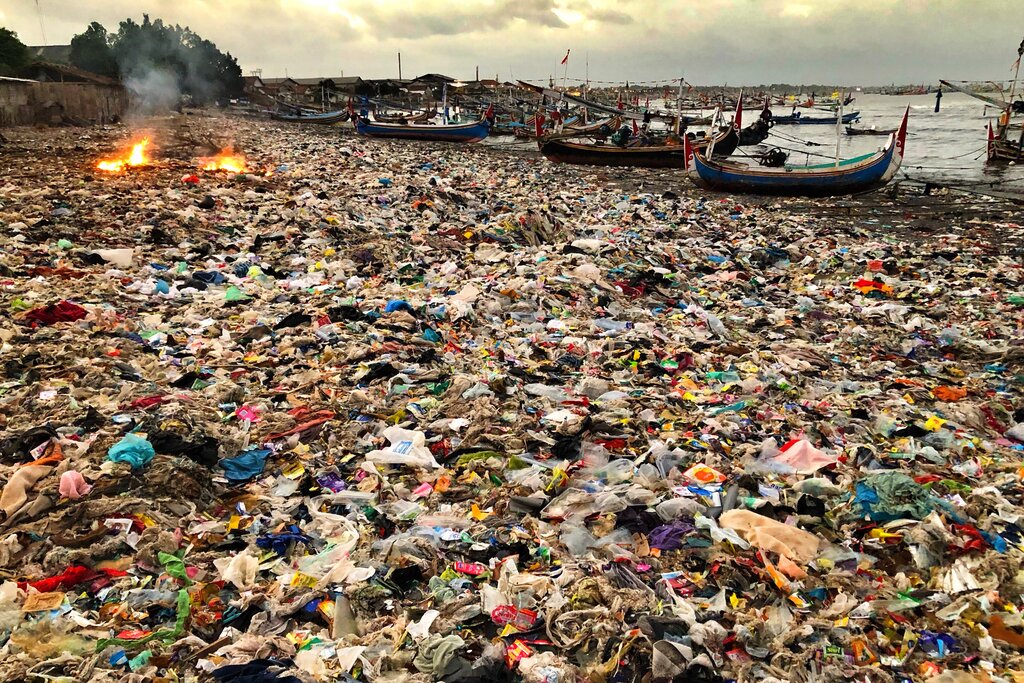
 

The world generates 300 million tonnes of plastic waste each year. Image by Vincent Kneefel

A report by science journal, Nature, determined that currently, roughly 14 million tons of plastic make their way into the oceans every year, harming wildlife habitats and the animals that live in them. The research found that if no action is taken, the plastic crisis will grow to 29 million metric tons per year by 2040. If we include microplastics into this, the cumulative amount of plastic in the ocean could reach 600 million tons by 2040.

Shockingly, National Geographic found that 91% of all plastic that has ever been made is not recycled, representing not only one of the biggest environmental problems of our lifetime, but another massive market failure. Considering that plastic takes 400 years to decompose, it will be many generations until it ceases to exist. There’s no telling what the irreversible effects of plastic pollution will have on the environment in the long run.

Deforestation

Every hour, forests the size of 300 football fields are cut down. By the year 2030, the planet might have only 10% of its forests; if deforestation isn’t stopped, they could all be gone in less than 100 years.

The three countries experiencing the highest levels of deforestation are Brazil, the Democratic Republic of Congo and Indonesia. The Amazon, the world’s largest rainforest – spanning 6.9 million square kilometres (2.72 million square miles) and covering around 40% of the South American continent – is also one of the most biologically diverse ecosystems and is home to about three million species of plants and animals. Despite efforts to protect forest land, legal deforestation is still rampant, and about a third of global tropical deforestation occurs in Brazil’s Amazon forest, amounting to 1.5 million hectares each year.
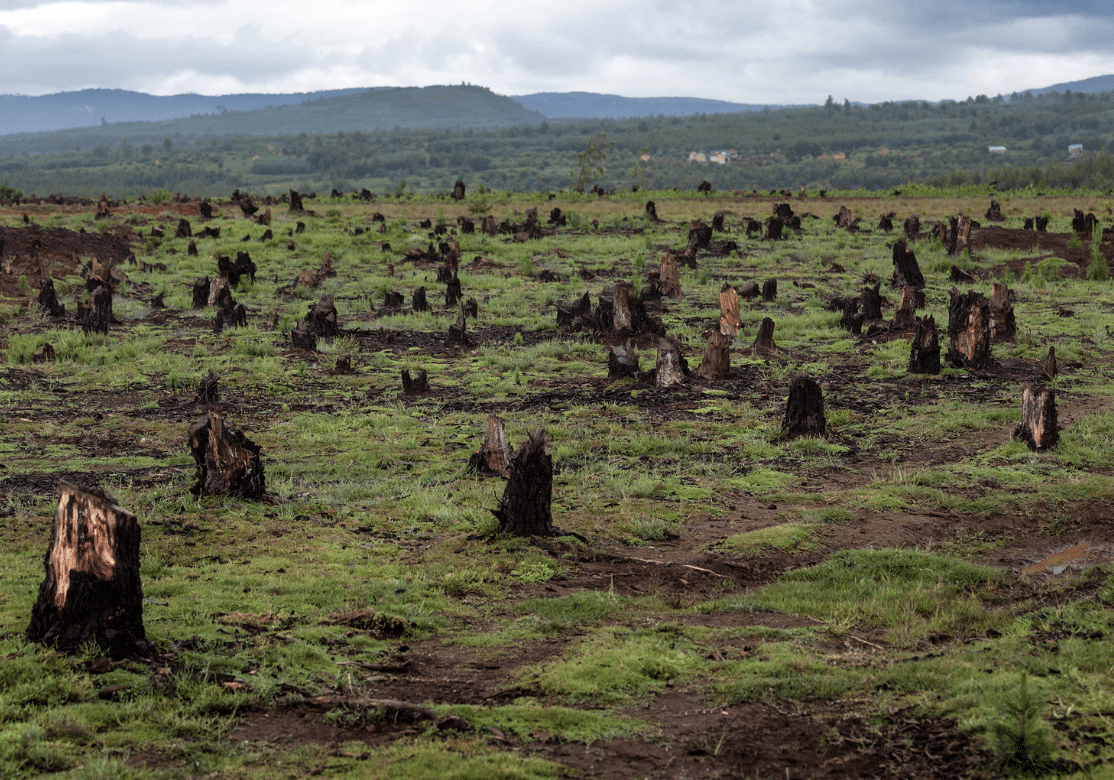
 

The world has been chopping down 10 million hectares of trees every year to make space to grow crops and livestock, and to produce materials such as paper.

Agriculture is the leading cause of deforestation, another one of the biggest environmental problems appearing on this list. Land is cleared to raise livestock or to plant other crops that are sold, such as sugar cane and palm oil. Besides for carbon sequestration, forests help to prevent soil erosion, because the tree roots bind the soil and prevent it from washing away, which also prevents landslides.

Air Pollution

One of the biggest environmental problems today is outdoor air pollution. Data from the World Health Organization (WHO) shows that an estimated 4.2 to 7 million people die from air pollution worldwide every year and that nine out of 10 people breathe air that contains high levels of pollutants. In Africa, 258,000 people died as a result of outdoor air pollution in 2017, up from 164,000 in 1990, according to UNICEF. Causes of air pollution mostly comes from industrial sources and motor vehicles, as well as emissions from burning biomass and poor air quality due to dust storms.

In Europe, a recent report from the EU’s environment agency showed that air pollution contributed to 400 000 annual deaths in the EU in 2012 (the last year for which data was available).

In the wake of the COVID-19 pandemic, attention has been put on the role that air pollution gases has in transporting the virus molecules. Preliminary studies have identified a positive correlation between COVID-19-related mortalities and air pollution and there is also a plausible association of airborne particles assisting the viral spread. This could have contributed to the high death toll in China, where air quality is notoriously poor, although more definitive studies must be conducted before such a conclusion can be drawn.

Melting Ice Caps and Sea Level Rise

The climate crisis is warming the Arctic more than twice as fast as anywhere else on the planet. Today, sea levels are rising more than twice as quickly as they did for most of the 20th century as a result of increasing temperatures on Earth. Seas are now rising an average of 3.2 mm per year globally and they will continue to grow up to about 0.7 metres by the end of this century. In the Arctic, the Greenland Ice Sheet poses the greatest risk for sea levels because melting land ice is the main cause of rising sea levels.

Representing arguably the biggest of the environmental problems, this is made all the more concerning considering that last year’s summer triggered the loss of 60 billion tons of ice from Greenland, enough to raise global sea levels by 2.2mm in just two months. According to satellite data, the Greenland ice sheet lost a record amount of ice in 2019: an average of a million tons per minute throughout the year, one of the biggest environmental problems that has cascading effects. If the entire Greenland ice sheet melts, sea level would rise by six metres.

Meanwhile, the Antarctic continent contributes about 1 millimetre per year to sea level rise, which is a third of the annual global increase. Additionally, the last fully intact ice shelf in Canada in the Arctic recently collapsed, having lost about 80 square kilometres – or 40% – of its area over a two-day period in late July, according to the Canadian Ice Service.

Sea level rise will have a devastating impact on those living in coastal regions: according to research and advocacy group Climate Central, sea level rise this century could flood coastal areas that are now home to 340 million to 480 million people, forcing them to migrate to safer areas and contributing to overpopulation and strain of resources in the areas they migrate to.

Bangkok (Thailand), Ho Chi Minh City (Vietnam), Manila (Philippines), and Dubai (United Arab Emirates) are among the cities most at risk of sea level rise and flooding.

Ocean Acidification

Global temperature rise has not only affected the surface, but it is the main cause of ocean acidification. Our oceans absorb about 30% of carbon dioxide that is released into the Earth’s atmosphere. As higher concentrations of carbon emissions are released thanks to human activities such as burning fossil fuels as well as effects of global climate change such as increased rates of wildfires, so do the amount of carbon dioxide that is absorbed back into the sea.

The smallest change in the pH scale can have a significant impact on the acidity of the ocean. Ocean acidification has devastating impacts on marine ecosystems and species, its food webs, and provoke irreversible changes in habitat quality. Once pH levels reach too low, marine organisms such as oysters, their shells and skeleton could even start to dissolve.

However, one of the biggest environmental problems from ocean acidification is coral bleaching and subsequent coral reef loss. This is a phenomenon that occurs when rising ocean temperatures disrupt the symbiotic relationship between the reefs and algae that lives within it, driving away the algae and causing coral reefs to lose their natural vibrant colours. Some scientists have estimated coral reefs are at risk of being completely wiped by 2050. Higher acidity in the ocean would obstruct coral reef systems’ ability to rebuild their exoskeletons and recover from these coral bleaching events.

Some studies have also found that ocean acidification can be linked as one of the effects of plastic pollution in the ocean. The accumulating bacteria and microorganisms derived from plastic garbage dumped in the ocean to damage marine ecosystems and contribute towards coral bleaching.
10. Agriculture

Studies have shown that the global food system is responsible for up to one third of all human-caused greenhouse gas emissions, of which 30% comes from livestock and fisheries. Crop production releases greenhouse gases such as nitrous oxide through the use of fertilisers.

60% of the world’s agricultural area is dedicated to cattle ranching, although it only makes up 24% of global meat consumption.

Agriculture not only covers a vast amount of land, but it also consumes a vast amount of freshwater, another one of the biggest environmental problems on this list. While arable lands and grazing pastures cover one-third of Earth’s land surfaces, they consume three-quarters of the world’s limited freshwater resources.

Scientists and environmentalists have continuously warned that we need to rethink our current food system; switching to a more plant-based diet would dramatically reduce the carbon footprint of the conventional agriculture industry.

Food and Water Insecurity

Rising temperatures and unsustainable farming practices has resulted in the increasing threat of water and food insecurity and taking the mantle as one of the biggest environmental problems today.

Globally, more than 68 billion tonnes of top-soil is eroded every year at a rate 100 times faster than it can naturally be replenished. Laden with biocides and fertiliser, the soil ends up in waterways where it contaminates drinking water and protected areas downstream.

Furthermore, exposed and lifeless soil is more vulnerable to wind and water erosion due to lack of root and mycelium systems that hold it together. A key contributor to soil erosion is over-tilling: although it increases productivity in the short-term by mixing in surface nutrients (e.g. fertiliser), tilling is physically destructive to the soil’s structure and in the long-term leads to soil compaction, loss of fertility and surface crust formation that worsens topsoil erosion.

With the global population expected to reach 9 billion people by mid-century, the Food and Agriculture Organization of the United Nations (FAO) projects that global food demand may increase by 70% by 2050. Around the world, more than 820 million people do not get enough to eat.

The UN secretary-general António Guterres says, “Unless immediate action is taken, it is increasingly clear that there is an impending global food security emergency that could have long term impacts on hundreds of millions of adults and children.” He urged for countries to rethink their food systems and encouraged more sustainable farming practices.

In terms of water security, only 3% of the world’s water is fresh water, and two-thirds of that is tucked away in frozen glaciers or otherwise unavailable for our use. As a result, some 1.1 billion people worldwide lack access to water, and a total of 2.7 billion find water scarce for at least one month of the year. By 2025, two-thirds of the world’s population may face water shortages.

Fast Fashion and Textile Waste

The global demand for fashion and clothing has risen at an unprecedented rate that the fashion industry now accounts for 10% of global carbon emissions, becoming one of the biggest environmental problems of our time. Fashion alone produces more greenhouse gas emissions than both the aviation and shipping sectors combined, and nearly 20% of global wastewater, or around 93 billion cubic metres from textile dyeing, according to the UN Environment Programme.

What’s more, the world at least generated an estimated 92 million tonnes of textiles waste every year and that number is expected to soar up to 134 million tonnes a year by 2030. Discarded clothing and textile waste ends up in landfills, most of which is non-biodegradable, while microplastics from clothing materials such as polyester, nylon, polyamide, acrylic and other synthetic materials, is leeched into soil and nearby water sources. Monumental amounts of clothing textile are also dumped in less developed countries as seen with Chile’s Atacama, the driest desert in the world, where at least 39,000 tonnes of textile waste from other nations are left there to rot.


Of the 100 billion garments produced each year, 92 million tonnes end up in landfills.

This rapidly growing issue is only exacerbated by the ever-expanding fast fashion business model, in which companies relies on cheap and speedy production of low quality clothing to meet the latest and newest trends. While the United Nations Fashion Industry Charter for Climate Action sees signatory fashion and textile companies to commit to achieving net zero emission by 2050, a majority of businesses around the world have yet to address their roles in climate change.

While these are some of the biggest environmental problems plaguing our planet, there are many more that have not been mentioned, including overfishing, urban sprawl, toxic superfund sites and land use changes. While there are many facets that need to be considered in formulating a response to the crisis, they must be coordinated, practical and far-reaching enough to make enough of a difference.

Overfishing

Over three billion people around the world rely on fish as their primary source of protein. About 12% of the world relies upon fisheries in some form or another, with 90% of these being small-scale fishermen – think a small crew in a boat, not a ship, using small nets or even rods and reels and lures not too different from the kind you probably use. Of the 18.9 million fishermen in the world, 90% of them fall under the latter category.

Most people consume approximately twice as much food as they did 50 years ago and there are four times as many people on earth as there were at the close of the 1960s. This is one driver of the 30% of commercially fished waters being classified as being ‘overfished’. This means that the stock of available fishing waters is being depleted faster than it can be replaced.

Overfishing comes with detrimental effects on the environment, including increased algae in the water, destruction of fishing communities, ocean littering as well as extremely high rates of biodiversity loss.

As part of the United Nations’ 17 Sustainable Development Goals (SDG 14), the UN and FAO are working towards maintaining the proportion of fish stocks within biologically sustainable levels. This, however, requires much stricter regulations of the world’s oceans than the ones already in place. In July 2022, the WTO banned fishing subsidies to reduce global overfishing in a historic deal. Indeed, subsidies for fuel, fishing gear, and building new vessels, only incentivise overfishing and represent thus a huge problem.

Cobalt Mining

Cobalt is quickly becoming the defining example of the mineral conundrum at the heart of the renewable energy transition. As a key component of battery materials that power electric vehicles (EVs), cobalt is facing a sustained surge in demand as decarbonisation efforts progress. The world’s largest cobalt supplier is the Democratic Republic of Congo (DRC), where it is estimated that up to a fifth of the production is produced through artisanal miners.

Cobalt mining, however, is associated with dangerous workers’ exploitation and other serious environmental and social issues. The environmental costs of cobalt mining activities are also substantial. Southern regions of the DRC are not only home to cobalt and copper, but also large amounts of uranium. In mining regions, scientists have made note of high radioactivity levels. In addition, mineral mining, similar to other industrial mining efforts, often produces pollution that leaches into neighbouring rivers and water sources. Dust from pulverised rock is known to cause breathing problems for local communities as well.

What Can I Do?
On A Personal Level

Ways to approach climate action within our personal lives (hint – it evolves personal action but is not focused on small behavioural changes, which whilst worthwhile will not get us there):Joining a community can be one of the best ways to increase your impact.
First, it can enable you to make hundreds of connections in one go.
Second, a group of people working together can have more impact than individuals. If you are not already, take action by becoming an EO Member to support our mission to encourage a billion climate activists.
If you’re a younger read ask your parents to take action by bringing your whole family on board as a Family Member.
Reflect on the concept of Effective Altruism, a project that aims to find the best ways to help others, and put them into practice.

On A Professional Level

Ways to approach climate action within the workplace:Maintain your career path but consider donating a portion of your income to organisations that are focused on achieving meaningful & impactful goals and call out your boss if the company or organisation you work for does not have clear policies that will result in reduced harm to the environment and a pathway to Net Zero.
Ask your boss to support EO by bringing the whole team onboard with EO company membership – and take action together.
Reconsider your career path, with excellent advice here.

On A Political Level

Ways to approach climate action as a voter or political actor (even if you can’t vote):Protest – make your feelings known – become a vocal and passionate advocate with friends and family (without being over pushy) of the need for climate action. We need a billion activists to turn this ship around.
Join organisations that are organising climate actions and protests locally, whether in your city, district, or even at school.
Vote (if you can) for politicians who will champion effective climate action by governments.
Vote for parties or organisations that espouse self-reform and the adoption of ‘Ministers of the Future’ into government.

Deena Robinson
Deena was previously a journalist in South Africa and before that, dabbled in radio and print journalism in Australia. She has a Bachelor's Degree in Journalism and Criminology and has a passion for the environment and how it intersects with social issues. 

31.1.22

Can Germany Show Us How to Leave Coal Behind?


The country embarked on an ambitious plan to transition to clean energy, aiming to lead the fight against climate change. It has not been easy.

In late September, just before the German parliamentary elections, the Alternative für Deutschland held a large campaign rally in Görlitz, a picturesque city of about fifty-six thousand people across the Neisse River from Poland. I was making my way down a narrow street toward the rally when I entered a square that had been dressed up as Berlin circa 1930, complete with wooden carts, street urchins, and a large poster of Hitler.

Görlitz, which was barely damaged in the Second World War, often stands in for prewar Europe in movies and TV shows. (“Babylon Berlin,” “Inglourious Basterds,” and other productions have filmed scenes there.) It was a startling sight nonetheless, especially since, a few hundred yards away, a crowd was gathering for the AfD, the far-right party whose incendiary rhetoric about foreign migrants invading Germany has raised alarms in a country vigilant about the resurgence of the radical right.

In fact, at the rally, the rhetoric about foreigners from the AfD’s top national candidate, Tino Chrupalla, was relatively mild. Germany’s general success with handling the wave of more than a million refugees and migrants who arrived in the country starting in 2015 has helped undermine the Party’s central platform. Chrupalla moved on from migrants to other topics: the threat of coronavirus-vaccination mandates for schoolchildren, the plight of small businesses, and the country’s desire to stop burning coal, which provides more than a quarter of its electricity, a greater share even than in the United States.

Coal has particular resonance in the area around Görlitz, one of the country’s two large remaining mining regions. Germany’s coal-exit plan, which was passed in 2020, includes billions of euros in compensation for the coal regions, to help transform their economies, but there are reports that some of the money has been allocated to frivolous-sounding projects far from the towns most dependent on mining. Chrupalla, who is from the area, listed some of these in a mocking tone and told the crowd that the region was being betrayed by the government, just as it had been after German reunification, when millions in the former East Germany lost their jobs, leading many to abandon home for the West. “We are being deceived again, like after 1990,” he said.

Villages continue to be destroyed to expand the brown-coal mines.
Such language was eerily familiar. For years, I had been reporting on American coal country, where the industry’s decades-long decline has spurred economic hardship and political resentment. In West Virginia, fewer than fifteen thousand people now work in coal mining, down from more than a hundred thousand in the nineteen-fifties. The state is the only one that has fewer residents than it did seventy years ago, when the U.S. had a population less than half its current size—a statistic that is unlikely to surprise anyone who has visited half-abandoned towns such as Logan, Oceana, and Pineville. 

Accompanying the decline has been a dramatic political shift: a longtime Democratic stronghold, West Virginia was one of only ten states to vote for Michael Dukakis, in 1988; in 2020, it provided Donald Trump with his second-largest margin of victory, after Wyoming, which also happens to be the country’s largest coal producer, ahead of West Virginia.

The statistics are strikingly similar in Lusatia, the coal-mining region that stretches north of Görlitz along the Polish border, straddling the states of Brandenburg and Saxony, about ninety miles southeast of Berlin. Since 1990, employment at coal mines and power plants has plunged from eighty thousand to less than eight thousand, and the region’s population has fallen sharply, too. Hoyerswerda, in the heart of the area, has lost more than half of its seventy thousand inhabitants, leaving a constellation of vacant Eastern Bloc high-rises; Cottbus, the region’s largest city, has dropped from roughly a hundred and thirty thousand people, just before the Berlin Wall fell, to less than a hundred thousand. And the rightward shift visible in West Virginia has happened here, too: along with the rest of eastern Saxony, Lusatia is the AfD’s stronghold, with the Party capturing more than a third of the vote in some towns.

But there’s one crucial difference between the two places. As part of its Energiewende, or energy pivot, Germany has embarked on a formal effort to exit coal, with a national commission and subsequent legislation setting specific closure deadlines for mines and plants, and distributing billions of euros in compensation to coal companies, workers, and the regions themselves. In the U.S., the coal exit has been haphazard. Federal attempts to move beyond coal went dormant under President Donald Trump, and under President Joe Biden they are now running up against the opposition of Senator Joe Manchin, the West Virginia Democrat who holds both the crucial fiftieth vote in the Senate and a stake in a family coal business that earned him nearly five hundred thousand dollars in 2020. 

To the extent that the country has reduced its coal usage, it has been driven mostly by the profusion of cheap natural gas. The effort to provide solutions to the social and economic fallout for coal regions has been limited to fledgling projects, such as a working group that Biden convened last year to identify communities in need and funding opportunities for them to pursue.

This contrast was what brought me to Lusatia. The German coal exit has assumed outsized symbolic importance in a world that desperately needs to reduce carbon emissions: the Intergovernmental Panel on Climate Change says that we need to stop adding carbon dioxide to the atmosphere by 2050 in order to have any hope of keeping warming to 1.5 degrees Celsius. 

Burning coal for electricity represented nearly a third of all energy-related carbon emissions—the world’s single largest source—in 2018, and the International Energy Agency believes that global consumption of coal power reached record levels last year. In the absence of leadership from the U.S., Germany is seeking to show how a major manufacturing power can reduce its reliance on coal without causing too much economic damage or political backlash. A lot is riding on whether the country can pull it off.

“God created Lusatia, and the Devil buried brown coal underneath it.” This saying is credited to the Sorbs, the ethnic Slavic people who have lived in the region—die Lausitz—since the sixth century. The land was swampy, and the area remained relatively impoverished, with the exception of the cities at its southern end, Görlitz and Bautzen, which flourished as market hubs on one of Central Europe’s primary east-west trade routes.

Everything changed after the discovery of the brown coal, in the late eighteenth century. Brown coal, or lignite, is sedimentary rock that is less compressed than typical bituminous coal. Lignite is softer, closer to peat in carbon’s geological arc. It’s also even dirtier to burn than bituminous coal, and emits even more carbon.

Because lignite sits closer to the surface than bituminous coal, workers don’t need to dig deep shafts and tunnels. Instead, they use the open-cast method, excavating the clay and sand that lie above the lignite seam. This is safer than sending workers deep underground. But it requires removing everything that stands in the way, and in densely settled Central Europe that means demolishing villages—Braunkohle mining has led to the destruction of hundreds of communities in Germany. Once the mines are exhausted, they are either flooded to become lakes or levelled off with fill, which often leaves the land unusable for farming and in some cases even too unstable to walk on. “No entry” signs dot the local woods.


Open-cast mining started in Lusatia around 1900, and, in the decades that followed, the villages targeted for destruction tended to be Sorbian. The new industry brought a wave of workers to the area, mostly ethnic Germans, and a prosperity that it hadn’t known before. Lusatia produced coal briquettes that warmed homes, and the fuel that lit the streets of Berlin and powered factories in Chemnitz and Dresden. The German word for miner has a noble connotation: Bergmann—literally, “mountain man.”

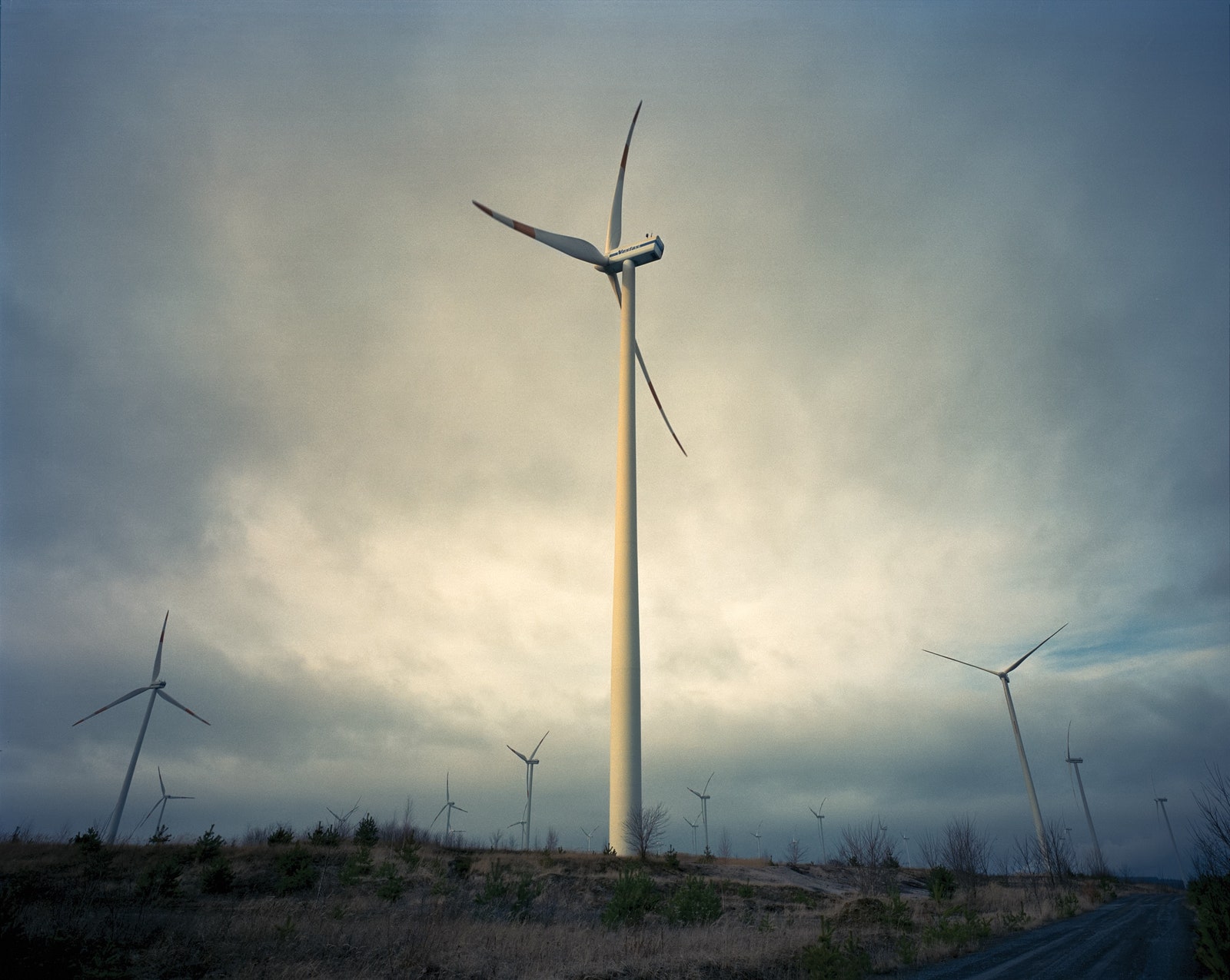
Wind turbines provide clean energy near a coal-fired power plant.
Brown coal is found in western Germany, too, near Cologne. But there it was long overshadowed by the much larger sprawl of bituminous mines in the Ruhr region, just to the north. These mines transformed the area into Germany’s great industrial powerhouse, a vast urban agglomeration home to Essen, Dortmund, and other manufacturing cities. Germany’s coal riches were integral to the new nation’s rise in the late nineteenth century, to the war machine that sustained it through two horrific conflicts, and to West Germany’s rebound in the nineteen-fifties, after which the region’s bituminous mining became less competitive with imported coal. In 2018, mining of bituminous coal in Germany was shut down for good.

In the coal regions of the former East Germany—Lusatia and a second region, near Leipzig, which has seen employment decline even more precipitously—the cultural and economic hold of coal persists. Braunkohle was the German Democratic Republic’s only major energy resource—it had almost no oil or bituminous coal—so the country opened several dozen open-cast mines in the postwar decades, destroying many more villages in the process. 

It built high-rise apartment towers in the larger towns to relocate people from the destroyed villages and to house mine workers. It gave these workers preferential pension payments and exalted them as paragons of the “workers’ and farmers’ state,” as the country’s leaders called the G.D.R. “Being a miner meant something,” a retired excavator operator, Monika Miertsch, told me. A former electrical engineer in Cottbus recalled that, when he was a child in the G.D.R., his teachers endlessly told students that their small nation produced more brown coal than any other country in the world. Christian Hoffmann, a naturalist who grew up in Weisswasser, in Lusatia, said that people would snap to attention whenever a band started playing the coal-miner anthem, “Steigerlied.”


The industry permeated local life. The soccer team in Cottbus is named Energie. Regional artists put Braunkohle mines on canvas—a museum in Cottbus recently held a retrospective of the work. One of East Germany’s best-known singer-songwriters, its Bob Dylan, was an excavator operator from Hoyerswerda named Gerhard Gundermann, who kept working in the giant pits even as his musical career blossomed.

After my first visits to Lusatia, which is now home to slightly more than a million people, the dominance of Braunkohle started to seem overwhelming. It was as if everyone was working for the industry or had lost his or her family’s village to it, or both—which helped explain why some residents weren’t too upset about the latter. It made for an especially stark manifestation of the trade-off between the coal-based development of the modern world and the environmental costs that came with it. “They knew that it gave work. 

They accepted it,” Hannelore Wodtke, a member of the town council in Welzow, said when we met. We were in Proschim, a village that she helped save from a planned expansion of the Welzow-Süd mine, two years ago. “Through coal, people did earn well. And that’s why it looks pretty good around here.”

One Saturday, I accompanied a group into the Welzow-Süd mine, on a tour offered by the owner of all the Lusatian mines, a Czech-controlled company called leag. We started at an outlook above the mine, a vast barren moonscape stretching to the horizon, four miles across, and then a bus took us down a long winding dirt road, pausing to let us admire giant excavators—more than six hundred feet long, among the largest machines in the world—that would resume work on Monday morning.

At last, we arrived at a seam of brown coal, about three hundred feet underground. A guide handed out plastic bags and encouraged us to pick up chunks as souvenirs. Some pieces were so soft or ragged that they resembled old wood or caked mud. It was hard to believe that this rudimentary stuff was still powering one of the wealthiest countries in the world.

I recalled a similar moment, years earlier, when I was far belowground, in a mine in southern Illinois, watching workers shear bituminous coal off a seam at the end of a three-and-a-half-mile tunnel. It had seemed unbelievably archaic at the time—men tossed hunks of black rock onto a conveyor belt so that we could power our laptops and cell phones. The giant hole in Lusatia seemed even more unfathomable: machines had destroyed villages, and then larger machines had dug into the fossilized past for three-hundred-million-year-old carbon with which to fuel yet other machines, our daily life.

“Watching coal-miners at work, you realize momentarily what different universes different people inhabit,” George Orwell wrote in “The Road to Wigan Pier,” his 1937 account from the North of England. “Down there where coal is dug it is a sort of world apart which one can quite easily go through life without ever hearing about. Probably a majority of people would even prefer not to hear about it. Yet it is the absolutely necessary counterpart of our world above. . . . Their lamp-lit world down there is as necessary to the daylight world above as the root is to the flower.”

That quality of not wanting to hear about the mining of coal, the reluctance of those in far-removed cities to make the connection between their world and that other one, provoked much of the resentment in the producing regions of the U.S. “This country benefitted from having the cheapest electricity in the world,” Cecil Roberts, the president of the United Mine Workers of America, told me in New York in July, after a rally of current and retired miners on behalf of striking Warrior Met Coal workers, in Alabama. “So what are we going to do with these communities?”

I heard a similar sentiment from miners in Germany. “If we really shut down now, then Berlin will have no more electricity,” Toralf Smith, a leading representative for power-plant workers in Lusatia, told me. “And I’d like to see how it goes at the universities in Berlin when the toilets don’t function and the cell phones don’t function and the Internet doesn’t function. When their lives don’t function. It’s a lack of respect. If we have to switch things over for the sake of climate politics, we won’t stand against that, but it can’t be done on our backs. It has to be done with us.”

In 2019, the sociologist Klaus Dörre, of the University of Jena, and a team of researchers interviewed dozens of coal workers in Lusatia about the region’s transition away from the industry. They found that workers keenly felt the loss of Anerkennung—recognition or esteem—that they and their forebears had enjoyed in East Germany. The workers cited opprobrium like that from a Green Party state legislator in western Germany who tweeted a protest poster that read “Whether Nazis or coal, brown is always shit.” One worker told the researchers, “In [East German] times, we were the heroes of the nation—that’s what they always said. And now we’re the fools or evildoers of the nation, because we have to let ourselves be scolded as Nazis or murderers or polluters and I don’t know what else. And that hurts.”

When I visited Dörre in his office in Jena, he said that the overriding theme from the interviews was the lingering trauma of the economic dislocation after the collapse of the Wall, a period known as die Wende. “The story that was told to us was ‘We’re the survivors, from eighty thousand down to eight thousand. Now you’re all coming and want to give us a second Wende.’ ”

But his team also found that the workers were not necessarily all gravitating to the AfD as a result of their anger and anxiety. Organized labor still has a strong hold on the German coal industry, unlike in the U.S.; the national coal workers’ union is allied with the center-left Social Democratic Party, and has managed to keep many members from straying right. Union leaders, as Dörre wrote in a report summarizing his research, hope that the region as a whole can also be kept from straying too much further right: “If you can manage to show that positive development is possible for the region, despite the coal exit, that would cut the ground out from under the AfD.”

In 2020, China built more than three times more new capacity for generating power from coal than the rest of the world combined. Last year, despite recurring pledges to start corralling carbon emissions, the country produced a record four billion tons of coal, up nearly five per cent from the year before. Defenders of coal in Germany like to point to figures like this, along with the fact that Germany’s greenhouse-gas emissions constitute a mere two per cent of the global total. Why should Germany be putting its economy at risk for such relatively slight gains?

Such arguments have stood little chance against Germany’s vigorous climate-activism movement. Activists and energy analysts told me that the country bears a special responsibility to reduce emissions. As a major industrial power, it produced a significant share of historical emissions; as manufacturing has shifted to Asia, the nation’s consumers are relying on goods produced elsewhere, making them partly responsible for emissions there, too; and, as a wealthy nation, Germany has the resources to demonstrate a better path. “It makes a huge difference if well-off, industrialized Germany manages to transition away to a different system that sustains its prosperity without causing massive emissions,” Benjamin Wehrmann, a Berlin-based correspondent for Clean Energy Wire, said. “Most people in the industry agree that its signalling effect is much larger than the actual effect.”

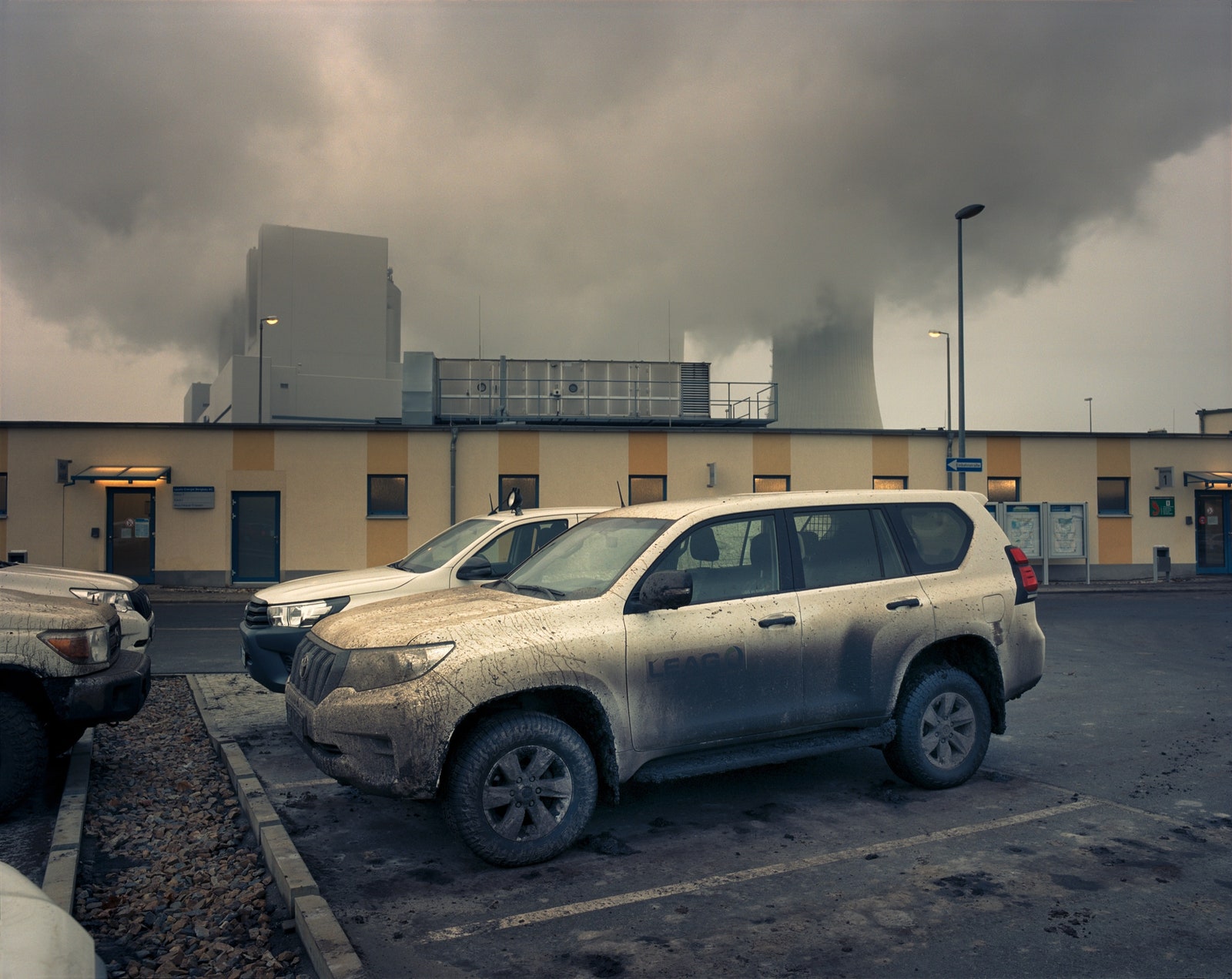
Outside a power plant fired by brown coal.

This exceptionalism has, however, complicated the effort to leave coal. Germany has long been home to a strong anti-nuclear movement, partly as a result of its fears of being caught in the middle of a Soviet-U.S. nuclear war. In 2000, the governing coalition of the Social Democrats and the Green Party, whose roots lay in anti-nuclear activism, agreed to phase out nuclear power. Chancellor Angela Merkel reversed this stance in 2009, after her center-right Christian Democratic Union regained power, but in 2011, in the wake of the Fukushima disaster, she announced that the country would close all seventeen of its nuclear power plants within eleven years. To replace the lost energy—nearly a quarter of the country’s load at the time—Germany would ramp up renewable energy. Thus the Energiewende accelerated.

Since then, the country has greatly expanded its wind and solar capacity. The dramatic shift toward renewables in a country of eighty-three million people helped drive down prices worldwide for wind and solar equipment, fulfilling the country’s self-conception as a market leader. (This plunge in prices came at a cost, though, as cheap Chinese solar panels put many German panel-makers out of business.)

But the expansion has slowed in recent years, owing to a combination of state-level restrictions on siting wind turbines, resistance to turbines and transmission lines among conservationists and local residents, and a reduction in subsidies for wind-power developers. In the first half of 2021, coal was back to providing more of the country’s electricity than wind. Most experts estimate that, to meet its renewable-energy goals, Germany needs to quadruple its wind production, to the point where turbines cover two per cent of the country’s landscape. And Germany is already contending with some of the highest electricity prices in the world, a source of consternation for domestic manufacturers seeking to remain globally competitive.

This was the daunting context in which the government convened its commission for the coal exit—Kohleausstieg—in June, 2018. Germany’s per-capita carbon emissions were still significantly higher than the E.U. average. Activists were demanding a fast response—hundreds of them had, since 2012, occupied Hambach Forest, a patch of woods in western Germany that was threatened by the expansion of a brown-coal mine. But the country needed to time the exit so that it could be assured of having enough power not only to replace both coal and nuclear energy but to add capacity, in order to handle the coming transition to electric-powered vehicles. (Tesla recently built a manufacturing plant outside Berlin.)

The thirty-one-member Commission on Growth, Structural Change, and Employment consisted of environmentalists and scientists, industry representatives and trade unionists, and residents and elected officials from the coal regions. It met regularly in Berlin and visited some coal towns. In January, 2019, after its final meeting, which ran until almost 5 a.m., it voted nearly unanimously in favor of a plan to exit coal by 2038. In July, 2020, the Bundestag passed a law with closure dates for various mines and power plants, and specific sums for compensation: 4.4 billion euros for the power companies, five billion euros for older workers to retire a few years early (separate funds would cover younger workers while they looked for new jobs), and, most important, forty billion euros for the mining regions, to help them with their economic transformation, a process known as the Strukturwandel.

It was a remarkable achievement, an example of postwar Germany’s consensus politics. “At a fundamental level, that all these different branches of society were able to come together around a coal exit is very significant,” Ingrid Nestle, a Green member of the Bundestag, told me. Climate-change experts in the U.S. looked on with admiration. “They got the environmental community, labor community, and business community together to hash it out,” Jeremy Richardson, an energy analyst and a West Virginia native formerly with the Union of Concerned Scientists, told me. “You have to get people together, and you have to invest.”


But it did not take long for the good feelings to fade. Environmental groups and Green Party leaders began arguing that the country needed to move up the exit date if it wanted to meet the European Union’s new, more ambitious goal of cutting emissions by fifty-five per cent from 1990 levels by 2030. In April, 2021, Germany’s Federal Constitutional Court ruled that the country’s existing climate efforts did not go far enough to stave off disaster. And, in July, heavy rains caused devastating flooding in western Germany, near Belgium. The floods killed at least a hundred and eighty people and destroyed entire towns, drawing greater attention to the possible effects of climate change.


As the election to replace Merkel got under way during the summer, climate change was central. Having sat through countless American Presidential TV debates where the subject was barely mentioned—and where politicians couldn’t even agree on whether climate change is real—I was astonished to see it take up twenty minutes in each of the three German debates that I watched, and to see the candidates toss around Klimaneutralität and Kohleausstieg as if they were household terms. The Social Democrats’ candidate for Chancellor, Olaf Scholz, agreed with his Green rival, Annalena Baerbock, on the urgent need to reduce carbon emissions. On Election Day, September 26th, the Social Democrats won more votes than Merkel’s center-right Christian Democrats, putting them in a position to form a government with the Greens and the pro-business Free Democrats.

The AfD saw its nationwide numbers sag, but, in the coal towns of Lusatia and the nearby regions of eastern Saxony, the Party did even better than it had four years earlier.

Iencountered an AfD voter at a wind-turbine factory in Lauchhammer, on the western edge of Lusatia. The Danish company Vestas had opened the plant in 2002, and it seemed to embody the ideals of the Energiewende: a century earlier, Lauchhammer had been home to one of the first brown-coal mines in the region, and now it was making the machinery of renewable power. But, a week before the election, Vestas announced that it was shutting down the factory, a decision widely attributed to the slowing growth of wind power in Germany. It will lay off the plant’s four hundred and sixty employees early this year.

I arrived at the factory one weekday evening at dusk, and waited in a light rain in a parking lot. After a while, a young man emerged, headed for his car. Cornell Köllner, a genial thirty-one-year-old, had worked at the plant for five years as a mechanic, advancing to a supervisory role. He enjoyed the work, and did not know what he would do next. The only other major employer in this part of Lusatia was B.A.S.F., the chemical company, which had a plant in nearby Schwarzheide that would soon be expanding into battery production. He could look for work outside the region, but he had recently bought a house, and he did not want to leave his family. “I’ve got to look for work here in the area,” he said.

The confounding nature of it all—shuttering a wind-turbine factory at a time when the country was supposedly ramping up renewable energy, and doing so in the region that was supposed to be targeted for extra assistance in managing the transition—had only confirmed for Köllner his preference for the AfD. “Not because of ‘Nazi,’ God forbid,” he said. “But because AfD is proposing something completely different.” I pressed him on what, exactly, that was, what the Party would do to help Lusatia or people like him, but he stuck to generalities. “They would change things,” he said. “They would really change things.”

Reluctance to leave in search of work elsewhere was widespread in Germany. “We work where we live,” Klaus Emmerich, the chief worker representative at the Garzweiler mine, in the western region, told me. “Where we live, that is our Heimat”—the German word that expresses something stronger than just “home” or “home town.”

Again, the echo was strong from U.S. coal regions, where residents, especially younger ones, constantly wrestle with the question of whether to stay or go. “It’s just home,” John Arnett, a marine veteran who worked for a closing coal-fired plant in southern Ohio, told me, in 2018. “I’ve been a bunch of different places, different countries. I’ve been across the equator. And now this is where I want to be, or I’d have stayed somewhere else. It’s the most beautiful place in the world, these hills.”

The people who remained often took offense at the economist’s or the pundit’s counsel that the only thing to do for regions that had lost their former economic rationale was to give people a bus or plane ticket out. In the U.S., the rate of people moving across state lines has in fact dropped by half since the early nineties, a trend attributed to, among other things, the cost of living in higher-opportunity cities and the breakdown of the traditional nuclear family, which leaves people dependent on extended family for child care or elder care.

The stay-or-go question is particularly sensitive in eastern Germany, because of the flight of younger people that occurred in the years after reunification. Die Zeit estimates that 3.7 million people, a quarter of the population of the former G.D.R., eventually left. One night, at a tavern in Hoyerswerda, I talked with Jörg Müller, a fifty-six-year-old man who worked at the B.A.S.F. plant, making paint for German car companies, and who had in his youth done cleaning jobs at the mine where his father worked as an engineer. Müller, who had brought up his children alone after his wife died young, of cancer, was worried about the impact that higher energy prices could have on B.A.S.F.’s prospects. But his main preoccupation was his grown children, who had left the area—one to study in Dresden, one to work in Kassel, in the former West Germany. I asked him how often he saw them. “Once or twice a year,” he said.

To coal’s opponents in Germany, such laments about home-town decline are undermined by the fact that the industry has been demolishing home towns for decades. The extent of the destruction is all the more striking in a culture that generally idealizes the village. Even amid all the devastation wrought by the coal industry in Appalachia—the mountaintop-removal mining, the coal-slurry spills—coal companies have not had to wipe entire towns off the map, as happens in Germany.

The week after the election, I travelled to the western brown-coal region, known as the Rhenish district, which has become the primary front for climate activists seeking to halt mining via direct action. They had succeeded in sparing Hambach Forest, and many had now moved to a new encampment, in a tiny hamlet called Lützerath that was on the verge of being claimed by the Garzweiler mine. Part of the hamlet had already been demolished by R.W.E., the German energy company that owns all the western region’s mines and power plants, which employ about nine thousand people. The only villager still living in Lützerath was a fifty-six-year-old farmer who was fighting the company in court and had welcomed more than a hundred activists to set up camp on his property. An R.W.E. spokesperson told me that the company “will continue to try to find an amicable solution with the landowner.” The spokesperson added that R.W.E. works closely with those affected by its plans and stands by its promises.

On October 1st, the day that the company was allowed to resume removing trees there, I cycled from the town of Erkelenz through fields of harvested sugar beets to reach Lützerath, where several dozen advocates had joined the occupiers to launch the defense. It made for a jarring juxtaposition: there were the remaining trees around the hamlet, festooned with tree houses and anti-coal banners; a narrow strip where the advocates were arrayed to speak; and, behind them, a vast pit, with excavators churning away at the edge of it. “If Lützerath falls, then the 1.5-degree limit falls,” Pauline Brünger, an activist with the youth movement Fridays for Future, said. “It lies in our hands—1.5 degrees is nonnegotiable. Lützerath must stand.”

I wandered into the encampment, where activists were breaking down pallets to build huts and more tree houses while others held an orientation session for new arrivals. Many wore balaclavas to try to hide their identities; others wore covid masks that served the same function. When I took pictures, a young woman came over to stop me.

Suddenly, a cry went up from the entrance to the encampment: two large excavators were approaching the hamlet. A couple of dozen activists marched down the road to block them. One of the drivers climbed out, saying that he and his colleague were only doing land-reclamation work on the older portion of the mine, and were coming to park their equipment for the weekend. The activists refused to let him through. “Hey, have a lot of fun sitting!” he called out angrily as he reversed back down the road.

Soon afterward, two large pickups approached from the other direction, loaded with concrete blocks and metal fencing, and rolled into the main assemblage of protesters; they were bringing the materials for an added security perimeter, and had taken a wrong turn, right into the enemy camp. The activists fell upon them and unloaded the blocks and fencing to build their own security perimeter, preventing access to one of the hamlet’s roads. The drivers sat helplessly in their cabs, watching the expropriation. Finally, a handful of police officers arrived and, after some cajoling, arranged for the materials to be returned and for the trucks to be allowed back out.

Nearby, five larger villages were also threatened with destruction by R.W.E. Most families had already sold their homes to the company and moved out, many of them to new developments on the outskirts of Erkelenz which had been built to house relocated families, and had even been named for the marked villages—Kuckum-Neu, Keyenberg-Neu, and so on. Tina Dresen, twenty-one, and her family were still holding out in Kuckum, and she told me how strange it had been to grow up in the shadow of Garzweiler and to see other villages falling to the bulldozers, one by one. “On the right side of my home was the hole, and life ended there,” she said. “I didn’t know anyone who lived there, and the bus stopped driving there, and the villages were destroyed there. I lived only to the left.”

She told me that some of the vacant homes in Kuckum were being used to house families who had lost their homes to the recent flooding. The irony was overpowering: people rendered homeless by a disaster likely exacerbated by climate change were now living in homes made available by the looming displacement of the coal mining that was contributing to climate change.


That evening, I rode my bike to Kuckum and found one of the displaced families. Anja Kassenpecher had been relocated to the village with her son, four cats, and two dogs, after the flooding destroyed her beloved half-timber house in the town of Ahrweiler. “What happened in the flood catastrophe, that was nature, and one couldn’t do anything against that,” she said. “But the dismantling of the coal here, one could do something about that.”

In 1945, the victorious Russians removed a thirty-kilometre stretch of rail between Cottbus and the town of Lübbenau, to take back to the Soviet Union, one of many such claims made throughout eastern Germany. The rails were never replaced, and the single track in that stretch has meant that trains run between Cottbus and Berlin only once an hour—less than ideal by German standards. Part of the Strukturwandel’s forty billion euros will be used to replace the missing track.

But, toward the end of 2021, reports kept appearing in the local and national media of the questionable ways other portions of the fund were being put to use by federal agencies and by the obscure provincial councils that were overseeing much of the spending: a techno festival, a zoo, new streetcars in Görlitz. Coal defenders and opponents alike told me how wrong they thought it was to spend three hundred and ten million euros on a new branch of Germany’s public-health agency in an exurb of Berlin sixty miles from Cottbus, or millions more on the renovation of a cultural center in a town thirty miles from Dresden, far from the coal towns. In November, eleven mayors met to express their frustration with the spending decisions and to demand that communities closest to the coal mines get more of a say. “If it goes on like this, the pot will be empty,” Tristan Mühl, the mayor of the village of Krauschwitz, told me afterward. “The perspective of the community is missing.”

An abandoned factory near an open-pit coal mine.


Part of the challenge for the appropriators was structural: under European Union rules, they were forbidden to use the money to subsidize new or existing businesses in the region. Instead, the discussion was of funding research institutes for renewable energy, including innovations in hydrogen power, that might eventually lead to job creation. René Schuster, a Cottbus-based representative of the environmental group Grüne Liga, told me that it was doubtful whether such ventures would ever come close to replacing the jobs that would vanish in the coal exit. “I doubt you’re going to get a boom in new jobs that will replace what you’re losing from coal,” he said. “That you’re going to get seven thousand jobs, that’s not going to happen.” But it was still wrong to think of the coal jobs as somehow sacrosanct, he added. “It’s often discussed as if coal workers have a fundamental right to their job. There’s no right to an income. You have a fundamental right to your property. Whoever gets relocated, their property rights are being encroached on. But whoever wants to live off that relocation, well, they have no fundamental right to that.”

After the election, Olaf Scholz and his counterparts in the Greens and the Free Democrats began negotiating the coal-exit terms for their coalition pact, including whether to move the 2038 date to 2030. Adding pressure was the concurrent climate summit in Glasgow, where a major focus was whether to mandate a global end to burning coal. The talk of an earlier exit prompted more consternation in Lusatia, where many viewed it as a breach of the commission’s compromise. “By 2030, little of this will have got started,” Christine Herntier, the mayor of Spremberg, said of the Strukturwandel.

Every day or two, I checked an app called Electricity Map, which shows the sources from which countries are drawing their electricity. Invariably, coal was Germany’s largest source, with wind a distant second or third. The plan was to use natural gas as a bridge to the expansion of renewables, but that would require building more gas power plants, fast, and would also mean making Germany even more dependent on Russia, one of its biggest gas suppliers. Recently, Russia built a controversial pipeline to Germany through the Baltic Sea, called Nord Stream 2. As a last resort, Germany could buy nuclear-based electricity from France, which has remained staunchly committed to nuclear power, or coal-fired electricity from Poland, but not without hypocrisy, given its own disavowal of both sources.

On November 24th, the coalition released its governing agreement, which called for “ideally” moving up the coal exit to 2030. The rhetorical wiggle room satisfied neither side, and reflected the bind in which the country has found itself. Germany had set out to be an example of how to relinquish the dirty-energy source that had enabled modernity. It had developed a clear timetable, and it had agreed on significant compensation, recognizing that there was a societal obligation to people whose livelihood was being shut down as a matter of policy. The process was undoubtedly superior to what was playing out at the same time in the U.S., where the Biden Administration’s plan to spend five hundred and fifty-five billion dollars on incentives to reduce greenhouse-gas emissions, as part of the sweeping Build Back Better package, was foundering, shy of majority support in the Senate.

But Germany was also at risk of being an unintended example, one that could be cited by opponents of the imposition of emissions reductions. (A recent Wall Street Journal editorial was titled “Germany’s Energy Surrender: Rarely has a country worked so hard to make itself vulnerable.”) The exit from nuclear power was leaving the country much less space to maneuver as it tried to move away from coal. And the lack of transparency and forethought with the regional spending undermined the purpose of the compensation: to convey that, this time around, the rest of the country really did care what happened to its left-behind places.

On my final visit to Lusatia, in November, I met Lars Katzmarek, an employee at leag, the coal company, at a coffee shop in Cottbus. Katzmarek, who is twenty-nine, oversees telecommunications at the mines, a job he loves and hopes to keep until things shut down. He was not drifting to the AfD: he is a loyal Social Democrat, he believes in climate change, and he even met with some Fridays for Future activists in 2019.

But he understood the feeling of betrayal in the region. His parents both worked in Braunkohle. His mother lost her job in the nineties and never found steady work again. Cottbus has experienced the third-highest rate of departures to western Germany of any city in the former G.D.R., and nearly all of Katzmarek’s high-school friends have left town. It was hard now to watch a new wave of people leaving the company and the region because they didn’t believe the promises of the Strukturwandel. “The sorrow is gigantic,” he said.

Katzmarek composed rap music on the side, and he had recently produced a single about Lusatia’s plight which included clips of him singing atop one of the turbines at the Vestas plant—before the news came of its closure. “For politics to win back the trust of the people, it has to finally be the case that things are carried out the way they said they would,” he said. “This is the big chance to win back trust.”

What you couldn’t have was a coal exit that led to a decline in German industry because of higher electricity costs. “You can’t have deindustrialization in Germany,” he said. “Industry means prosperity. A loss of prosperity would be absurd. If other countries look to see how Germany has fared, and they see deindustrialization and a loss of prosperity and the people growing discontent and populism gaining a new foothold, who would follow our example?”

His nuanced tone made me wish that we had more time to talk. But he had to catch the hourly train to Berlin, to visit one of his many friends who had left Lusatia.

ProPublica is a nonprofit newsroom that investigates abuses of power. 
Sign up to get stories like this one as soon as they are published.

15.1.22

How the Refrigerator Became an Agent of Climate Catastrophe


The evolution of cooling technology helps to explain why supposed solutions to global warming have only made the situation worse.

Acouple of years ago, in spring, my wife and I took our dog for a walk near Bantam Lake, in northwestern Connecticut, a few miles from our house. In swampy woods on the lake’s northern shore, we noticed a double row of lichen-spattered concrete pillars, each one four or five feet tall. The rows began at the edge of the water and extended maybe two hundred yards into the trees. Nearby was a narrow canal filled with water and dead leaves, crossed in several places by wooden bridges that looked like shipping pallets. In a rectangular clearing beyond the inland end of the canal, we saw two parallel strips of concrete, hundreds of feet long and more than a hundred feet apart. They made useful walking paths over the mucky ground.

I learned later that we had seen ruins of the Berkshire Ice Company, which ran a harvesting operation on the lake a century ago. Each winter, at that site, Berkshire employed a hundred and forty men, many of whom lived in bunkhouses. They worked from three in the morning until six at night, seven days a week. Teams of horses pulling sleigh-like “scorers” cut grid lines in the ice, and men with long handsaws followed the lines. The ice, to judge from old photographs, was more than a foot thick. The concrete pillars that we saw supported a conveyer belt. It moved freshly cut blocks away from the lake to an immense icehouse, which stood on the concrete footings that we had used as walking paths. The icehouse held sixty thousand tons. Train cars could be loaded from two sides of the building at the same time.

According to a historical booklet published by the White Memorial Foundation, the conservation nonprofit that owns the land now, the harvest typically began each year in late November, and ended in mid-March. I went back to the same spot several times in recent months, beginning shortly before Thanksgiving, and saw no ice at all, much less enough to support men and horses and heavy equipment. Many of the homeowners had pulled their docks onto the shore for the winter, but the entire lake was open water. On the afternoon of December 16th, the temperature was sixty-one degrees.

Changes in the Earth’s climate in recent decades have been both frighteningly swift and deceptively slow. Once in a while, though, you notice something that knocks you over. Many unsettling transformations are concealed within 1.5 degrees Celsius.

Ice harvesting on Bantam Lake ended in 1929. The proximate cause was a fire that destroyed the icehouse, but the business was doomed anyway, by the rise of artificial ice production and the growing popularity of a new consumer product: the household refrigerator. Kelvinators, General Electric Monitor Tops, and other early residential models were crude and expensive, but they and their successors eventually displaced icehouses, horse-drawn scorers, and overworked sawyers. The evolution of cooling technology can be viewed as a parable of our unfolding climate catastrophe, partly because the technology has directly contributed to the crisis, but mainly because its history suggests a counterintuitive explanation for why combatting global warming has proved to be so hard, and why some of our putative solutions are actually making our problems worse.

The end of ice harvesting on Bantam Lake, in 1929, corresponded with a rise in artificial ice production and the growing popularity of the household refrigerator.Photograph courtesy Bantam Historical Society.

In temperate places, regularly using cold to preserve food first became practical in the early decades of the nineteenth century, when harvesters in Connecticut and elsewhere began packing lake and river ice in sawdust and shipping it as far away as India and Australia. Large-scale artificial production followed. My mother, who is ninety-two, calls her refrigerator her icebox, because when she was a little girl that’s what her parents had: a zinc-lined food-storage cupboard that didn’t plug into anything and sometimes dripped meltwater onto the kitchen floor.

The first electric refrigerators were loud, poorly insulated, and occasionally dangerous, and they cost more than some new cars. As the technology improved and prices dropped, though, they upended multiple industries. Iceboxes and neighborhood icemen gradually disappeared, of course, but the production, packaging, distribution, retailing, purchasing, and consumption of food were transformed, too. At around the time that the Bantam Lake ice business ended, Clarence Birdseye, an American businessman and inventor, introduced flash-freezing technology, and the tiny freezer compartments of early household refrigerators grew to make room for Birds Eye peas and spinach, and also for the aluminum trays that set my father’s teeth on edge when he pulled their handles to free ice cubes for his cocktails.

My grandchildren dispense ice cubes for themselves by pressing a glass against a lever in their freezer door. My wife and I don’t have one of those, but we do have a refrigerator-freezer in our kitchen and another in our basement, along with a full-size stand-alone freezer. We are by no means the most well-equipped people we know; we don’t have a temperature-controlled wine-storage cabinet, an under-counter refrigerated beverage drawer next to our dishwasher, or a third refrigerator, in our garage. Even crummy motel rooms now have refrigerators (always running, seldom used). I sometimes buy gas at a big new Cumberland Farms, which, like many modern gas stations, has more refrigerated display space than the A. & P. where my mother did her grocery shopping when I was little. The small grocery store near my house has an entire refrigerated room just for beer.


Refrigerators use compressors, condensers, and coils filled with volatile compounds to transfer heat from inside to outside; this same innovation made air-conditioning possible. When I was born, in 1955, air-conditioners in houses (and cars) were rare; today, in almost all of the United States, they’re close to universal. My mother’s father stayed semi-comfortable during Kansas City summers in the thirties and forties by moving a bed into his screened porch and wearing seersucker suits to work. Now it’s possible to pass entire days without encountering air that hasn’t been artificially cooled—and, once you get used to cooled air, its absence can feel unendurable. (In 2011, a retired Army general estimated that the Defense Department was spending a little over twenty billion dollars a year to provide air-conditioning for U.S. forces in Iraq and Afghanistan.)


The use of cooling technology is growing worldwide. China now accounts for close to half of global air-conditioner purchases and roughly three-quarters of global production; in Dubai, where life during much of the year would be next to impossible without air-conditioning, hotel swimming pools are chilled. According to a report published in 2018 by the International Energy Agency, refrigeration in 2016 accounted for about six per cent of the world’s energy consumption, and space cooling accounted for about eight per cent. In the same report, the I.E.A. predicted that worldwide energy use by air-conditioners would triple by 2050, “requiring new electricity capacity the equivalent to the combined electricity capacity of the United States, the E.U. and Japan today.” Energy use by refrigerators is on a similar upward path.

Much of the world’s recent growth in cooling capability has been an adaptive response to global warming. The problem is self-perpetuating, because the electricity that refrigerators and air-conditioners run on is mostly generated by burning fossil fuels. There are other climate impacts. Hydrofluorocarbons—which, for decades, have been the volatile compounds circulating inside most new cooling equipment—were widely adopted as refrigerants because they don’t have the same destructive effect on the Earth’s ozone layer as their immediate predecessors, chlorofluorocarbons. But hydrofluorocarbons are greenhouse gases with hundreds or thousands of times the warming potential of carbon dioxide. Last year, the Environmental Protection Agency adopted a rule phasing down their production and use in the United States by eighty-five per cent over the next fifteen years. But vast quantities are still being manufactured. Leakage is a common problem, and not only when old refrigerators and air-conditioners end up at the dump.

The most widely embraced strategy for slowing the warming caused by cooling technology is to increase the energy efficiency of new refrigerators and air-conditioners. In a 2011 report, the U.S. Department of Energy estimated that its new efficiency standards for refrigerators (which went into effect in 2014 and are currently being updated) would “save the nation almost four and a half quadrillion BTUs over 30 years. That’s three times more than the total energy currently used by all refrigeration products in U.S. homes annually. It’s also the equivalent amount of energy savings that could be used to power a third of Africa for an entire year.” The I.E.A., in its 2018 report, argued that, through “stringent minimum energy performance standards and other measures such as labelling, the average energy efficiency of the stock of ACs worldwide could more than double between now and 2050.” Implementing those changes, it said, would significantly reduce the need for new electricity infrastructure, flattening the curve of future energy demand.

This strategy sounds both logical and doable. But history suggests that it won’t succeed. Artificial cooling caught on initially because it was more efficient than packing lake ice in sawdust and loading it onto trains and ships. During the decades since then, the efficiency of cooling machines has increased steadily and spectacularly. Indeed, the stunning growth in cooling machines’ energy consumption has been paralleled, from the beginning, by equally stunning growth in their energy efficiency. Some of the biggest gains began in the mid-nineteen-seventies, in the aftermath of the Arab oil embargo, but efficiency improvements had preceded the crisis, and they continued long after it had passed. In 2010, the World Economic Forum estimated that the average refrigerator for sale at that time used only a quarter as much energy as a typical 1975 model, yet had twenty per cent more storage capacity and cost only forty per cent as much. Today’s refrigerators and air-conditioners are more efficient still.

If increased energy efficiency makes over-all energy consumption go down, as the I.E.A. and the D.O.E. suggest, then why does our warming problem keep getting worse? Defenders of efficiency as a climate strategy argue that the amount of energy our machines use today would be vastly higher if our machines were as inefficient as they were ten or twenty or fifty years ago. But the flaw in that argument is easy to see. If the only refrigerators we could buy now were thirties-era G. E. Monitor Tops, Cumberland Farms wouldn’t have an entire wall filled with chilled soft drinks and drinking water (in minimally recyclable plastic bottles, which themselves would not exist without the efficient refrigerated display cases that keep them cold). Similarly, if the only way to fly from one coast to the other were to hitch a ride with the Wright brothers, you wouldn’t travel to California for Christmas.

The I.E.A. says that if we successfully implement what it calls an “Efficient Cooling Scenario,” by optimizing the energy efficiency of our cooling machines, we could save almost three trillion dollars by 2050. If we really do that, though, we will have three trillion to spend on something else, and whatever we spend it on will inevitably have climate consequences of its own. The history of civilization is, in many ways, the history of accelerating improvements in energy efficiency. Extracting greater value from smaller inputs is how we’ve made ourselves rich; it’s also how we’ve created the problem that we’re now trying to address with more of the same. Making useful technologies more efficient makes them cheaper, and as they become cheaper we use them more and find more uses for them, just as adding lanes to congested highways makes driving more attractive, not less. In 2011, the D.O.E.’s forecasters presumably didn’t anticipate that improvements in energy efficiency would make it increasingly economical to power and cool the server farms that mine and manage cryptocurrencies. The correlation between growth in efficiency and growth in consumption is not accidental.

My wife and I lived in Connecticut without air-conditioning for thirty-seven years. The summers are getting hotter, though, and we’re both in our sixties and therefore more susceptible to heat-related health problems. In December, we installed a modern four-zone air-conditioning system in our house. Because the system is so energy efficient, a consortium that includes the state and two electric utilities covered part of the cost. The transaction encapsulates the main flaw of America’s principal response to climate change: we increased our annual energy consumption by making a luxury addition to our house and got credit for helping to save the world.

On January 2, 2022, I went back to Bantam Lake and saw two pickup trucks and a boat trailer parked near the state launch ramp. The day was too cold for water skiing but warm enough for dog walking in just a sweater. A little later, I spotted the boat, with two guys in it. They were probably fishing, or maybe they were just tooling around. There was no ice anywhere, not even on the puddles in the parking lot.

David Owen

20.12.21

The Extraordinary Stone House In Portugal "Casa do Penedo"