Showing posts with label Portugal. Show all posts

24.12.22

Elephants ‘return’ to Alentejo in Portugal

After many thousands of years in which they ‘roamed wild’ a retirement sanctuary is planned


A retirement sanctuary for circus elephants and others “at the end of their lives” is to be created on a 400 hectare plot of land straddling the Alentejan municipalities of Vila Viçosa and Alandroal.

The initiative comes from the Pangea Trust, a private non-profit organisation “dedicated to working with governments, zoos and circuses who wish to give these uniquely sentient, intelligent and social beings a fulfilling life”.

This will be the trust’s “first large-scale elephant sanctuary, emulating the approach of those found in Asia, Africa, and the Americas. Local biodiversity will be encouraged to flourish, and elephants will be given the space to roam freely, forage naturally, and socialise as they please”, explains Pangea’s website.

Led by conservationist Kate Moore, Pangea’s focus is on “demonstrating that only expansive, natural habitats can meet the complex needs of elephants”.

The trust believes the sanctuary “will catalyse the change that so many of us want to see: an end to elephant-keeping in Europe – which is a practice that is symbolic of humanity’s exploitation of nature – so that we can turn our attention to the protection of elephants in the wild, where they belong”.

For now there is no time-scale given for this project. It is simply clear that it has the full backing of local municipalities, and will be privately funded.

Say reports this week, all the authorities have to do is “deal with licenses and authorisations for work to advance”.

Alandroal municipality particularly has said it is “deeply committed to supporting this private project, unique in Europe, which could put the region in a reference position in terms of the conservationist message”.As national media has stressed, right now there are no elephants living in the Alentejo, but studies indicate that many thousands of years ago (from between 35,000 to 100,000) they most certainly did exist, “most specifically along the Costa Vicentina, in the areas of Porto Covo, Vila Nova de Milfontes and along the Malhão dunes.

In a way, history is gently ‘repeating itself’, although these may well be creatures well past reproductive age.

The plan is to accommodate around 24 elephants.

Pangea’s website adds that Portugal was chosen as the best place for the plan after a Europe-wide study. The country won through due to “its Mediterranean climate and associated habitat, availability of sizeable estates, and political stability”.

Over 90 properties were considered before this particular area in the Alentejo – the equivalent in size of 400 football pitches – was chosen.

16.8.22

PORTUGAL MASTERS 2022 Stays in Portugal


The Portugal Masters is once again part of the 2022 DP World Tour official calendar and will take place at Dom Pedro Victoria Golf Course, in Vilamoura, from October 27 to October 30, with the Pro-Am on the 26th.
 
This year will be the 16th time the tournament has been played. Established in 2007, it is contested annually at the Arnold Palmer–designed Dom Pedro Victoria Golf Course.
 
The tournament of €1.75 million in cash prizes will culminate in the 'Iberian Swing' from the final phase of the season, after three straight weeks in Spain.
 
Last year, Thomas Pieters became the 14th different champion of the Portugal Masters and in the first Belgian to win it. Thomas Pieters won with a total of 19 strokes under par and a 2 advantage strokes over three players at the Dom Pedro Victoria Golf Course.
 
To quote DP World Tour's "Chief Tournament Business Officer" Ben Cowen: "The Dom Pedro Victoria Golf Course has provided immense sports drama and enthusiasm for over the years. We are therefore delighted for returning for the 16th consecutive year to this course as the stage for the Portugal Masters».
«We value the long-term support of Turismo de Portugal to this tournament, which takes Portugal to our audience on a global scale," added the leader of European golf.
 
Stefano Saviotti, the 'Chairman' of Dom Pedro Hotels & Golf Collection, said: "The Portugal Masters is extremely important as a showcase for golf in the Algarve and we are pleased to welcome the best golfers in the world at Dom Pedro Victoria Course, in Vilamoura».
 
Luís Araújo, the President of Turismo de Portugal, considered: «Portugal has consolidated its international prestige as a 'premium' golf destination, which, in large part, is due to the quality and diversity of courses across the country».
 
“The numerous awards and distinctions that we have been targeted only confirm this fact and the trust that the DP World Tour places in the country are especially important. In each one of the last 15 years, Portugal has received one of the tournaments on the calendar of the Tour, the Portugal Masters», underlined Luís Araújo.
 
“We welcome again this recognized event international level, confirming that Portugal has, not only, the perfect conditions for any golfer to play and train, but also the capacity and infrastructure to accommodate most demanding international events", declared the president of the Turismo de Portugal.
 
«The 16th edition of the Portugal Masters proves the ongoing commitment of all partners of the tournament, Turismo de Portugal, as well as of regional entities and companies in the Algarve. 

We all share the same vision of a product of excellence», concluded.

Hugo Ribeiro
Press Officer
www.facebook.com/hugoribeirouppmagazine 

4.7.22

The hidden hell of the Maldives and the startup that is trying to save paradise


Paolo Facco

On many islands in the Maldives, rubbish is burned in the open. Making plastic-producing companies accountable can be a way to finance environmentally friendly waste management.

When we think of the Maldives, we imagine white sand beaches and clear waters. This, says Paolo Facco, is the picture that luxury resorts send to the world, but in the places where people actually live, garbage turns the paradise setting into a burning inferno.

"Resorts have a lot of money and manage to deal with their garbage (where this garbage ends up is another matter... but at least it's not visible). If we go to the capital Malé or other atolls where locals live, the situation is totally different: in On many islands the garbage is collected and simply burned close to the beach."

"It's a shame. The Maldives has an incredible ecosystem, it's a paradise", laments the representative of Adelphi, a think-and-do tank based in Berlin, Germany, which since March 2021 has been working together with the NGO.

Zero Waste Maldives to help the archipelago better manage waste, with support from the United Nations Development Programme. This startup's proposal is to implement an Extended Producer Responsibility (EPR) policy in the Maldives, which obliges "producers of plastic goods or companies that produce plastic packaging materials to assume responsibility for managing the waste generated by its products".

Speaking on the sidelines of the Oceans Conference, Paolo Facco says that the first step was to understand the local reality - how much plastic is generated and who are the decision makers. Now, this startup is working directly with the Maldives Government to define an action plan that makes the private sector responsible for managing the waste that the consumption of its products ends up producing. For example, "if a company places a PET bottle on the market, it has to pay a specific fee to ensure the collection, transport and recycling of that bottle."

"This concept has been applied for decades in several countries in Europe, in countries like Spain, Germany or France, but in developing countries it is difficult because they do not have a good waste management system", he explains. The Maldives has a particular characteristic that makes everything more difficult: it is an archipelago made up of more than a thousand islands, about 200 inhabited, so "the transport of materials between different islands is very expensive, since it is done in small boats and the price of gasoline is very high", explains Paolo Facco.

"We live in a plastic-based economy, where everything has to be packaged, and people can't deal with the garbage they produce," he recalls. Waste management is expensive and governments in many countries do not have enough money to implement sustainable systems, so holding the private sector to account can help.

30.6.22

The Climate Emergency


It's scary to know that this could be our new reality: a submerged planet and an increasingly difficult life. 

As the waters rise, waste and difficulties in obtaining drinking water and food would also multiply. And these are just some of the many problems we would face. 

Do these places you are going to see look familiar to you? 
In reality they are, but the difference is that they are isolated. In 2050, these photo may become real. Many studies estimate that temperatures could rise by 3°C in the next thirty years, which would cause sea levels to rise worldwide. 

To make the population aware of the climate emergency we find ourselves in, Climate Central scientists illustrated what some iconic places on our planet will look like if we don't act.

These photos in a video UPP made for Climate Central make it very clear that we must act!


27.6.22

Jason Momoa in Portugal at the Oceans Conference


Carcavelos in Portugal, June 26, in superhero blockbuster Aquaman, popular Hollywood actor Jason Momoa plays the role of protector of the deep, but with the world's oceans under threat in real life, he is also taking the fight off-screen.

"Without a healthy ocean life, our planet as we know would not exist," Momoa said with the sea behind him as he took part in an event on a Portuguese beach ahead of the United Nations Ocean Conference in Lisbon, which starts on Monday.

Around 7,000 people, from heads of state to environmental activists, are expected to attend the conference, which was postponed from 2020 to this year due to the coronavirus pandemic.

Dozens of youth activists from various countries clapped and cheered as Momoa, who will soon become the U.N. Environment Programme advocate for Life Below Water, spoke about the problems facing the world's oceans.

"We must seek to right the wrongs we have done against our children and grandchildren, turn the tide on our irresponsible stewardship and build momentum for a future where humanity can once again live in harmony with nature," said Momoa, 42.

Momoa is known for his role as Arthur Curry, a half-human, half-Atlantean character in DC Comics' Aquaman, which takes viewers to the underwater world of the seven seas. Aquaman 2 is scheduled for release in March 2023.

U.N. Secretary-General António Guterres joined Momoa at the event and apologised on behalf of his generation for not doing enough at the time to tackle climate change, save the ocean and protect biodiversity.

"Even today we are moving too slowly...we are still moving in the wrong direction," Guterres said, also pointing a finger at the fossil fuel industry. "It's time for these behaviours to be seriously condemned."

The ocean covers 70% of the planet's surface, generating over half of the world's oxygen and absorbing 25% of all carbon dioxide emissions but climate change is increasing its temperature and causing sea levels to rise.

Eleven million metric tons of plastic ends up in the ocean each year, a figure that's expected to triple by 2040 unless production and use of throwaway are reduced, multiple scientific studies show.


Carlos Alves de Sousa
United Photo Press

20.12.21

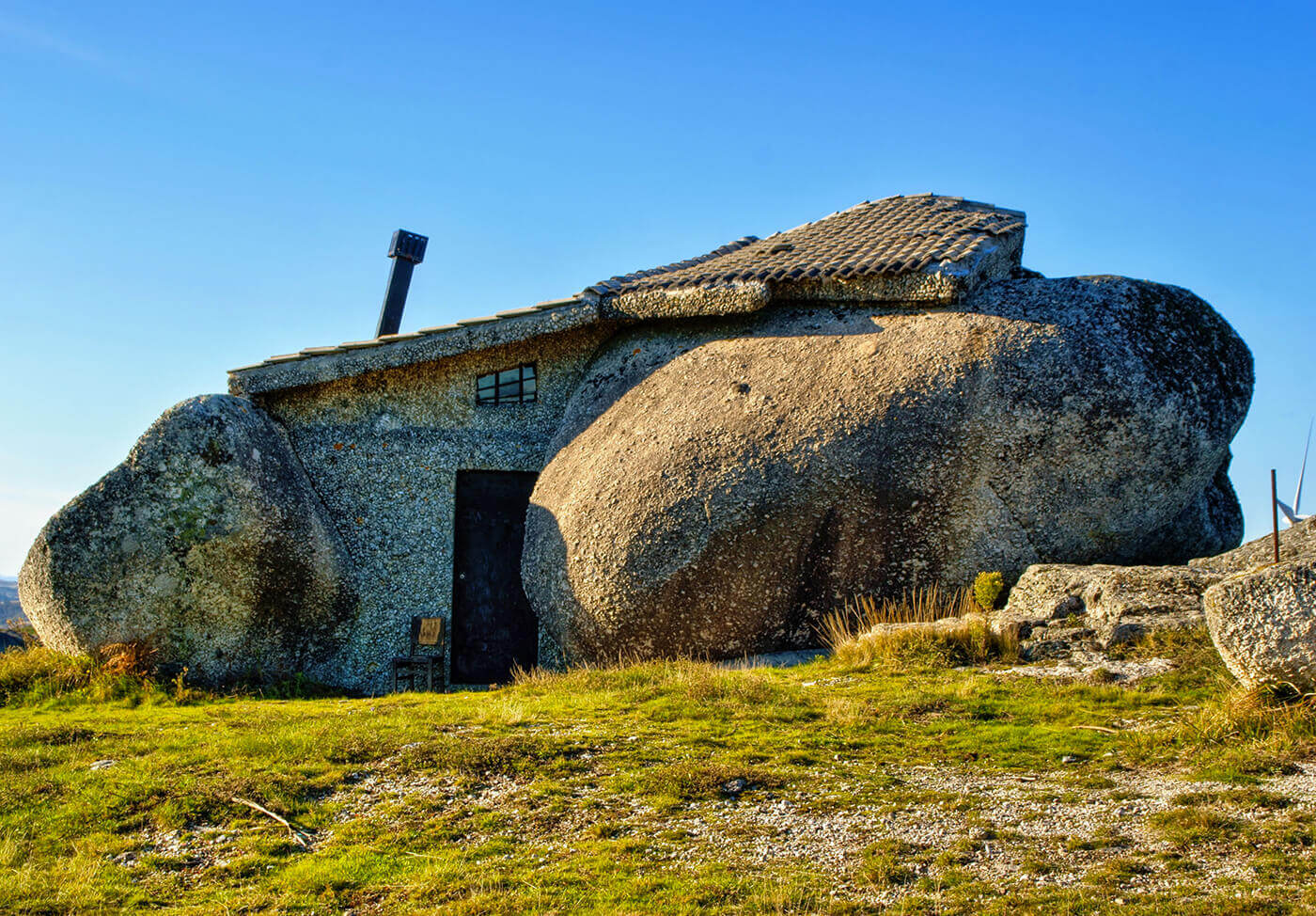
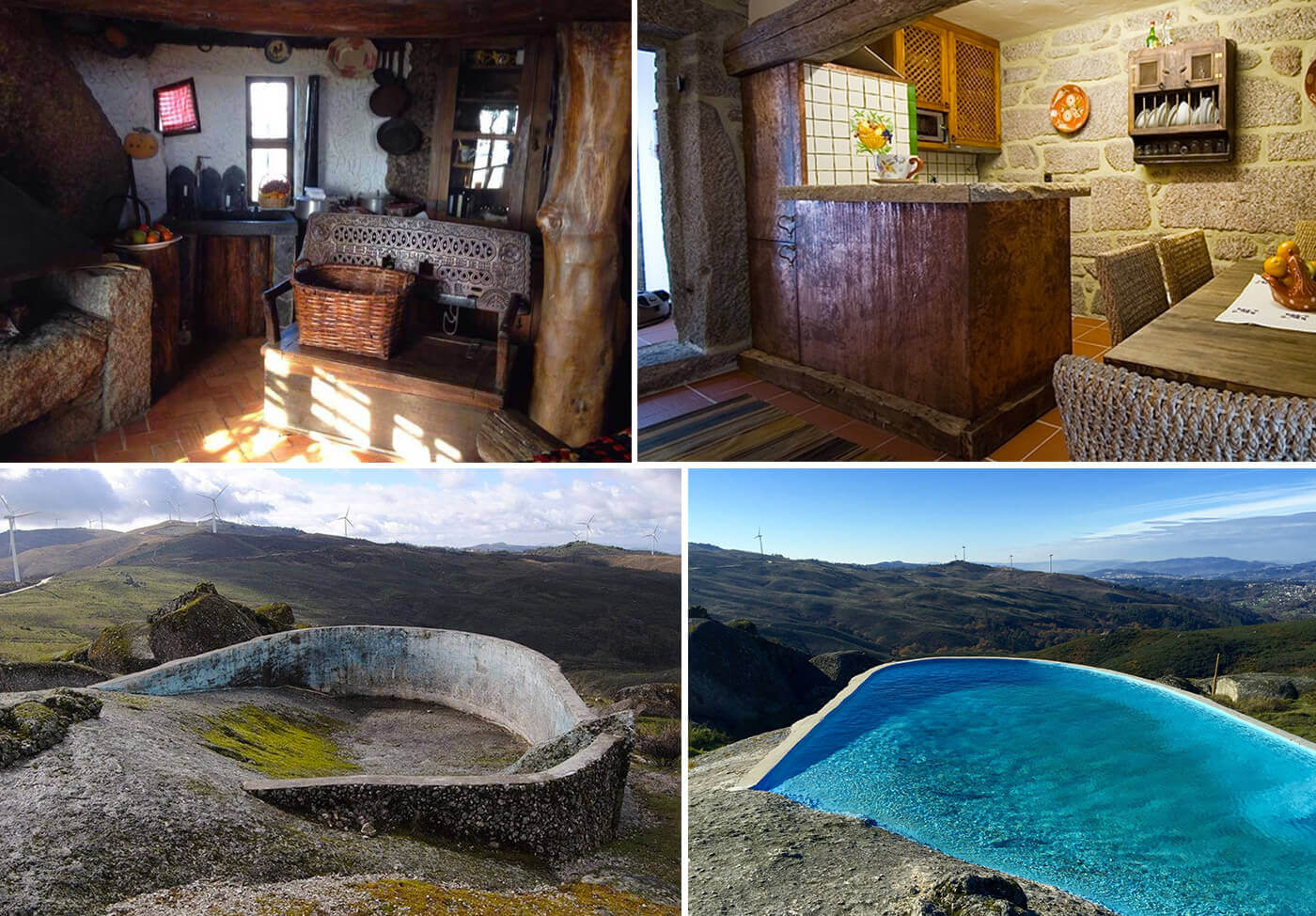
The Extraordinary Stone House In Portugal "Casa do Penedo"

22.10.21

Portugal Masters returns to Algarve


The European Tour has added the Portugal Masters to its 2021 schedule, with the rearranged tournament now set to take place at Dom Pedro Victoria Golf Course, in Vilamoura, from November 4-7.

This will be the 15th consecutive edition of the event which became part of the European Tour in 2007.

The €1.5 million event was originally due to take place at the end of April but was postponed due to travel difficulties caused by the Covid-19 pandemic.

It has now been rescheduled for 4-7 November, replacing the Volvo China Open which, due to the ongoing effects of the pandemic, will be played as a national event only this year and will not be sanctioned by the European Tour.

South African George Coetzee claimed the title when the Portugal Masters was last played in September 2020, finishing two shots clear of Englishman Laurie Canter to secure his fifth European Tour title.

He joined a list of champions that includes Lee Westwood (2009), Shane Lowry (2012) and Pádraig Harrington (2016).

Keith Pelley, Chief Executive of the European Tour, said: “We are delighted to confirm the rescheduled Portugal Masters as we continue to reshape the end of our season following yesterday’s announcement of the Mallorca Golf Open.

Dom Pedro Victoria Golf Course has been a popular venue with our players, and it has produced plenty of drama, so we are very pleased to be able to return for the 15th year in a row. We are grateful to the venue for accommodating us at a busy time of the year and to Turismo de Portugal for their long-term support of this tournament.

“Naturally, it is disappointing we are unable to sanction the Volvo China Open again this year, but we have long-standing relationships with Volvo and the China Golf Association, and we look forward to that event returning to our schedule in 2022.”

Stefano Saviotti, Chairman of Dom Pedro Hotels & Golf Collection “The Portugal Masters is an incredibly important showcase of golf in The Algarve and we are delighted to once again welcome some of the world’s finest golfers to the Dom Pedro Victoria Course.

“After a difficult period, the European Tour's return to our facilities enables us to demonstrate why Vilamoura and Dom Pedro Hotels & Golf Collection has a reputation as one of Europe’s most sought after golf destinations. We look forward to hosting such a prestigious event and crowning the 2021 champion.”

Luis Araújo, President of Turismo de Portugal, said: "The Portugal Masters is of great importance for the tourism sector in Portugal, providing great media exposure of the whole country. It confirms that Portugal continues to be an excellent destination for all golfers, and an international presence in terms of major sporting events. This is a very prestigious competition, and it will be an important moment to showcase the international prestige of our country.”


25.1.21

United Photo Press Photographer, Teresa Ribeiro, Released a Photographic Book

This book by Teresa Ribeiro shows the experience of Intendente car workshops in Lisbon, in an intimate look at these spaces. Old, endangered workshops with many stories to tell ...The book follows a color path. The vivid and intense colors that fill the workshops.


Some photographs in this book are part of the exhibition of the XI Photographic Narratives at Intendente, at Casa Independente, in Largo do Intendente, in Lisbon, from 11.4.2020 to 15.02.2021.

About the series, United Photo Press photographer, Teresa Ribeiro writes:

As part of the edition of Intendente's Photographic Narratives, I toured Intendente car workshops for a few months. I visited a total of nine workshops, of which, for reasons of aesthetic design, only seven are included in this book.

In a neighborhood with such unique characteristics as Intendente, the oldest workshops date from 1947-1956, with the emblematic character that they contribute to our cultural and social history being indelible.

The workshops portrayed are probably the last to survive the irreversible technological advances, the strong market competition brought by the many companies that have been appearing in the periphery, and the services offered by brand groups. They have also survived the various economic crises over the past six decades and, more recently, the effects of an unexpected global pandemic.

The workers I spoke with dedicated their entire lives to improving their craft, always in the sense of finding new solutions and adapting their techniques to the needs of customers. Men who are creators of gadgets and gadgets that so often resemble real pieces of art, worthy of a museum.

In the larger workshops I found teams that employed up to twenty workers: mechanics, sheet metal workers, painters, washers, petrol workers, night guards, apart from apprentices and helpers.

On many occasions, especially in days gone by, workshops have held a special place in supporting the community living in the old neighborhood. “People were helped and the workshop was the salvation of many” - someone told me. Many residents deposited their house keys on a large keyring that was kept by the workshop, in a gesture of total neighborhood trust. They say that some even today come to fetch water from jerricans, leaving here grateful and with an open smile.

Now you no longer breathe the polluted air from the exhaust pipes, nor do you breathe in the aroma of hot oil. Times have changed a lot. For some, work has become scarce and several of the workshops are now garages for collecting taxis, vans or electric tuk-tuks.

The workers in these workshops are somewhat elusive men, almost always busy with their tasks and countless commitments. But, on better and less busy days, they are willing to share old memories and like to tell their stories. Stories from your workshops that are also the stories of your lives.

Whoever listens to them.

The work also includes a short story by Tiago Salazar, of which I transcribe a part:
The sickle, hammer and stringer
Every step has a weight and a dimension. When I joined the party (PCP) I received several warnings. (…)
The mechanic António Chiquita is in his garage Manique like Da Vinci for the sketches of flying devices.
I can say this by proving it.
One day I entered the Manique garage with a presumed hydraulic breakdown. I called Master Chiquita and told him about my suspicions. "Let's hear it," he said.
He then leaned over the bonnet and asked for a slight acceleration. “I must tell you that you are being too abrupt with the brakes. The problem is with the injector ”.
I heard the diagnosis, surprised by the certainty of what was said. The master always keeps a notebook in his pocket and a pencil behind his ear. “I make you a drawing” and he started doodling “the soul of the car”. “You want a car to last, so take care of it carefully and don't limit yourself to cleaning”.
My first car was a Datsun 1200 from 1972. DN on the license plate like the newspaper where I had sat as a trainee.
I bought it with the first salary from Raul Esperto, a mechanic and car driver who had paid for the competition. I went to Ponte de Sôr at Rodoviária Nacional and entered the workshop with eyes shining. Datsun was in the elevator tuning. I snuck into the silo's coffee shop and did more to learn than my father's basic lessons, between watching oil and tire pressure, steering play and the state of the pads.
Appreciating an engine was then as still today as a donkey looking at a palace. I went for a walk with Raul Smart at the wheel, explaining the science of rear traction to me.
(…)
There were many trips to Ponte de Sôr to have the hands, eyes and ears of the Smart to take care of Datsun. Until the day when like all lives everything ends. I came back from another review, with inflated tires and a cracking sun, going all the way along the curves of the dam when a patego entered the highway nonstop and almost took me to the Hereafter.
I just remember whirling in the air and landing in a ditch, the steering wheel cracked in half and half of the body outside the window. For unfathomable accidents, seconds before making the turn I opened the window on my side wide and spit out instead of being crushed between the roof and the seats.
The patego survived the ashesiness and fright and became my reader today. ”


Teresa Ribeiro, Intendente Workshops, 2020

Some photographs in this series are part of the exhibition of the XI Photographic Narratives at Intendente, which takes place in Lisbon, at Casa Independente, in Largo do Intendente, from November 4, 2020 to February 15, 2021 (in the Fascination of Photography here ).

Teresa Ribeiro . Someone who, in life as in the profession, as a psychotherapist, seeks to reconnect what never existed apart: body and mind.

Photography has been present in your life for many years, celebrating sunny days and saving you from storms and storms.

In 1983/84 he carried out an Advanced Training at the Portuguese Photography Institute (IPF). In 1994, he attended the photography course at Ar.Co. He developed several documentary photographic projects under the guidance of Nelson D 'Aires, in the Photographic Expression Movement (MEF).

He developed several creative projects and collaborations: In the Escr-Leitura: “construction of a video document”, with Pedro Sena Nunes (Lisbon, 2009); Participated in NextArt with the installation “Is there a Diva in each one of us?” and the installation “Abrigo para sem Abrigo”, in Jardim do Príncipe Real (Lisbon, 2010); Project “Uma Imagem Solidária”, with the Portuguese Telecommunications Foundation (Lisbon, 2018); at CROMA - Collective Exhibition of Photography Instagram (Oeiras, 2017); Collective Photography Exhibition at the Atmosfera M Gallery (Lisbon, 2018); Artistic Residency coordinated by photographer Pauliana Valente Pimentel (Algarve, 2020); International Collective Exhibition “Celebration of the 30 Years of United Photo Press Creative Artists (UPP)”, at the Museu da Eletricidade (Funchal, 2020); Photographic Narratives of the Intendente (Lisbon, 2020).


You can see other works by Teresa Ribeiro at "Fascínio da Fotografia", here .

To purchase the book, please contact the author teresaribeiro08@gmail.com .
Teresa Ribeiro - Oficinas do Intendente
Photography: Teresa Ribeiro / Short story: Tiago Salazar / Graphic Design: Teresa Ribeiro and Jorge Coimbra / Cover: Catarina Marques / Author's Edition / December. 2020 / Portuguese and English / 26.1 x 21.1 cm / 60 pp / Brochure / 100 eg, numbered and signed / Softcover: Creator Gloss 350gr; core: Creator Gloss 170gr / Printing: digital laser / Stitched notebooks / ISBN: 9789893313077

7.1.21

Luis Martelo, of Taunton, wins bronze at Global Music Awards

The trumpeter Luís Martelo, based in Taunton, has been awarded Bronze in the Global Music Awards which is the equivalent to the Grammys for independent musicians.


Trumpet player Luis Martelo has scooped a top accolade at a major international awards ceremony. Luís Martelo has this week won a bronze medal at the Global Music Awards in the United States, equivalent to the Grammys for independent musicians.

Luís was nominated for his solo show Chorando Saudade in two categories in the worldwide contest - best Latin jazz soloist and best instrumentalist, receiving bronze in the latter.

He has carved out a successful career in Portugal, where he was a band player in the army, and in bands and orchestras in the United Kingdom.

He has recorded for several well-known artists in studio sessions and a number of soundtracks for Hollywood films such as Uber Time.

He has performed internationally as a soloist, was nominated for the best theatre musician 2020 by the Cinderella Awards and has been invited to play and teach in masterclasses and international festivals including the VGBRASS festival in Croatia in June this year.

About Martelo

Award-nominated Trumpeter Luís Martelo studied trumpet at the Conservatoire of Music in Coimbra, The Trinity College of Music - London, and at the University of Évora (Classical Music) with the Teacher Pedro Monteiro.

A former Army trumpet player in Portugal, Martelo has played in the Symphonic Army Band and The Military Band of Évora.

Nominated for the Best Theatre Musicians 2019/2020 by the Cinderella Awards, Martelo has played in bands and orchestras all around Portugal, from north to south; from big bands to classical orchestras and concert bands; as principal Trumpet, soloist and guest artist, including:
Banda Filármonica Lyra Barcoucense
Banda de Mourão
Banda de S.João da Madeira
Banda de Portel
Banda de Nsa Sra de Machede
Big Band da Vidigueira
Banda dos Bombeiros Voluntários de Alvito
The Magic Jazz Band (Co-founder)
Banda da Pampilhosa do Botão
Orquestra clássica da Universidade de Évora
and many more.

Alongside his busy performance schedule, Martelo has completed a number of masterclasses and courses, such as:
The 1st and 2nd Brass Masterclass in Taveiro (Portugal)
The 1st Chamber Music course in Fermentelos (Portugal)
The Advanced Wind Band Masterclass of John Packer in Taunton
The Advanced Wind Band Masterclass 2019 and 2020 in Wellington

And in 2019, completed a year-long Online Course with the Brazilian Trumpeter and international Soloist Flávio Gabriel.

During his extensive musical education & career, Martelo has also been taught by a multitude of illustrious brass musicians, notably: Fernando Vidal (Trumpet, Ex Portuguese Army principal trumpeter and conductor), Pedro Monteiro (Trumpet, Gulbenkian Orchestra and Portuguese Symphony Orchestra, Hot Club Portugal-Big Band), Sergei Nakariakov (One of the best trumpet players ever, Russia/Israel), Lechner (Trumpet, international Soloist), Louis Dowdeswel (Yamaha Artist, Lead Player), and Paulo Viveiro (Latin Grammy Winner 2 times, international trumpet soloist, Seu Jorge trumpeter, Brazil).

Now based in England, Martelo is the Principal/Soloist Trumpet of the Taunton Concert Band, Lead Trumpet of the Deane Big Band, Lead trumpet of the Bertie's Big Band, Solo Trumpet of the Postmodern Jukebox UK, Trumpet and Founder of "Lady and the Tramps" and one of the most sought after freelance trumpeters for studio sessions.

Martelo has recorded for many Band’s tracks and albums, and made horn section arrangements.

Recently, he has recorded with Postmodern Jukebox UK, recorded the new single from the band Nederveen called Father, and the new single from the Irish Singer Marie Therese, from Dublin.

Alongside these achievements, Martelo has also recorded for many other projects and live virtual shows as a guest as the Gignify.tv Classical music virtual Festival 2020 and was invited by Philip Schartz, the principal Trumpet of the BBC National Orchestra of Wales, to join the orchestra as a freelance from now on!

Whilst in England, Martelo has already played Lead Trumpet with Groove-a-Licious (funk/soul band), 1st trumpet/soloist with the Wednesday Classical Orchestra,Lead trumpet/soloist with the Tone Big Band, 1st Trumpet with the Somerset County Orchestra, Trumpet with the Big Noise Street Band, freelance with The Motown Gold Band from Earcandy (Award-winning Band), the Regal Theatre pit orchestra, has played two times live at the BBC Radio, played as a guest the Rite of Spring from Stravinsky with the Brunel Symphony orchestra, and The Golden Coast Big Band from North Devon

Notably, Martelo was declared the winner of the PTrumpet HyTech, offered by Warwick Music UK - 2019.

Finally, Martelo teaches Trumpet and works in his music studio where he produces, composes and records. Recently Luis brought to the market his first trumpet method and is finishing his new Trumpet album called "Latin Soul" with the British producer Martin Selwood.

Carlos Alves de Sousa

29.7.20

The Incredible Clouds around Madeira Islands

Satellite: Terra - Date Acquired: 7/16/2020 - Bands Used: 1,4,3
Image Credit: MODIS Land Rapid Response Team, NASA GSFC

Portugal’s Madeira Island, sometimes called “the island of eternal springtime”, rises abruptly out of the North Atlantic about 300 miles (483 km) off the coast of Morocco. Madeira’s tall, blunt mountain peaks are actually the crest of a massive submerged shield volcano which has been created over millennia, starting in the Miocene Epoch and continuing until roughly 700,000 years ago.

The island’s location not only ensures a mild, spring-like climate but the prevailing north-east trade winds also guarantee near-constant breezes and frequent cloud cover. When the skies are cloudy, the turbulent trails of the winds’ movement around the mountainous island creates twists and twirls in the clouds.

On July 16, 2020, the Moderate Resolution Imaging Spectroradiometer (MODIS) on board NASA’s Terra satellite acquired a true-color image of snake-like swirls of white cloud twisting behind Madeira Island.

This trail of cloud is the visible part of a wind pattern called von Kármán vortices. Such vortices can form nearly anywhere that fluid flow (such as a blowing mass of air) is disturbed by a solid object. In this case, winds blowing across the ocean are disturbed by a small island (Madeira Island) poking high above the surface of the North Atlantic.

The air mass, and clouds moving with it, blows around instead of over the island. This movement sets up a spinning pattern in the air behind the island, with one side blowing clockwise while the other spins counter-clockwise. In this case, relatively low wind speed gives a moderate disturbance of the wind and cloud behind the island, leaving a snake-like trail of cloud above the blue waters of the North Atlantic.

13.5.20

Interview with United Photo Press member, Luís Romão from All Residence, Portugal

Sharing experiences and best practises is a key element in professional growth. So, in a moment so unique that the market is living, UCI Portugal brings you the testimony of United Photo Press member Luís Romão, from All Residence, a real estate partner specialized in international buyers.

UCI: Corona virus imposed significant changes to everyone’s life. What has changed in the way you do business?

LR: This question is very technical since it has to do with the virtual tools that we need to use to continue promoting our products and interact with our customers. So, we are now more aware of the importance of these digital and virtual tools and platforms that allow us to work remotely.

In our market, which works with a very significant percentage of customers who live in other countries or in other areas of our country, it was already a certainty that we were unable to operate in such a global world without these mechanisms but now they are absolutely essential.

UCI: What was the impact of this situation for the international buyers and their willingness to invest in Algarve’s real estate market?

LR: The impact was immense, considering customers’ lack of mobility and assuming that no one buys a property without seeing it.

We felt the retraction of various customers who decided to postpone their decisions but in customers who had already assumed the intention to buy, the processes were maintained, and we are in the finalization phase.

I think the problem here is more logistical and, in some percentage, the investing customers, who will wait to see which trend prices will follow and try to buy better.

There are many doubts and we see economists defending the idea that Covid-19 will have the same impact on the real estate sector that had the crisis of 2008 and we have other experts defending the idea that after this more complicated phase, we will have some resumes that will balance the market.

I do not intend to do futurology but even if the impact is very significant, our area in particular (Algarve) will always have a greater balance due to its characteristics and a very international market.

UCI: What are you doing to prepare your business for the after this current situation?

LR: Our action after this crisis will not differ much from what we were already doing and once again I speak of investing in digital tools that can bring us closer to customers and provide a service of proximity and excellence. It was in this sustained way that we grew and that allows us to regularly do several deals with the same clients. One satisfied client represents several clients.

Today we have a very diversified offer with a wide portfolio of new or under construction properties, close to the sea or with a sea view that is the most sought-after product by international customers. I think we are well positioned to do our part to fight the problem.

UCI: Do you think that, after this, the real estate market will be the same? What will change for the international byers?

LR: I am not naive enough to believe that after this everything will be the same! However, I think that the recovery of our market in Algarve will be faster than anywhere else in the country.

The reasons that lead thousands of people from different parts of the world to Algarve and buy properties here will not disappear and at most they may even be able to assert themselves even more if the international panorama is worse than ours.

After the crisis, we will continue to welcome people, we will continue to have the same climate and geography, the same coast and the same gastronomy. Everything will be the same as yesterday. The worst that can happen is that prices go down and the customer can buy better or more.

Luis Romão is a United Photo Press member
Interview originally published at UCI Portugal

27.4.20

When Stanley Kubrick photographed a european country planted by the sea, named Portugal

Stanley Kubrick, Self Portrait

Stanley Kubrick became a renowned filmmaker in the course of the 20th century, bringing together successes after successes in the seventh art. However, his appetite for audiovisual did not immediately go to the cinema, unfolding his potential in photography. In fact, one of the characteristics by which the North American became more famous was, precisely, the avant-garde and unique photography of his films.

It all started at the age of 17, in 1939, when he became an employee of the magazine “Look”, founded two years before and in circulation until 1971, being the great rival of “Life” then. Initially, he sought to portray the urban and metropolitan dynamics of New York, adding to his repertoire hundreds of reports and respective histories captured by the lens of his machine.

However, his first photograph would only be printed in 1945, which caused Kubrick to launch himself on this path of unique works, where he sought the spontaneity of what he portrayed. He said that it was there that the validity and expressiveness of photography resided on the aesthetic plane, and that was what he did until the year 1950, when he definitively turned to cinema. It was during this period that, at the age of 20, in a hot August of 1948, Kubrick would travel to Portugal for (more) a photographic report.


The purpose of his trip was to, at the request of his editors, photograph the way Portugal had escaped the apparatus of World War II unscathed. They wanted great tourist attractions to be photographed for those who read the magazine assiduously, albeit in a systematic and naturalistic way, which was part of their editorial line. Kubrick seeks, however, to capture the most profound moments of everyday life in communities, both urban and villagers, both older and younger. Despite the fact that the resources were not evolved, what they allowed to do before the Portuguese scope was acclaimed by the editors of “Look”.


Front page of “Look” magazine and the report by Stanley Kubrick.

This is because the fascination of the future filmmaker was not limited to what his countrymen knew about the country. It was in Nazaré, a village marked by fishing communities, that it unfolded and that sought to collect as many testimonies about its day-to-day. Not only the places, but also the utensils and people, their faces, their faces, their costume (black, in the case of women). Some were taken to international exhibitions, which marked their curriculum at Look, among the twelve thousand negatives that were identified as their authorship; in addition to indirectly inviting other renowned photographers, such as Henri Cartier-Bresson or Edouard Boubat, to make Portugal the target of their objectives.

Thus, Portugal became a reference that Kubrick kept in mind throughout his career, so much so that one of the projects that left pending was a film about the Portuguese presence in the East in the 16th and 17th centuries. His artistic experience opened up his horizons, but it is certain that one of the points of passage of his route was Portugal, immortalized by the photographs that well illustrate and report his identity. A Portugal that, unknown to most of those who read “Look” on the other side of the Atlantic, told the stories that faithfully translated a (perhaps) forgotten and neglected depth.


The Stanley Kubrick photo gallery about Portugal


12.8.16

3 things we learned as Portugal beat France 1-0 in extra time to win Euro 2016

No amount of misfortune was going to stop Portugal from lifting the European Championship trophy.

ither home field advantage for France nor an early injury to Cristiano Ronaldo were enough to hold Portugal back, and they emerged from the Euro 2016 final triumphant, 1-0 winners in extra time over France. Thanks to Eder's goal in the second half of extra time, Portugal are the champions of Europe, and France are left asking themselves what went wrong.

It was clear very early in the match that it would be played with high energy, with France screaming forward chasing an early goal and Portugal flowing all over the pitch trying to blunt that attack and launch counters of their own. The quality of the play on the field was a little shaky in the opening minutes, but as things started to settle down you could see just how hard both teams were willing to fight to be the ones celebrating at the end of the night.

That fight lead to one poor bit of luck, though -- an eighth minute challenge from Dimitri Payet caught Cristiano Ronaldo awkwardly, leaving the Portuguese star clutching his left knee in pain and clearly in a fair amount of distress. He'd try to run off the pain, but it was clear that Ronaldo was nowhere near 100%, and after coming off twice for treatment he finally had to be stretchered off and out of the match just 25 minutes into the game.

It was a bitter blow for Portugal to lose their biggest star and best player so early, but to their credit they didn't back down for an instant. Ricardo Quaresma came in hoping to make the same kind of impact he's made off the bench in previous Euro matches. Portugal also worked to slow the game back down after losing Ronaldo, knowing that his absence would make it harder to keep pace with France as they'd been trying to early in the match. That tactic worked, although it was just as hard to watch as most of Portugal's play earlier in the tournament -- but it got them to halftime with the score still at 0-0, giving them a chance to readjust and find a way into the match without Ronaldo.

The second half started playing a little bit faster, but it wasn't until France brought Kingsley Coman off the bench that things really started to kick into a higher gear. France finally started to look dangerous in attack again, and that in turn forced Portugal to get aggressive getting forward to try to relieve the pressure and cause some danger to France as well. They also made perhaps the most attacking substitution they've made all tournament long, taking out wonderkid Renato Sanches from midfield and putting on a striker in his place in Eder.

It was another substitute, Andre-Pierre Gignac, who nearly won it for France in second half stoppage time, getting just a moment's freedom in the penalty area by juking Pepe onto the ground, but his shot cracked off the base of the goalpost, and Antoine Griezmann couldn't get to the rebound fast enough to put it away. That meant the match went to extra time, for which Portugal could have been playing ever since Ronaldo was forced out with his injury.

The first half of extra time passed fairly quietly -- there were chances for both teams, but nothing found the back of the net. Portugal had their best chance to score of the match so far when a free kick from Raphael Guerreiro smacked off the bottom of the bar. That wouldn't go in, but only moments later Eder scored one of the best goals of the tournament, hitting a low shot from outside the box that blasted past Hugo Lloris and into the back of the net to give Portugal the lead.


The stadium exploded in shock as the French fans watched their team go behind with so little time left to play, while the Portugal bench exploded in joy. Even an injured Cristiano Ronaldo was on his feet celebrating, and there was no question of just how incredibly important that goal was to the Portuguese players and fans -- and how devastating it was to anyone wearing French colors.

France: Hugo Lloris; Bacary Sagna, Laurent Koscielny, Samuel Umtiti, Patrice Evra; Blaise Matuidi, Paul Pogba; Moussa Sissoko (Anthony Martial 110'), Antoine Griezmann, Dimitri Payet (Kingsley Coman 57'); Olivier Giroud (Andre-Pierre Gignac 78')

Goals: None

Portugal: Rui Patricio; Cedric, Pepe, Jose Fonte, Raphael Guerreiro; William Carvalho, Adrien Silva (Joao Moutinho 66'), Renato Sanches (Eder 79'), Joao Mario; Nani, Cristiano Ronaldo (Ricardo Quaresma 25')

Goal: Eder (109')
Three things we learned
France reacted badly to Ronaldo leaving the match

When Cristiano Ronaldo went down, France had an opportunity to go for the throat. Portugal were scattered and their morale was shaken, and a hard push from France could have taken them further off balance and seen them score a goal. For some reason, though, that push didn't come, and Portugal got the chance they needed to catch their breath and gather themselves. It was a huge wasted opportunity for the French, and despite being an injury that should have helped them, it seemed to suck the energy and momentum out of the hosts instead, as though not facing Ronaldo didn't have the same motivation as otherwise. Letting that opportunity slip by is a mistake France will rue for a long, long time.

Kingsley Coman was almost the perfect substitution

Of course, one change can make all the difference, and for France that was Kingsley Coman. Just 20 years old, he's coming off a fantastic season with Bayern Munich and had been excellent for France earlier in the tournament. When he came on in the second half, he brought a huge spark of energy back into the side and quickly helped drive several attacks that gave France better scoring chances than they'd had all night long. Using Coman's vitality to replace Dimitri Payet, who had been a very low-energy player for most of the match, was absolutely huge for France and instantly made them a much, much more dangerous team. Coman wouldn't prove to be enough for France to win, of course, but that's not his fault -- he came in, did his job, and did it better than any other French player on the day.

Renato Sanches is great, but he's still a teenager

Portugal's Sanches has been one of the unquestioned breakout stars of the tournament, scoring a huge goal for his country against Poland and generally being one of their top performers despite being just 18 years old. In the final, though, there were times when it was obvious just how young he is, looking very much the part of a teenager in a major tournament final -- overawed, nervous and not playing as well as he's capable of.

Sanches was a borderline liability in possession and going forward early in the match, leading Fernando Santos to make him the deepest midfielder on the pitch, swapping places with William Carvalho. That helped re-settle Sanches, and we saw him play better again, more like he had earlier in the tournament -- but there were still a handful of awestruck moments when he just wasn't quite as sharp as we're used to seeing. It was little surprise to see him taken off for an extra attacker late in the second half, and while that's certainly a disappointing end to the tournament for Sanches, it's something he can learn from and use to become an even better player down the line.