|
Bathers enjoy the warm volcanic hot springs of the Blue Lagoon in Grindavik, Iceland, March 6, 2020.
|
As the coronavirus pandemic surges worldwide, each piece of data counts in the fight against the deadly pathogen.
But significant findings about the contagious disease are coming from an unlikely place: Iceland, the tiny Island state with a population of just 364,000 people, where authorities are testing large numbers of the population – without imposing any lockdown or curfew.
The country didn’t just manage to flatten the curve; it virtually eliminated it.
On the morning of Friday, February 28th, Ævar Pálmi Pálmason, a detective with the Reykjavík police department, was summoned by his boss. Iceland did not yet have a confirmed case of covid-19, but the country’s Department of Civil Protection and Emergency Management wanted to be prepared. Suppose somebody tested positive? A team would be needed to track down everyone with whom that person had been in contact. Pálmason’s supervisor told him he was going to lead that team.
“We were just talking: ‘If and when the first case happens—it could be this week, we just don’t know,’ ” Pálmason recalled. “And then, two hours later, we got the call.” A man who’d recently been skiing in the Dolomites had become the country’s first known coronavirus patient.
Two other cops, two nurses, and a criminologist had been assigned to Pálmason’s team. “With our detective techniques to find people, we began to gather some information from the case,” Pálmason told me. The man, the team learned, had been back in Iceland for several days before he’d been diagnosed. During that time, he’d done all the things people normally do—gone to work, met with colleagues, run errands.
Anyone who’d spent more than fifteen minutes near the man in the days before he’d experienced his first symptoms was considered potentially infected. (“Near” was defined as within a radius of two metres, or just over six feet.) The team came up with a list of fifty-six names. By midnight, all fifty-six contacts had been located and ordered to quarantine themselves for fourteen days.
The first case was followed by three more cases, then by six, and then by an onslaught. By mid-March, confirmed covid cases in Iceland were increasing at a rate of sixty, seventy, even a hundred a day. As a proportion of the country’s population, this was far faster than the rate at which cases in the United States were growing. The number of people the tracing team was tracking down, meanwhile, was rising even more quickly. An infected person might have been near five other people, or fifty-six, or more. One young woman was so active before she tested positive—going to classes, rehearsing a play, attending choir practice—that her contacts numbered close to two hundred. All were sent into quarantine.
The tracing team, too, kept growing, until it had fifty-two members. They worked in shifts out of conference rooms in a Reykjavík hotel that had closed for lack of tourists. To find people who had been exposed, team members scanned airplane manifests and security-camera footage. They tried to pinpoint who was sitting next to whom on buses and in lecture halls. One man who fell ill had recently attended a concert. The only person he remembered having had contact with while there was his wife. But the tracing team did some sleuthing and found that after the concert there had been a reception.
“In this gathering, people were hugging, and eating from the same trays,” Pálmason told me. “So the decision was made—all of them go into quarantine.” If you were returning to Iceland from overseas, you also got a call: put yourself in quarantine. At the same time, the country was aggressively testing for the virus—on a per-capita basis, at the highest rate in the world.
Iceland never imposed a lockdown. Only a few types of businesses—night clubs and hair salons, for example—were ever ordered closed. Hardly anyone in Reykjavík wears a mask. And yet, by mid-May, when I went to talk to Pálmason, the tracing team had almost no one left to track. During the previous week, in all of Iceland, only two new coronavirus cases had been confirmed. The country hadn’t just managed to flatten the curve; it had, it seemed, virtually eliminated it.
Ihad initially planned to go to Iceland in March, for a story unconnected to the coronavirus. Suddenly, the trip was called off. The European Union was barring Americans from entering, and the United States was barring Europeans. Flights were being cancelled. There didn’t seem any way to resurrect the trip, until it occurred to me: what if I wrote about Iceland’s response to covid-19?
I looked online and learned that all those entering the country were required to submit a form outlining how they planned to quarantine for two weeks. I applied to the Ministry for Foreign Affairs for an exemption as a journalist. The answer came back: no.
I did some e-mailing and phoning around. Iceland, which has three hundred and sixty-five thousand residents—about half the population of Denver—is a famously tight-knit country. Almost everyone, quite literally, is related to everyone else, and if two people want to know how exactly their families are intertwined they can consult a genealogy database run by an Icelandic biotech firm called deCODE Genetics. Iceland was able to test so many people because, at the height of the outbreak, deCODE turned its state-of-the-art facilities over to screening for the virus. I got in touch with the head of the firm, Kári Stefánsson, a neurologist and a national celebrity. He told me that he would work things out.
A few days later, the no became a yes, with qualifications. I’d have to enter a “modified” quarantine for journalists. The list of rules ran four single-spaced pages and included provisos on how to use—or, really, not use—public rest rooms. It laid out a half-dozen scenarios—“interview of a public figure in a private company setting,” “interview of any person in a private setting out of doors”—with detailed instructions for how each one should be handled. An “interview of a public servant in the workplace” was allowed, but with numerous conditions. (“The director of the public entity must be informed and assent to the interview even if they are not the interviewee. . . . The journalist should not explore the site, even with a guide, but only visit the space designated for the interview.”)
Icelandair had, by this time, suspended service from the United States, except for sporadic flights out of Boston. The day I left, a Saturday, the international terminal at Logan was as solemn and silent as a mausoleum. Not a single ticket desk was open. On the plane, I counted fourteen seats occupied, out of nearly two hundred. I spoke briefly with a woman seated a few rows in front of me. She was going to visit her fiancé, an Icelandic soccer player, and was unhappy that they would be spending the first two weeks of her stay in separate apartments.
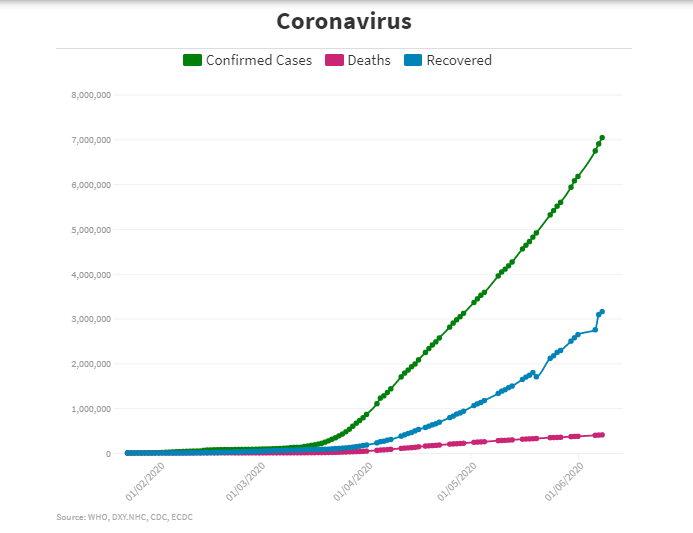 |
Icelandic authorities claimed they had tested a higher proportion of the citizens than anywhere else in the world. “Iceland’s population puts it in the unique position of having very high testing capabilities with help from the Icelandic medical research company deCode Genetics, who are offering to perform large scale testing,” Guðnason said to Buzzfeed. “This data can also become a valuable resource for scientific studies of the virus in the future,” he added.
|
The in-flight magazine, which apparently hadn’t been replaced for several months, was filled with pictures of vacationers in the snow. It read like an illuminated manuscript—a relic from another era. One of the crew members told me that he and almost all of his colleagues, including the pilots, had been given three months’ notice; they were working only occasional flights. Despite the generalized gloom, it was thrilling to be going somewhere; for the previous eight weeks, the farthest I’d travelled was to the liquor store.
When we landed at Keflavík, Iceland’s international airport, I faced my first crisis of conscience. Among the many proscribed activities for me, I knew, was shopping. But it was nearly 10 p.m., and Icelandair had cancelled the flight’s meal service. Was I allowed into the duty-free store? I decided that I was. Dinner that night was beer and licorice.
He next day, Stefánsson offered to pick me up at my hotel. (Crisis No. 2: “Even those being interviewed should maintain 2 metres distance from the journalist in quarantine as much as possible.”) As soon as I got into his Porsche, he asked me where I was from. I said western Massachusetts. “Massachusetts is probably the most boring place on earth,” he declared.
Stefánsson, who is seventy-one, is tall and broad-shouldered, with white hair and a white, Hemingwayesque beard. For most of the eighties and nineties, he lived in the U.S., teaching first at the University of Chicago and then at Harvard. He returned to Iceland with the notion of using the country’s small, inbred population to study the connection between disease and genetic variation. This was before the human genome had been fully sequenced, and Stefánsson was sailing into uncharted waters. He founded deCODE, and it grew into a large company, which, like much of the rest of Iceland, went bankrupt following the financial crisis of 2008. DeCODE is now owned by an American biotech company, Amgen; its offices are in a sleek, metal-clad building not far from Reykjavík’s municipal airport. Refrigerated storage rooms in the basement hold blood samples from a hundred and eighty thousand Icelanders—roughly one of every two people in the country.
Stefánsson told me that he’d decided to get involved in covid-19 research a few days after Iceland’s first case was announced. He was driving to his office one morning when he heard on the radio an estimate of the virus’s fatality rate. “They predicted that 3.4 per cent of those who were infected would die,” Stefánsson recalled. “And I couldn’t understand how they could calculate the death rate, not knowing the distribution of the virus in society. So when I came to work I sat down with my colleagues. And I told them we should offer to screen the general population in Iceland.”
Iceland’s university hospital was already testing people who had symptoms of covid-19. But by testing people who had no symptoms, or only very mild ones, deCODE picked up many cases that otherwise would have been missed. These cases, too, were referred to the tracing team. By May 17th, Iceland had tested 15.5 per cent of its population for the virus. In the U.S., the figure was 3.4 per cent.
Meanwhile, deCODE was also sequencing the virus from every Icelander whose test had come back positive. As the virus is passed from person to person, it picks up random mutations. By analyzing these, geneticists can map the disease’s spread. At the beginning of the outbreak, travellers returning to Iceland from the Italian Alps seemed to be the primary source of infections. But researchers at deCODE found that, while attention had been focussed on Italy, the virus had been quietly slipping into the country from several other nations, including Britain. Travellers from the West Coast of the U.S. had brought in one strain, and travellers from the East Coast another. The East Coast strain had been imported to America from Italy or Austria, then exported back to Europe.
By sequencing the virus from every person infected, researchers at deCODE could also make inferences about how it had spread. “One of the very interesting things is that, in all our data, there are only two examples where a child infected a parent,” Stefánsson told me. “But there are lots of examples where parents infected children.”
Stefánsson is a frequent critic of the Icelandic government. He often fires off opinion pieces to newspapers, on subjects ranging from the management of fisheries to hospital financing. (A few years ago, he circulated a petition demanding that the government spend more on health care, and a third of the country’s adult population signed it.) At any given moment, he’s almost sure to be wrangling with one ministry or another; in March, when the Icelandic Data Protection Authority said that it couldn’t rule immediately on a request from deCODE, Stefánsson issued a lengthy denunciation on Facebook. But, when I asked Stefánsson about the Icelandic government’s response to covid-19, he had only kind words.
“This was done in an extremely balanced way,” he said at one point. “And I think the authorities did pretty much everything right.” At another point, he told me, “The remarkable thing in this whole affair is that in Iceland it has been run entirely by the public-health authorities. They came up with the plan, and they just instituted it. And we were fortunate that our politicians managed to control themselves.”
In Reykjavík, I stayed at one of the few hotels that were open, in an Art Deco building not far from the parliament. One evening, upon returning to the hotel, I found a film crew and a jumble of equipment blocking the hallway. In front of the cameras stood two middle-aged men and a woman, all dressed in white terry-cloth bathrobes. Though I’d been in Iceland for only two days, I recognized them. They were the team who had guided Iceland’s response to covid-19: the country’s director of emergency management, Víðir Reynisson; its chief epidemiologist, Þórólfur Guðnason; and its director of health, Alma Möller.
Reynisson, Guðnason, and Möller worked together out of an improvised covid command center in the offices of the Icelandic Coast Guard. Through March, April, and much of May, they gave a joint briefing every day at 2 p.m., at which they discussed, matter-of-factly, what they knew and what they didn’t. Sometimes they invited guests, such as a psychologist who spoke about how to talk to kids about the pandemic. On occasion, they warned about misinformation—for instance, the potentially fatal consequences of attempting to fight the virus by drinking bleach. Three-quarters of Icelanders tuned in at some point. Reynisson, Guðnason, and Möller became so well known that they were referred to simply as the “trio,” or the “tripod,” or, as one person put it to me, the “holy trinity.”
That evening, the holy trinity had put on bathrobes to attempt another miraculous rescue. About forty per cent of Iceland’s export revenue comes from tourism. To make up for all the Americans and English and Germans who would be staying home because of covid-19, the government had commissioned a commercial to encourage Icelanders to travel domestically over the summer. Reynisson, Guðnason, and Möller went into separate rooms—Reynisson on one side of the hall, the two others on the opposite side. At the count of þrír, tveir, einn, they were supposed to open their doors, bedroom-farce style. Then Reynisson was to look into the camera and deliver the punch line: “We’ll come along, just in case.” (Each time he did so, the camera crew cracked up; I had to assume it was funnier in Icelandic.) As one take followed another, I tried to picture the director of the National Institute of Allergy and Infectious Diseases, Anthony Fauci; the head of the Centers for Disease Control and Prevention, Robert Redfield; and the White House coronavirus-response coördinator, Deborah Birx, in terry cloth.
As it happened, I had an appointment the next morning to speak to Möller. She was back in her own office, in a sleek glass tower by the harbor. The first thing she said when I sat down was “I’m so sorry. I knew from early February that the U.S. would be in great trouble.” Möller is an intensive-care physician by training; in 1990, she became the first woman to serve as a helicopter doctor with Iceland’s Coast Guard. The job entailed such tasks as being lowered in a harness onto fishing boats in the North Atlantic to treat sick crew members. In 2018, she became the country’s first female director of health.
Möller pulled up a series of graphs and charts on her laptop. These showed that, per capita, Iceland had had more covid-19 cases than any other Scandinavian country, and more than even Italy or Britain. There was an outbreak in a nursing home in the town of Bolungarvík, in northwestern Iceland, and one in the Westman Islands, an archipelago off the southern coast, which seemed to have started at a handball game. (In Europe, handball is a team sport that’s sort of a cross between basketball and soccer.)
“The numbers in the beginning were terrible,” Möller said. She attributed the country’s success in bringing the caseload down in part to having got an early start. The “trio,” along with officials from Iceland’s university hospital, had begun meeting back in January. “We saw what was going on in China,” she recalled. “We saw the pictures of people lying dead in emergency departments, even on the street. So it was obvious that something terrible was happening. And, of course, we didn’t know if it would spread to other countries. But we didn’t dare take the chance. So we started preparing.” For example, it was discovered that the country didn’t have enough protective gear for its health-care workers, so hospital officials immediately set about buying more.
Meanwhile, Möller began assembling a “backup” team. “You know, everybody knows everyone in Iceland,” she said. “And so I rang up the president of the Icelandic Medical Association and the head of the nurses’ association.” Doctors who had recently retired, nurses who had gone on to other jobs—all were urged to sign up. When new cases started to be diagnosed in a great rush, the backup team, along with doctors whose offices had been shut by the pandemic, counselled people over the phone. “If you were seventy, if you had high blood pressure, you got called every day,” Möller told me. “But, if you were young and healthy, maybe twice a week. And I’m sure that this led to fewer hospital admittances and even to fewer intensive-care admittances.”
This, in turn, appears to have cut down on fatalities. Iceland’s death rate from covid-19 is one out of every one hundred and eighty confirmed cases, or just 0.56 per cent—one of the lowest in the world. The figure is so low that it raised some doubts. Möller’s department decided to look into how many Icelanders had perished for any reason since the outbreak began. It turned out that over-all mortality in Iceland had actually gone down since the coronavirus had arrived.
I asked Möller about masks. In Massachusetts, an executive order issued by the governor requires that masks be worn by anyone entering a store, taking a cab, or using public transit, and violators can be fined up to three hundred dollars. In Iceland, masks aren’t even part of the public conversation. Möller said that wearing one might be advisable for a person who is sick and coughing, but that person shouldn’t be walking around in public anyway. “We think they don’t add much and they can give a false sense of security,” she said. “Also, masks work for some time, and then they get wet, and they don’t work anymore.”
Möller was careful not to suggest that Iceland had beaten the virus. She seemed almost embarrassed by the idea of claiming credit for herself, for the trio, or for Iceland. The furthest she would go, when pressed, was to say, “We are a nation that’s used to catastrophes. We deal with avalanches, earthquakes, eruptions, and so on.” Among the slides she showed me about the country’s experience with covid was one labelled “Success?”
Iceland was one of the last (more or less) habitable places on earth to be settled by humans, sometime toward the end of the ninth century. Genetic analysis performed by deCODE shows that the island’s original inhabitants were mainly men from Norway and women from the British Isles. (It seems likely that the women were seized by the Vikings and brought along by force.)
For centuries, hardly anyone from anywhere else bothered to travel to Iceland; it just didn’t seem worth the effort. Isolation, combined with low population density, tended to keep out epidemics—the island was, for example, spared the Black Death. But, when disease did slip in, the effects on a population that lacked immunity could be devastating. In 1707, an Icelander contracted smallpox during a trip to Copenhagen. He died on his way home and was buried at sea. His clothes continued on to the town of Eyrarbakki, on the island’s southern coast, sparking an outbreak that, by 1709, had killed about a quarter of the country.
Today, Iceland is still far from anywhere. Its nearest neighbor, Greenland, is mostly ice, and the capital city of Nuuk is almost nine hundred miles away. But jets and cruise ships have turned Reykjavík into a bucket-list destination; last year, almost two million foreign tourists visited, four times the number that visited just a decade ago. Iceland’s first covid casualty was, perhaps not surprisingly, a vacationer. The man, whose name was not released, was Australian. He died on March 16th, shortly after arriving at a medical clinic in Húsavík, a small town on the northern coast known for whale-watching. His widow, who also tested positive, was ordered into isolation, a development that prompted an outpouring of sympathy from Icelanders. A woman named Rakel Jónsdóttir set up a Facebook group, With Love from Us, so that people could post messages to her; more than ten thousand people joined. “You may not see us, you may not know us, but we all think of you and have you in our hearts,” Jónsdóttir wrote.
Icelanders, too, are big travellers: in 2018, more than eighty per cent of them vacationed abroad. I spoke to several people in Reykjavík who’d brought the virus home from overseas. One was Börkur Arnarson, an art dealer. I went to speak to him at his gallery, i8, which was closed to the public at the time. (Rule 4b: “Only those being interviewed should have direct interaction with the journalist.”)
Arnarson, who represents, among others, the Danish-Icelandic artist Olafur Eliasson, had been in New York, attending the Armory Show, at the beginning of March. After the show ended, he’d gone to a crowded party where finger food was served. “I’m not a news guy,” he told me. “But I knew what was going on here in Iceland, and I knew what was going on in Europe. And I was struck by how New Yorkers were so confident. They didn’t believe it was going to happen, or, if it was going to happen, somehow it was going to be O.K.”
Arnarson started to feel crappy almost as soon as he got home. His daughter signed the family up for covid tests that were being offered by deCODE; when his came back positive, Arnarson went into isolation in a studio loaned to him by an artist friend. Every day, someone on the team of nurses and doctors phoned him. “They asked, ‘How are you doing? What are your symptoms? Are you getting all the help you need?’ ” he recalled. “And that was really amazing. It was so comforting, knowing that they were doing this.” He was given a number to call in case of an emergency: “I don’t think they were getting many calls, because they were so proactive.” While he was in isolation, his wife and his daughter, who’d originally tested negative for the virus, came down with it. They received the same treatment. None of them ended up going to the hospital or to a clinic.
Arnarson spent nearly six weeks on his own; with his family in isolation, he couldn’t go home once he’d recovered. During that time, along with the rest of Iceland, he watched the trio daily at 2 p.m. “The three of them—the policeman, the doctor, and the epidemiologist—they’re such heroes,” Arnarson said. “They were just calmingly talking to the people, with just the facts and just the basics. There were no politics and no politicians in the way.”
t the height of the outbreak, Iceland’s government imposed a ban on gatherings of more than twenty people. It also closed high schools and universities. (Primary schools and day-care centers remained open, on a limited schedule.) The restrictions started to ease up in early May. By the time I arrived, the schools had reopened, the limit on gatherings had been raised to fifty, and people were again getting their hair cut. Across from where I was staying, the building that once housed Iceland’s state telephone company was being converted into a hotel. Every day, I woke to the clang of construction.
In the absence of tourists, though, many businesses in Reykjavík remained shuttered. One day, I took a walk down Laugavegur, the city’s equivalent of Fifth Avenue. Spúútnik, a used-clothing store, was open, as was Swimwear & Bikini, a bathing-suit shop. But Óðinn, a store stocked with troll dolls and assorted other “Icelandic memorabilia,” was “closed until further notice.” So was Iceland Memories, a souvenir shop called Thor, and another souvenir store called idontspeakicelandic. I stopped by a shop that was stuffed with puffin figurines and model Viking ships. (This was an admitted violation of Scenario 5; by this point, though, I’d been tested for the virus myself, and the result had come back negative.) It was empty except for two women working there.
“We have no tourists and we are a tourist shop,” one of them said, when I asked about business. She hunched her shoulders together: “Normally, we are so crowded you cannot walk.”
Having effectively eliminated the virus—the week I was there, only one new case was confirmed—Iceland now finds itself in a position at once enviable and awkward. Obviously, the fewer people who enter the country, the less likely a new outbreak. But no visitors means empty hotels, unsold trolls, and thousands upon thousands of lost jobs. (Icelandair may require a government bailout; well before the virus hit, it was losing money.)
Even as I was struggling to abide by the rules of my modified quarantine, longingly eying the coffee bars and the public rest rooms, Icelandic authorities were considering how to reopen the border. On May 12th, the country’s Prime Minister, Katrín Jakobsdóttir, announced a plan to let visitors into the country by mid-June. Under the plan, foreigners arriving at Keflavík would be presented with three options. They could show a certificate confirming a recent negative covid-19 test, be screened for the virus, or go into quarantine. Who would perform the screening, and how this would all work, was left unspecified.
The day after Jakobsdóttir’s announcement, I was talking to Kári Stefánsson about it when he asked, “Do you want to talk to the Prime Minister?” I said sure. He called her press secretary, who didn’t answer, so he dialled Jakobsdóttir directly. She picked up.
Jakobsdóttir, who is forty-four, is a member of the Left-Green Movement. She became Prime Minister in 2017, at a particularly turbulent moment in Icelandic politics: two governments had collapsed in quick succession, one owing to a scandal involving a sex offender, the other to a scandal involving offshore assets. She works out of a handsome building known as the Cabinet House, which was erected in the late eighteenth century as a prison.
As I was ushered into her office, she told me that she had agreed to see me mostly because it was easier than arguing with Stefánsson. I asked her why she thought Iceland had done so much better at dealing with covid-19 than so many other countries. “We were following the news from China very closely,” she said. “So we started our preparations long before the first case tested positive here in Iceland. And it was very clear from the beginning that this was something that should be led by experts—by scientific and medical experts.” She went on, “And the experts, they were very humble. They were saying, ‘We really don’t know everything about this virus.’ And I think one of the strengths of the process is that we just said, ‘Well, we don’t know what is going to happen next.’ ”
Jakobsdóttir praised the work of the contact-tracing team, which had compelled one of her three sons to go into quarantine. (Her husband took him to a summer house for two weeks.) I asked about the plan to reopen the border. She noted that all the countries in Europe were struggling with this issue.
“We think we are taking a really cautious step, by saying we are going to start this experiment, where people can choose between a test or quarantine,” she said. “If it works well, it might become the arrangement, at least for the next few months. It won’t save the tourism sector in Iceland this year. We are very much aware of that. But we need somehow to insure that people can come and leave the island, and we need to do it without putting too much pressure on the health-care system. So it’s a delicate balance.”
That evening, the weather was clear and cool—by New York standards, too cool to eat outside, by Reykjavík standards balmy. The outdoor cafés were crowded. Restaurants had been asked to arrange their tables to keep groups two metres apart, but some diners, I noticed, had pushed the tables closer together. Everyone was talking and laughing, masklessly. The scene was completely ordinary, which is to say now exotic—just people meeting up with friends for dinner. For a traveller these days, this might be an even better draw, I thought, than glaciers or whale-watching.
40 mutations of the virus
Iceland's high-volume testing also involves genetic sequencing of the different samples of the virus, which helps researchers to investigate the various mutations of the virus.
Icelandic scientists say testing has already revealed that there are at least 40 mutations of coronavirus in Iceland, and the virus might develop to become more contagious, but less dangerous. These variants can also act as the fingerprints of the virus to trace its origin. Seven of the infected people were traced to an undisclosed football match in England, the team said.
Elizabeth Kolbert