Showing posts with label Photographers. Show all posts

5.8.22

UNITED PHOTO PRESS presents “Elements, Photography Representing the Universe and Celebrating Life”


The international exhibition “Elements, Photography Representing the Universe and Celebrating Life” is organized in four parts: photography, painting, video & music.

The exhibition “Elements” gives us another the look at the arts, their contexts, their intra and extra-artistic relationships, their conceptual strata, promote an endless game of statements in which the dense production of meaning constitutes the predominant gesture.

It tries to sketch a joint portrait of the arts and the issues that cross the reflection of the different cultural acts of United Photo Press artists from various parts of the globe. The exhibition shows the importance of dialogue between art and other related areas, so that thinking about new stories and new meanings of creative mixtures can be broadened...


4 OCTOBER | 30 NOVEMBER 2022
FUNCHAL ELECTRICITY MUSEUM
MADEIRA ISLAND
www.unitedphotopress.com
www.unitedphotopressworld.org

8.3.21

Man Ray: The Unwilling Fashion Photographer Who Excelled


Man Ray is today regarded as one of the most innovative photographers of the twentieth century. He reinvented solarization and further developed photograms, which he called “rayographs,” in reference to himself. He also pioneered fashion photography in the 1920s-1940 in Paris but did not want to be known as a “photographer.” He considered himself a painter and artist above all.


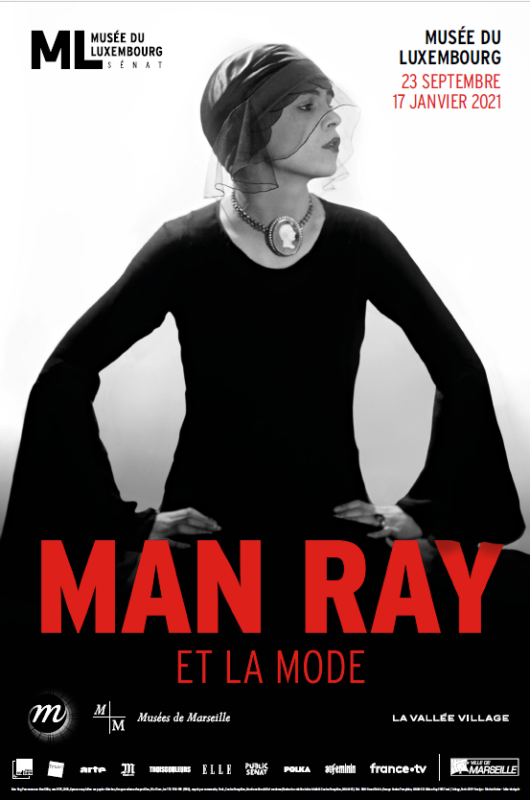
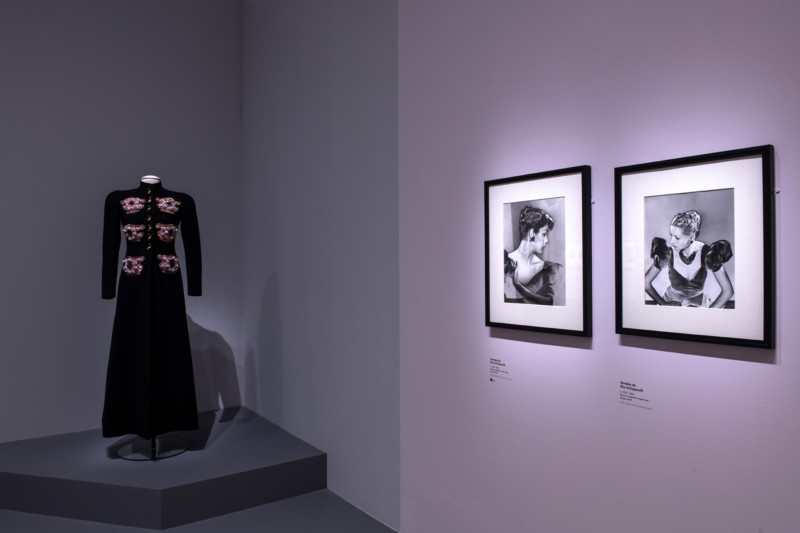
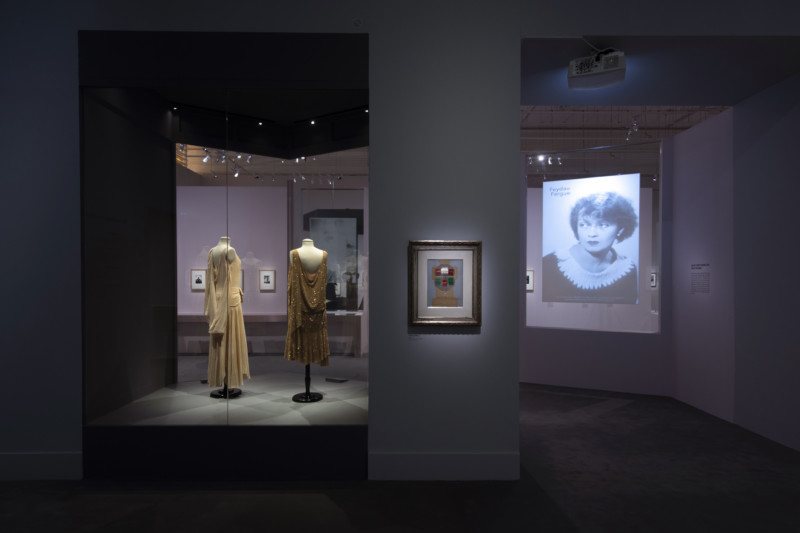
Man Ray and Fashion is an exhibition organized by the Réunion des Musées Nationaux – Grand Palais and the City of Marseille, at Musée du Luxembourg, Paris. Man Ray is presented here in a new light as his photography has never been explored from a fashion perspective.

Man Ray was a notable player in the artistic life in interwar Paris and of Surrealism in particular. Man Ray and Fashion is made up of the following sections: From 1920s Portraiture to Fashion Photography, The Rise of Fashion and Advertising, and the heyday of fashion photography: The Bazaar Years.

It displays more than 200 prints of the artist’s black-and-white images alongside magazines, haute couture, and film clips. It demonstrates how fashion influenced his work and how he influenced the fashion industry and almost created fashion photography.

Exhibition poster © Réunion des musées nationaux – Grand Palais, Paris 202 a camera around 1915 merely to record his paintings, but he soon learned to use it artistically.

He moved to Paris in 1921, where his dream was to mix with Dada and Surrealist circles, but that did not go too well.
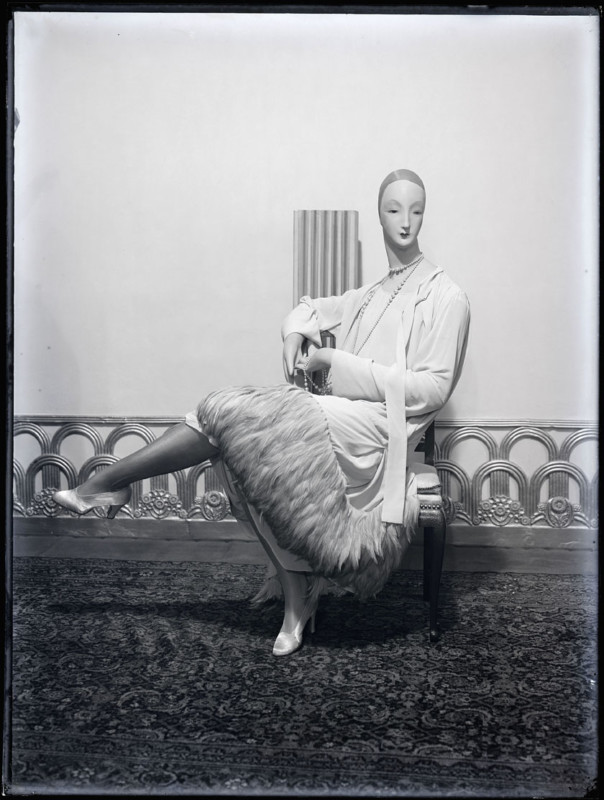
Man Ray. Pavilion of Elegance, International Exhibition Decorative and Industrial Arts, 1925 platinum proof, exhibition print made from the glass plate negative 23.5 x 17.5 cm Paris, Center Pompidou, National Art Museum, modern / Industrial Creation Center, purchased by order, print Jean-Luc Piété, © Man Ray 2015 Trust / Adagp, Paris 2020

May Ray at first found work by focusing on society portraits to put food on the table. As he was looking for ways to make money quickly, he was introduced to fashion designer Paul Poiret by art critic Buffet-Picabia, wife of artist Francis Picabia. Poiret wanted the human element that painters lacked, and Man Ray found a niche for himself in photographing Poiret’s fashions.

Man Ray freely admitted to not knowing much about fashion photography and initially had difficulty lighting the model, but he was quick to learn on the job.

Fashion photography was not very popular in the early part of the last century as it was challenging to compete with illustrators who dominated the fashion press.

“Reproducing photographs was still very difficult and expensive at the time,” explains Catherine Örmen, co-curator of the Man Ray and Fashion exhibition at the Musée du Luxembourg to the BBC.
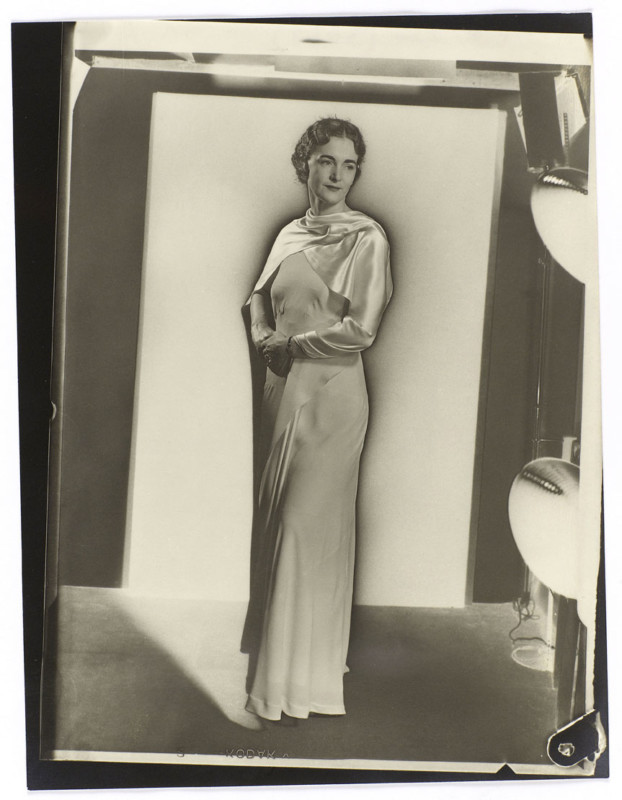
Man Ray. Portrait of Unidentified Woman, fashion? 1930 gelatin silver print (including solarization) 12.2 x 9.3 cm Paris, Center Pompidou, National Museum of Modern Art / Industrial Creation Center, founded in 1994, © Center Pompidou, MNAM-CCI, dist. RMN-Grand Palais / Image Center Pompidou, MNAM-CCI, © Man Ray 2015 Trust / Adagp, Paris 2020
Fashion photography was not easy a hundred years ago.

“For Man Ray, who worked before the development of ‘fast film’ and motor-drive cameras, there was no question of snapping pictures of models cavorting at hot spots or on the beach,” notes The New York Times in 1990. “The film was too slow; the model had to stand still.”

The models were not leaping off the page in vibrant poses, but the photographs showed excellent detail in the clothes, making the designers happy.

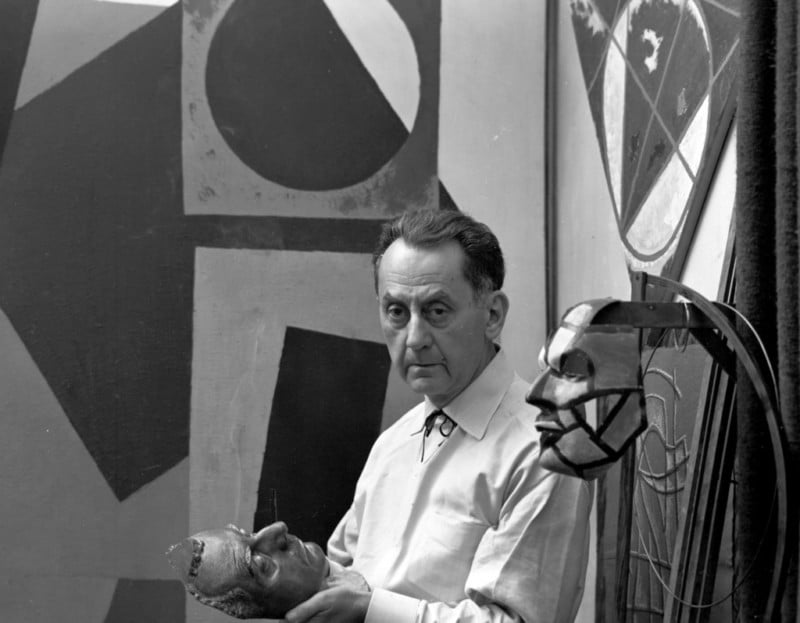
Man Ray in His Workshop. Photo PICRYL

As Man Ray perfected his photography, word of his imagery’s high quality, which bordered on the experimental, began to spread. He started getting approached by most of the great couturiers, including Madeleine Vionnet, Coco Chanel, Augusta Bernard, Louise Boulanger, and above all, Elsa Schiaparelli.

Fashion magazines were attracted to his work, and he began working with Vanity Fair, French Vogue, and Harper’s Bazaar.

Man Ray’s mother made clothes, and his father worked in a garment factory, which could also be connected to Man Ray’s interest in photographing fashion. Art historians have noted similarities between Ray’s collage and painting techniques and styles used for tailoring, as noted in Conversion to Modernism: The Early Work of Man Ray.

Kiki, Noire et Blanche (header photo above) was first published in French Vogue in May 1926. In this outstanding example of Surrealist art, Man Ray’s lover Kiki de Montparnasse poses with an African mask. The doubling of faces symbolizes divided subjects made up of the conscious and unconscious.

In the photo, as seen from left to right, it is white and black but the wordplay of the artist titled it “Noire et Blanche” or “Black and White”. If any of Man Ray’s imagery proves that he was more artist than a mere photographer, this is the supreme example.

Lee Miller his assistant would often take over Ray’s fashion assignments to enable him to concentrate on his painting. So closely did they collaborate that photographs taken by Miller during this period are credited to Ray.

Ray embraced all aspects of expressionistic art that flourished between World War I and II. Fashion photography was just a necessity for making a living.As an artist who worked in several genres – painting, film, sculpture, printmaking, and the essay – he did not like the designation “photographer.” The pictures he took of women in Paris haute couture were to pay for his studio, his brushes, and his paint, he said.

During his time, one of the major art movements was Dadaism, which believed that the ordinary could become extraordinary through art and his reinvent of photograms dovetailed neatly into that thinking. Photograms are created by placing objects directly onto photographic paper and then exposing them to light.
View of the Man Ray and Fashion exhibition (7) scenography Agence NC, Nathalie Crinière assisted by Lucile Louveau © Rmn-Grand Palais 2020 / Photo Didier Plowy

Man Ray reinvented this technique and called it “rayographs.” He even moved the object during exposure to give it more depth and tonal range. This kind of imagery probably gave him more satisfaction as an artist than fashion photography, which was essentially putting bread on the table. Vanity Fair printed four of his rayographs in a feature.

“He later characterized his discovery as an unconscious, ‘automatic’ darkroom happening that occurred in his tiny bathroom/darkroom when he placed a small glass funnel, the graduate, and the thermometer in the tray on the wetted paper and turned on the light,” writes Robert Hirsch in his book Seizing the Light: A History of Photography.

It is essential to keep in mind that Man Ray was a painter, and he had done similar techniques in painting when he had put an object on the canvas and painted around it.

Man Ray also reinvented solarization (see sidenote below & Portrait of Unidentified Woman, above) and started using it in his fashion photography to make them look painterly.

He started working with Harper’s Bazaar in 1934, and it was this fashion magazine that bestowed Man Ray’s image as a fashion photographer. Art director Alexey Brodovitch wanted to innovate the magazine’s layout, and Man Ray’s creations were a perfect technical match for his visualizations.
View of the Man Ray and Fashion exhibition (2) scenography Agence NC, Nathalie Crinière assisted by Lucile Louveau © Rmn-Grand Palais 2020 / Photo Didier Plowy
Man Ray’s strange compositions, plays of light and shadow, solarizations, colorizations, and other technical experiments sprouted, dreamlike images that would create magazine pages that were not seen before.

Bradovitch granted Man Ray total creative freedom and “allowed him to produce images bordering on abstraction which embodied the very essence of fashion,” says Catherine Örmen, a co-curator of the Man Ray and Fashion exhibit.

Paris got engulfed in the Second World War as the German Wehrmacht began its entry into France in 1940, and it was then that Man Ray fled to the USA and Hollywood. Man Ray never enjoyed commercial photography and was now even more concerned that he would be viewed as just another commercial photographer and not an artist.

With all this in mind, he decided to abandon fashion photography, even though this would have been very lucrative in Hollywood given his reputation and experience in the fashion capital of the world. He resided in Los Angeles from 1940 to 1951 and during that time concentrated on painting rather than photography.

It is said that while in the US, he would often track down old magazines to look for his photos only to find them torn out. This would give him immense pleasure that readers were excited by his imagery and collecting it.

While in Paris, he had almost tried to conceal his professional photographer’s trade, even then preferring to position himself as a painter. He kept the prints he made to a minimum, printing only the contact sheet, and then just the images chosen for the publication. At that time, magazines owned the negatives in addition to the prints.

Man Ray always wanted to return to Paris, and he finally did so in 1951. There he continued his creative practice across different mediums. He even recreated earlier work in new forms. He died in Paris in 1976 from a lung infection.
Over the course of his career, Man Ray elevated the craft of fashion photography to an art form. He inspired photographers like Sarah Moon, Guy Bourdin, Paolo Roversi, and many more. Bourdin was turned away from Man Ray’s door six times by his wife and, on the seventh, finally succeeding in gaining the artist’s company when Man Ray himself answered the door and invited Bourdin in.
So, was Man Ray a fashion photographer or even a photographer? Sure, but it would be more accurate, and even autobiographical, to say that “Man Ray was a reluctant photographer.”

Sidenote: Did Man Ray or his assistant/lover re-discover (read popularize) the technique of solarization?
I guess they both did jointly over a darkroom accident. The story is that Lee Miller*, his assistant thought she felt a mouse running over her foot while she was working in the darkroom in Paris, and promptly turned on the light (after screaming her lungs out!), exposing the photograph that was in the developer. Imagine Man Ray’s surprise when he saw that the photo had turned part negative and part positive to create a surrealistic image.
Although solarization was known to the early pioneers, including Daguerre, John William Draper, and J.W.F. Herschel, Man Ray helped popularize it by using it in his fashion photography published in major magazines.
* Miller was accredited with the U.S. Army as a war photographer for Condé Nast Publications during World War II. Miller was famously photographed by LIFE photographer David E. Scherman taking a bath in Hitler’s Munich apartment.

About the author: Phil Mistry is a photographer and teacher based in Atlanta, GA. He started one of the first digital camera classes in New York City at The International Center of Photography in the 90s. He was the director and teacher for Sony/Popular Photography magazine’s Digital Days Workshops. You can reach him via email here.

Image credits: Header photos “Kiki, Noire et Blanche” by Tim Evanson from Cleveland Heights, Ohio, USA, CC BY-SA 2.0, via Wikimedia Commons

24.1.21

A Greek Photographer’s Ode to the Dying Art of Mourning

“Nyx (the night),” 2019. Photographs by Ioanna Sakellaraki

Ioanna Sakellaraki’s series is an elegy both to her father and to the doyennes of a national tradition.


Ioanna Sakellaraki, a Greek photographer based in Brussels, left Athens at the age of eighteen to get an education abroad. She’d lived in seven different countries by the time she returned a decade later to attend her father’s funeral. 

The ceremony took place on a hillside of Mount Poikilo, where one of Sakellaraki’s aunts, Katina, hoped to perform a ritual lament in the style of the nation’s famed moirologists, or hired mourners. Since antiquity, women in Greece have been called on to voice the collective grief of the bereaved, gathering at gravesides to wail and pull their hair. 

Sakellaraki’s family decided against the idea; it didn’t seem to suit her father, a quiet man who’d died at ease, in the shade of his favorite orange tree. But the possibility of such a performance stuck in her mind as she spent the next months in her homeland, mourning.

“Moirologia (fate songs),” 2018.


“Atropos (the unturned),” 2018.

During the following years, Sakellaraki made several trips to the Mani Peninsula, in southern Greece, to document some of the last remaining representatives of the art of moirologia. 

She tracked down the mourners, some of them more than a hundred years old, by word of mouth, dawdling at guesthouses, chatting up locals, and hitchhiking to the funerals of strangers. In churches and at burial sites, she watched her subjects weep. Between services, the old women posed for portraits and told Sakellaraki stories, though several of them could barely hear her. 

“The Truth Is in the Soil,” a series of photographs and mixed-media images inspired by her travels, is an elegy both to her father and to the doyennes of a dying tradition.


“Ker (destruction),” 2019.


“Apate (deceit),” 2019.


“Clotho (the spinner),” 2020.

In rural Greece, family members often ready a body for burial by washing it with wine, water, or vinegar. They dress the deceased in clothing that he would have worn to church, coax the arms across the chest, tie the feet together, and strap the jaw shut. 

(In some ancient customs, a coin was set between the teeth, to fund the soul’s passage across the River Styx.) 

In editing film, Sakellaraki has established similarly intricate rituals. Some of her mixed-media images transport the mourners to remote landscapes, showing only the black back sides of their garments as they gaze at mountain ranges and roiling tides. In other cases, their silhouettes appear to have decomposed, as though over time, into the very texture of their surroundings: a chain-link fence, an aging vase, a cave wall etched with chalk drawings. 

Sakellaraki has recast a few of the images themselves as artifacts, altering their surfaces to include cracks that suggest the delicacy and compressed depth of fossils.


“Aletheia (unconcealment),” 2020.


“Achlys (mist of death),” 2018.

Greek lore describes a liminal period between a person’s funeral, when the journey to the underworld begins, and the rite of exhumation, when the soul escapes its earthly bonds. (The state of the body’s remains is understood to convey the destination of the departed: clean bones signify that the deceased has reached paradise, whereas blackened ones bespeak sin.) 

The grieving undergo their own metamorphosis, estranged from society until they relinquish the dead. Sakellaraki’s portfolio includes hand-stitched collages that embellish faded photographs from her father’s days as a sailor. After his death, she printed the original images on organza fabric and, working alongside her mother, traced their outlines in embroidery. 

When Sakellaraki left Greece, she and her mother completed the project by shipping works in progress across Europe, continuing each other’s stitches while they lived apart.


“Maizuru Jukogyo,” 2020.
“Memory of a Journey,” 2020.

Part of Sakellaraki’s aim, she told me recently, is to create space in her photography where “death can exist” apart from its formal commemoration. Though her imagery celebrates Greece—a few scenes feature pomegranate seeds or cypress branches, and the titles of individual shots evoke specific myths—Sakellaraki situates the toil of mourning somewhere placeless, everywhere and nowhere both. 

Her work projects a pronounced mournfulness at a time when funerary rites across the world have been disrupted, leaving the dying and the bereaved to suffer alone. Sakellaraki returned to Greece recently for the funeral of her aunt Katina, who fell at home and spent the last weeks of her life in a hospital where visitors were prohibited. 

For the service, a small, socially distanced affair held in a church by the side of a highway, Sakellaraki prepared a portrait of her aunt to decorate the tomb. The image depicts Katina as a black silhouette with red hands clutched over her heart, frozen in the role of both the mourned and the mourner.

“Thia Metamorfosis (holy transfiguration),” 2019.

Eren Orbey

30.9.20

30 Years of United Photo Press Creative Artists


We present the 30 YEARS OF UNITED PHOTO PRESS CREATIVE ARTISTS international exhibition & creative artists book, that will inaugurate in October 2020 in Electricity Museum - Casa da Luz, in the heart of the city of Funchal in Madeira Islands.

The UNITED PHOTO PRESS is ready to restart !

After the international exhibition in January 2020 at Setúbal city and after the forced stop due to the global pandemic we still work too open our second international exhibition to continue commemorate the 30 years starting from October 01, 2020 at Funchal city. We can't wait to see you and your art works again and continue spread and sharing contemporary art all over the world from Electricity Museum on the beautiful Madeira Islands.

I begin by thanking our members throughout the world and the future members as well guests who participated in our international books, exhibitions of photography, painting, sculpture, installation, etc..., for your availability, imagination and interest in the United Photo Press over these 30 years. 

Our special thanks go to The American Institute of Arts and the University of Queensland in Australia for their recognition in our contribution to spread the contemporary art in the world. The work of today is the certainty of tomorrow, because we are all artistically together without distinction of race, color or sex, which stimulates our dream in inspiration of feeling new formulas, new techniques, new materials, so that we grow together ... 

Not all was easy in our 30 years of existence – of course we encountered and resolved difficulties, problems, deviations and setbacks. The largest obstacle and threat to the UPP's survival have been the tight budget/underfunding and continuously acquiring and retaining new members worldwide. Self-financing remains until now the biggest challenge to UPP as an international non-profit association.

Our publications and international exhibitions (ranging from Madeira Islands, Moscow, Tokyo, Munich and New York amongst other large cities) are intended to record both UPP's 30 years of struggle and inspiration in the process of spreading art construction. We hope that both serve as reflection material for society in general, art academies as well as art galleries worldwide.

After 30 years, the thematic scope is to continuously develop and diversify artistically. This will support to explain our longevity and the international interest: All generated by United Photo Press artists, books and exhibitions.

30 YEARS OF UNITED PHOTO PRESS CREATIVE ARTISTS is a international contemporary art fair that presents solo projects by international artists. The 30th anniversary will present for 30 days a forum for direct exchange of ideas and contacts between collectors, artists, photographers, designers and art professionals. The art fair features paintings, sculptures, photography art, installations, video art and live performance. 

The background music will be contributed by Austrian UPP member’s Tan Ses, winner of Academia Music Awards in Los Angeles for Best Ambient/Instrumental Song and American UPP member Alison Welles Jazz Quintet from New York. From Italy comes the first expected presentation  in Portugal of the documentary "Laboratory Greece" by UPP member filmmaker and photographer Jacopo Brogi, that portrays the genesis, decline and revenge of liberalism.

30 YEARS OF UNITED PHOTO PRESS CREATIVE ARTISTS provides artists and exhibitors with the unique opportunity to present their works to the world in a fascinate museum to an international audience of professionals as curators, gallerists, collectors, editors and publishers who seek to acquire, publish and encourage the best contemporary art talents. 

See 2019 edition here: 

The exhibition + book 30 YEARS OF UNITED PHOTO PRESS CREATIVE ARTISTS will be presented at Electricity Museum - Casa da Luz from 01 to 31 October 2020 in the city of Funchal in Madeira Islands. The vernissage of the United Photo Press exhibition will be held on 01 October, at 6pm.

Carlos Alves de Sousa
President of United Photo Press

20.5.20

Why We Do It: Photographers and Photo Editors on the Passion That Drives Their Work

LIFE photographer Margaret Bourke-White making a precarious photo from the Chrysler Building.
Oscar Graubner—The LIFE Images
The people who make up today’s thriving photographic community are our eyes to the world. Whether established artists and journalists or passionate emerging voices, they inform us, they inspire us, they amaze us, they put our world in the broader context of history.

But that community also faces great challenges — dwindling sales, increased competition and a fragile trust in photographers’ mission to inform. Too often, those factors can make those of us in that community, photographers and photo editors alike, lose sight of what drive us.

For this post, my last as editor of TIME LightBox, I asked 13 of my colleagues – some of the many photographers and photo editors who have influenced and inspired me over my last ten years in this industry – to answer these essential questions: Why do they do it? Why do they wake up every morning ready to take photographs, to edit them, to publish them? Why is photography important to them and, by extension, to all of us?

Here are their answers.

Kathy Ryan, Director of Photography, the New York Times Magazine

Photographs are the universal language of our era. Everyone has hundreds, maybe thousands in their pocket. Weightless, they turn the scale when the argument is: What happened here? Images don’t age or warp. A great photographer’s strings never go out of tune.

It is for this reason that we need photographers. They are the ones who sort all the chaos of the world into images that bring clarity to the free-for-all of life. They are the witnesses and artists who can distill the mayhem and beauty that surrounds us. They call our attention to the things we miss in our everyday lives and they call our attention to events and people at a great distance from our own patch of the universe. When they direct our eyes and hearts with precision and honesty, we know what we know differently and better. Photographers teach us to look again, look harder. Look through their eyes.

Ruddy Roye, Photographer

I shoot because I see. I shoot because if I don’t, I don’t know who will. Activism is seen as a dirty word. I shoot because I find peace in being especially active, and being a vigorous advocate for a cause.

How does one define what a “cause” is? According to Webster, it is “a person or thing that acts, happens, or exists in such a way that some specific thing happens as a result; the producer of an effect.”

I wish that every image I photograph reexamines and redefines the image of the black man, the black woman, and the black child. My photography is first and foremost a catalyst or reason to motive human action. Every picture I take asks the questions, “Who am I and what is my role here on this earth?” It is my way of seeing. It is my way of saying this is another way of seeing me.

Sarah Leen, Director of Photography, National Geographic

I have spent my entire professional life creating, editing, critiquing or teaching photography and working with photographers. It has been the way that I have experienced much of the world. In a deeply personal way I feel an image is a poem about time, about “staying the moment.” Photography can defeat time. Images can keep the memory of a loved one alive, hold a moment in history for future generations, be a witness to tragedy or joy. They can also change behavior, stimulate understanding and create a sense of urgency that will move people to action. Photography is the universal language that speaks to the heart.

Photographers are the dedicated, passionate and sometimes half-crazy individuals who are willing to give their lives, too often quite literally, to show us what needs to be seen, what needs to be known. I can think of no greater honor nor privilege than to have lived a life surrounded by images and the amazing individuals who create them and share them with us.

Stacy Kranitz, Photographer

For me it began with this fear of myself as a hermit and a search for a tool that would put me in a position to have to be out engaging with the world everyday.

Then it became this portal to and catalyst for reckoning with the other and how the camera can be used to breaking down barriers between the photographer, subject and viewer.

Now that the image has become devalued as a truth-revealing mechanism, it is free to own its subjectivity and becomes an ideal medium to navigate ideas around humanity, connection, identity, memory, presence, experience and intimacy.

Stephanie Sinclair, Photographer

Why do we do it? I think we all ask ourselves this question, especially as the industry becomes ever more volatile, with colleagues losing their jobs, and even their lives, more often than many of us ever expected when we went into this profession. Not to mention the steeply declining pay for those of us who manage to eke out a living doing editorial work… But for me, it comes down to the people in my photographs.

I still believe in the power of journalism and photojournalism to spark positive change — in a world where the pursuit of self-interest is prioritized by so many, its role speaking truth to power when all other avenues fail is unparalleled. And beyond the big-picture role of journalism, it can also be a revelation at the personal level. I’ve seen that from both sides of stories. For example, not long ago I was a story’s subject when my mother lost her life to medical malpractice in Florida hospitals; and, of course, I’ve been behind the camera interviewing hundreds of girls during my 15-year Too Young to Wed project. From both vantage points, I’ve learned how personally cathartic and validating it can be to share injustices suffered with a global community.

MaryAnne Golon, Director of Photography, Washington Post

Why is photography important? Photography speaks. When I discovered and later understood photographic visual language, I saw that this language could inform, educate and move audiences worldwide without the need for a shared spoken language. A successful photo story, when well-authored and edited, is universally understood. I once presented a photo story in China in silence to a professional photography group where the audience smiled, laughed, and fell quiet in all the right places — without a word in Mandarin or English. After the last frame, we all just beamed at each other. It was so thrilling.

I believe in light. Photography is light. That light is often shined into the darkest of places by the world’s bravest and most talented photojournalists. I have been most honored to support and publish work by many of them. I intend to continue nurturing, encouraging, supporting, cajoling, helping, counseling, appreciating, celebrating, and paying for professional photojournalism for as long as I am able. I believe in its power.

Aidan Sullivan, CEO and Founder, Verbatim

Photographers will tell you it’s almost like a disease, an obsession, a condition that drives them to tell the story at any cost, suffer hardships, isolate themselves and take extraordinary risks, all in an effort to capture and convey the story they are passionate about.

I have been there, as a young photographer, and I understand that passion and drive — and now, as my career has taken me through so many levels and roles in our industry, I feel compelled to support and nurture those storytellers, to help them continue to produce important work and tell those stories, often uncomfortable ones, so that we can, sitting in the comfort of our homes, be made aware of the darker side of our world.

This art, this madness, this compulsion to convey a story we know as photojournalism will not die, storytelling will not die, it will change and evolve but it is human nature to want to learn, to be educated and to understand our world through narratives.

I think photojournalism and the skills required to become a photojournalist are an inherent trait, genetic, it’s built into the DNA, it’s a need to be first to tell a story or pass on knowledge visually, like storytellers through the ages, when storytelling was deemed to be a gift and an important way to educate, when memory was a key requirement for learning.

Early cave drawings were the beginning of the visual narrative, all that has changed really is the method to capture those images and now, with a mobile and digital world, the way we disseminate them, instead of access to a few in our inner social circles, now it’s to hundreds of millions of people within the blink of an eye.

Laura Morton, Photographer

I first became interested in photojournalism primarily out of an interest in history. One day, while studying the Industrial Revolution, I found myself very saddened by a photograph of a child in a factory. I remember realizing in that moment that both the child and photographer were likely no longer alive and I became fascinated by how the photograph could make me so upset for the hard life of someone who lived so many decades before me. In a way both of them became almost immortal through the photograph and there was something very compelling about that.

I believe it’s incredibly important for photographers to document everyday life and even sometimes the seemingly mundane, not just for a better understanding of our times, but for individuals in the future to be able to reflect on who they are and how they got there. A photograph is particularly powerful because it is accessible to most of humanity. There is no language barrier in photography. I pick stories and pursue the projects I do with the goal of documenting not only important issues of our time, but ones that will also be relevant or perhaps even more vital for our understanding of humanity in the future.

Simon Bainbridge, Editorial Director, British Journal of Photography

Twenty years ago, I took a formative road trip across the Southwestern states with my sister and my best friend. She was studying literature at the University of Colorado in Boulder, and he was a film school graduate who was just beginning to take his experiments with a still camera more seriously. We planned to cross the San Juan Skyway, then head West to Canyonlands and Monument Valley, looping through New Mexico and back across the Colorado border, but we ended up taking the circuitous route.

Every few miles my friend would point excitedly at the horizon or some mark on the map, and suddenly we’d be veering off-road, heading for some rock or mountain or strange sounding name. Soon we’d be crossing “no entry” signs into reservation land, or knocking at the door of some crazy who’d spent years on a diet of marijuana and aloe vera, building a five-story tower made from Budweiser cans, or detouring up the aptly-named Oh My Gawd Road, or into Cañon City, “Corrections Capital of the World.” At first frustrated by these diversions, my sister and I soon gave in to the adventure, and over the next two weeks let ourselves be led by our random guide, in search of Kodak Gold. I would stand next to my friend, and see what he saw. But somehow he captured something ethereal and profound that I hadn’t recognized. We came to see the world differently; not through some new point of view, but by giving in to our heightened sense of curiosity.

Two decades later, this is still the Holy Grail. The photographers I most admire go out into the world with a sense of wonder and freedom and, yes, arrogance, challenging our apathy, making us see it afresh, for better or worse. Today, I am as willing and eager as ever to wade through the endless repeated themes and subjects to find those rare works that provoke, challenge and thrill me through their brave and insightful perspectives, or their sheer visual sublime.

Alex Potter, Photographer

When I left Yemen in August 2015, the place where I learned to photograph, build a story, and really love a community, I felt very lost. For over a year I tried to seek out a new base, a new story and group of people that had meaning to me, for something I felt connected to, without success. By November I was asking myself that very question — why am I still trying to do this?

I arrived in Iraq in November 2016, looking for stories having nothing to do with Mosul, yet I felt with so many other journalists around, I needed to find meaning elsewhere. I’m a registered nurse, so I sought out a small group of foreign medics working with the Iraqi military medics to treat people wounded during the battle. Living with this tight knit group, I began photographing our surroundings, the Iraqi medics whose job was so morbid, but who were so jovial in our downtime.

By working side by side with them and photographing what we went through together, I was useful, needed, and passionate about something again: I felt the desire to photograph for the first time in over a year. For me, photography is something I’ll always come back to, having assignments or not, to process my reality, to document the world around me, and to remember small details in difficult times that may have otherwise been forgotten.

Jeffrey Furticella, Sports Photo Editor, the New York Times

A favorite childhood memory is of my father driving us to a hobby store, purchasing a few packs of trading cards and me excitedly ripping them open to see what was inside. The bulk of what I’d find were mainstream releases, but what kept me tearing apart those cellophane wrappers week after week was the hope of unearthing something unique, something beautiful, something rare.

That same rush is what propels my belief in picture editing. In a time when our global awareness is under siege by an increasingly insular perspective, the responsibility of empowering photographers whose mission is to not just capture but to investigate, to enlighten, to excite, is one of the great privileges of our time.

Today there are more photographers producing more photographs and populating more platforms than have existed at any other point in our history. With that ubiquity has come an evolution in our audiences, which are more sophisticated and demanding than ever. What a thrilling time then to be tasked with looking through the mainstream releases in the hope of unearthing something unique, something beautiful, something rare.

Peter Di Campo, Photographer

Why is it important? Look at where we are right now. The world today scares me, frankly – people, cultures refusing to understand each other, and the results are frightening, and it’s to the benefit of the people at the top to keep it that way. So I have to believe in a more diverse and inclusive media (yes, to believe it’s dangerously problematic that the world has been predominantly visualized by people who look like me), and I have to believe in the innovations that allow for people to share their own stories with a wide audience. I care deeply about both investigative journalism and user-generated forms of storytelling, and I’m naive enough to believe that those two genres can coexist.

Everyday Africa recently had a big exhibition opening in Nairobi. It was wild, a full house. I couldn’t believe my eyes. A lot of the contributing photographers came in from across the continent, and we all met for the first time. You should have seen how the African photographers were treated – like celebrities! – by the fans who have been following them on social media for years. They’re seen as role models in the African art, photography and social-media circles because they’re black people imaging black people, and that’s Power. Anything I can do to continue supporting that – that’s what gets me out of bed in the morning.

Is it odd to be a white American man saying all this? I don’t let it bother me. We all have to care about this.

Jean-François Leroy, Director, Visa pour l’Image Photojournalism Festival

I’ve been doing what I do for 40 years because I’ve always had the same gluttony to discover, among all the proposals I receive, the pure nugget, the young photographer whose photographs are a slap in the face, the young photographer that has that rare talent. Today, to see established photographers, recognized by everyone, whom I exhibited first – I’m beyond proud.

Even if it can be difficult, at times, to work with photographers, I love to reveal them, to help them edit, to build, with them, a story. After all these years, I have the same passion for this witnesses of what we’re living through. They are our eyes. They show us what’s happening. They astonish us. They move us. They make us smile, sometimes. Cry, as well.

I can’t imagine my life without all these encounters, so enriching, so surprising, so astonishing. Life!

Olivier Laurent