Showing posts with label Man Ray. Show all posts

17.4.25

The most expensive photograph in history is once again of Man Ray and sold for 12 million

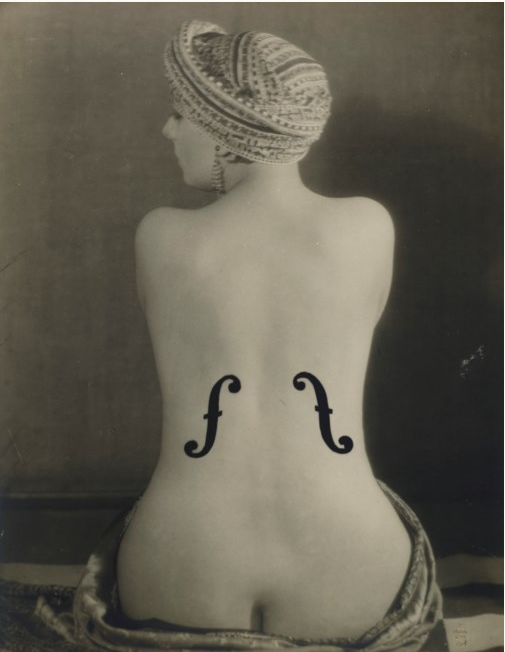
Le Violon d’Ingres (1924), by Man Ray, in a period test
Rosalind Gersten and Melvin Jacobs/Christie’s Collection

It depicts a woman whose bare back evokes the shape of a violin. We can’t see her arms or legs, and only her profile reveals the identity of the model, Kiki de Montparnasse, singer, painter and lover of Man Ray, the artist to whom we owe Le Violon d’Ingres (1924), one of the most celebrated photographs of the 20th century.

A copy vintage of this work, which we immediately associate with its author and the surrealist movement, of which he is one of the main references, was sold this Saturday at an auction in New York for 12.4 million dollars (12 million euros, which already includes the fees that the transaction involves), greatly exceeding the most optimistic estimate, which was set at seven million.

Le Violon d’Ingres (silver gelatin print measuring 48.5 x 37.5 cm) was one of the lots that had generated the most expectations around the prestigious Christie’s auction and was part of the surrealist art collection of Rosalind Gersten and Melvin Jacobs.

According to the American art magazine Art News It took ten minutes, under the watchful supervision of the auctioneer, Adrien Meyer, for two of the auctioneer’s photography specialists, Darius Himes and Elodie Morel, on the phone with two bidders, to settle the dispute. Morel and the collector he represented ended up winning, setting the price at 10.5 million dollars (10.1 million euros) and drawing applause from the room.

This portrait of Kiki de Montparnasse, one of Man Ray’s muses, is what in the specialized world is called an “original photographic copy”, since it was made at the same time as the artist created the corresponding negative, which makes it very rare and therefore particularly valuable to any collector or museum.

The Jacobs, executives linked to the fashion world and with friends in the surrealist circle, which also included Marcel Duchamp, René Magritte, Max Ernst and Dorothea Tanning, bought Le Violon d’Ingres directly to Man Ray (1890-1976), in 1962, and they never abdicated it. Rosalind outlived her husband (Melvin died in 1993), eventually dying in 2019, aged 94. It fell to the heirs to sell the couple’s collection.

The auction offer of this iconic work by the American artist, which on the eve of his visit to Darius Himes square, he called “something unprecedented in the art market”, set a new record for photography and by a wide margin. The former belonged to Andreas Gursky, the German photographer who in 2011 saw one of the proofs of his The Rhine II (1999) to be sold for 4.3 million dollars (4 million euros). Gursky then broke the record previously held by Man Ray, author of Noire et Blanche (1926), sold four years earlier for three million (2.8 million euros).

“At once romantic, mysterious and mischievous, this image has captured everyone’s minds for nearly 100 years,” said Christie’s specialist Himes, quoted in a statement in which, weeks earlier, the prestigious auctioneer had publicized and promoted the sale of the portrait. unique by Kiki de Montparnasse.

With copies in the collections of the Pompidou Center in Paris, one of the most important museums of modern and contemporary art in the world, and in the J. Paul Getty Museum in Los Angeles, Le Violon d’Ingres it is a work built in stages: the artist photographed the model, then printed the resulting negative and, on the proof that gave rise, drew the typical openings of the violin, in pencil and ink, a type of ink. Only later did he pick up the camera again to record the result, which gave rise to a new negative and the proofs that would lead to the title of the one that was now sold at auction.

Le Violon d’Ingres it is, according to some art historians, a tribute by Man Ray to one of his favorite painters, the Frenchman Jean-Auguste Dominique Ingres, who liked to play the violin in his spare time. The model’s pose, they note, is also reminiscent of that of the women who appear in two famous paintings by Ingres: Le Bain Turkish (the one in the center wearing a turban, playing a stringed instrument) and la baigneuse.

16.5.22

A stunning selection of Masterpieces in May!


The major sales in May will be offering works from a number of exceptional collections including the Macklowe, the Ammann, the Anne H. Bass, the Maezawa and even the Gersten and Jacobs collections. So important are these collections that the sale of their “nuggets” promises to revise several global auction records! An Andy Warhol Marilyn is expected to fetch $200 million and a painting by Basquiat is expected at $70 million. Below we take a quick look at 10 very important works coming to auction in May.

Andy Warhol: $195 million (Christie’s, May 9)
Andy WARHOL is now the most expensive painter after Leonardo da Vinci and ahead of Picasso! It’s official since yesterday, with the sale of Shot Sage Blue Marilyn (1964) for $195m at Christie’s…

This iconic canvas pays homage to Marilyn Monroe, a personality whose duality fascinated Warhol. Highly glamorous, she embodied the archetype of feminine beauty of her era, but appeared to live a tragic life. For Shot Sage Blue Marilyn, Andy Warhol used a promotional photo from the 1953 film Niagara and gave the actress a pink face, blue eyeshadow and red lips against a light blue background. The work dates from 1964, two years after the actress’s mysterious death.

From the collection of Thomas and Doris Ammann, Shot Sage Blue Marilyn could mark a turning point in the history of the art market, being presented by Christie’s both as “the absolute pinnacle of American pop” and as one of the greatest paintings of all time, “alongside Botticelli’s Birth of Venus, da Vinci’s Mona Lisa and Picasso’s Demoiselle d’Avignon”.

Expected to refresh Warhol’s current auction record of $105.4 million (Silver Car Crash (Double Disaster) (1963) at Sotheby’s New York in 2013), Shot Sage Blue Marilyn could become the most expensive 20th century artwork ever sold at auction!

Van Gogh: $45 million (Christie’s, May 11)
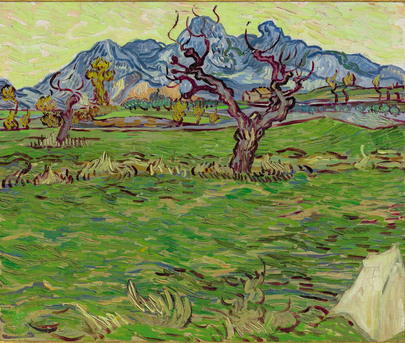
Fields near the Alpilles is an oil-on-canvas executed in November 1889, six months after Vincent VAN GOGH mutilated his ear. He painted the work at the time of his voluntary internment in Saint-Rémy-de-Provence, then sent the canvas to his friend Joseph Roulin. The work has remained in private hands ever since and has never been exhibited to the public. It should sell for around $45 million.


Jackson Pollock: $45 million (Christie’s, May 12)
Canvas Number 31 dates from 1949, shortly after Jackson POLLOCK had dropped his brushes to devote himself to Action Painting and upset the framework of traditional pictorial practices in the process. In charge of 20th and 21st century art at Christie’s, Alex Rotter recalls that “true dripping paintings were – and still are – the ultimate in mid-century American avant-garde, and it is rare to see them appear on the secondary market”. A rarity that could attract 45 million dollars on May 12 according to the estimate provided by François Pinault’s auction house.

Having remained in the same private collection for more than two decades, Number 31 sold for $3.5 million in 1988 at Christie’s. This painting could now sell for 13 times that amount. To beat Pollock’s current auction record, Number 31 will have to exceed the $61.1 million reached last November by Number 17 (1951), a painting from the Macklowe Collection sold at Sotheby’s.

Claude Monet: $150 million in three lots (Christie’s, May 12)
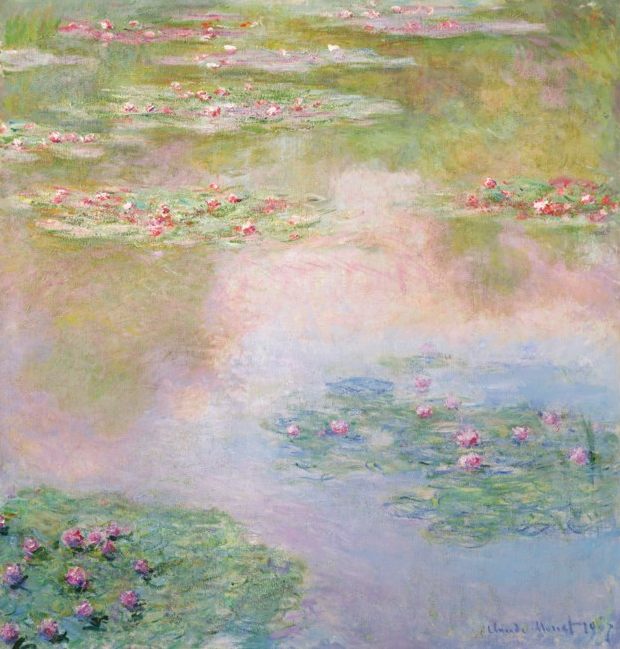
The collection of American investor Anne H. Bass is impressive. Christie’s has been awarded the honor of dispersing 12 of its masterpieces on May 12, including three paintings by Claude MONET which should bring in, together, 150 million dollars. Two of them – Le Parlement, soleil couchant et Peupliers au bord de l’Epte, automne – were purchased from the Acquavella gallery in 1982; the third – a hypnotic Water-lilies in spring colors – was acquired from Wildenstein New York in 1984.

The highest estimate has been given to Le Parlement, soleil couchant (1900-1903) which is expected to reach $60 million. It is one of the four paintings of the British Parliament in private hands, but above all one of Monet’s finest achievements, being among the most colorful of the series he began in London in 1899 and completed in Giverny in 1904. The future owner of this canvas will own a Monet on a level equivalent to those present in museums such as the Musée d’Orsay in Paris, the Metropolitan Museum of Art in New York and the National Gallery of Art in Washington.


Mark Rothko: $80 million (Christie’s, May 12)
Also from the Anne H. Bass collection, a flamboyant Mark ROTHKO from 1961 is estimated between $60 and $80 million. But if it exceeds its high estimate, this marvelous canvas could renew the American artist’s auction record which has stood at nearly $87 million since a canvas painted in the same year and with a similar, but slightly larger, chromatic range, Orange, Red, Yellow (1961), sold at Christie’s New York on 8 May 2012. Having guaranteed a minimum price to the seller, the stakes are high for Christie’s.


Man Ray: $7 million (Christie’s, May 14)
Another record that could be broken concerns the art photography market as a whole. On May 14 Christie’s will be offering MAN RAY’s iconic photograph “Le Violon d’Ingres”. Having spent 60 years in the same collection, the curves of this woman-violin (whose model is none other than Kiki de Montparnasse) are estimated to attract between 5 and 7 million dollars.

The image is on track to smash Man Ray’s record of $3.1 million for a photographic work, a record hammered for his Noire et Blanche (1926) at Christie’s Paris in 2017. But even if it reaches its low estimate it will become the most expensive photographic work ever sold at auction. Excluding Jeff Koons’ photographic portrait under a light box which fetched $9.4 million in 2013, the global auction record for a photographic artwork is currently held by Andreas Gursky’s Rhein II which fetched $4.3 million at Christie’s in New York in 2011.


Pablo Picasso: $60 million (Sotheby’s, May 17)
Pablo PICASSO is the star of Sotheby’s Modern Art sale on May 17 with a canvas expected to fetch around 60 million dollars. It’s a 1932 portrait of Marie-Thérèse Walter with whom the artist fell in love five years earlier (when she was 17 and he was 45). In Femme nue couchée, Walter takes on the contours of a sensual creature by the sea in a Surrealist setting.

Philip Guston: $30 million (Sotheby’s, May 17)
Nile is a monumental work that represents the pinnacle of Philip GUSTON’s abstract practice and, according to Sotheby’s catalog note, it is among the works that established the artist’s reputation “in the foremost rank of the preeminent art movement of the twentieth century, Abstract Expressionism”. On May 17, Sotheby’s is hoping to revise Guston’s auction record with a result above $30 million.

Remaining in the Dallas-based collection of Peter and Edith O’Donnell for over 40 years, the presentation of Nile is certainly timely with the opening of the “Philip Guston Now” exhibition at the Boston Museum of Fine Arts in early May.
$70 million Basquiat (Phillips, May 18)

Phillips (which posted a record turnover of $706 million in 2021 from art sales) could attract the best bid of its history on May 18 with a major 1982 canvas by Jean-Michel BASQUIAT from the collection of Japanese billionaire Yusaku Maezawa. If it reaches the estimated $70 million, Mr. Maezawa, its Japanese billionaire owner, will pocket around $10 million having acquired the canvas at Christie’s for $57.3 million in 2016. The following year, he bought another work by Basquiat for $110.5 million (Sotheby’s), setting the American artist’s all-time auction record.

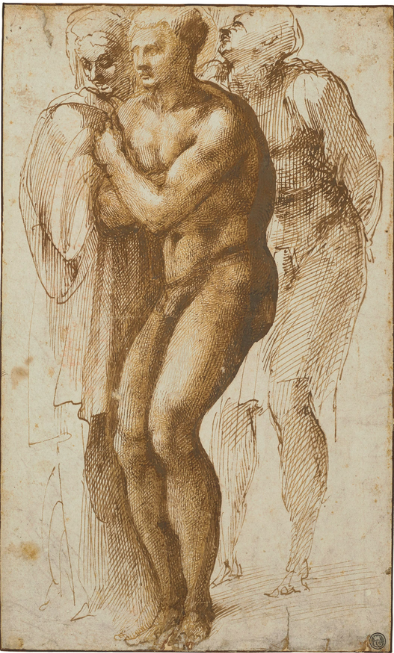
Michelangelo: $30 million (Christie’s, May 18)
“Rare” would be an understatement! Only eight drawings by MICHELANGELO (1475-1564) have been offered at auction in the past 40 years. Here is the ninth: an early drawing from the 1490s inspired by Masaccio’s frescoes in the Brancacci Chapel in Florence. Above all, It was the artist’s first known ‘academic’ Nude, rediscovered in a French collection.

In 1907 the drawing was presented for sale at the Hôtel Drouot in Paris as a work by “a member of Michelangelo’s entourage”. It was finally recognized as a veritable Michelangelo work in 2019 by Furio Rinaldi, then a specialist in Christie’s Old Master Drawings department.

Fewer than ten of the artist’s works are still in private hands around the world, so the sale of this 33 × 20 cm sheet takes on an exceptional character that Christie’s is highlighting by dedicating a sale uniquely to this work. The rare bidders will battle it out in Paris on May 18 and this incredible “jewel” is expected at fetch around $30 million.
8.3.21

Man Ray: The Unwilling Fashion Photographer Who Excelled


Man Ray is today regarded as one of the most innovative photographers of the twentieth century. He reinvented solarization and further developed photograms, which he called “rayographs,” in reference to himself. He also pioneered fashion photography in the 1920s-1940 in Paris but did not want to be known as a “photographer.” He considered himself a painter and artist above all.


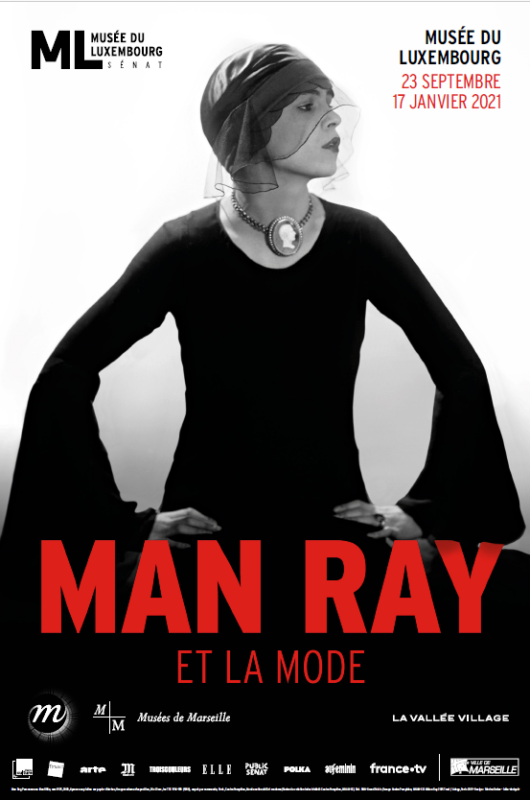
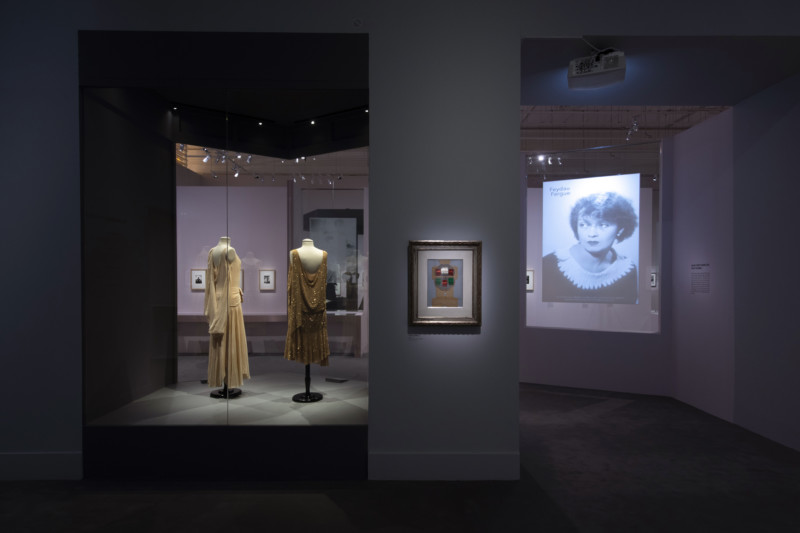
Man Ray and Fashion is an exhibition organized by the Réunion des Musées Nationaux – Grand Palais and the City of Marseille, at Musée du Luxembourg, Paris. Man Ray is presented here in a new light as his photography has never been explored from a fashion perspective.

Man Ray was a notable player in the artistic life in interwar Paris and of Surrealism in particular. Man Ray and Fashion is made up of the following sections: From 1920s Portraiture to Fashion Photography, The Rise of Fashion and Advertising, and the heyday of fashion photography: The Bazaar Years.

It displays more than 200 prints of the artist’s black-and-white images alongside magazines, haute couture, and film clips. It demonstrates how fashion influenced his work and how he influenced the fashion industry and almost created fashion photography.

Exhibition poster © Réunion des musées nationaux – Grand Palais, Paris 202 a camera around 1915 merely to record his paintings, but he soon learned to use it artistically.

He moved to Paris in 1921, where his dream was to mix with Dada and Surrealist circles, but that did not go too well.
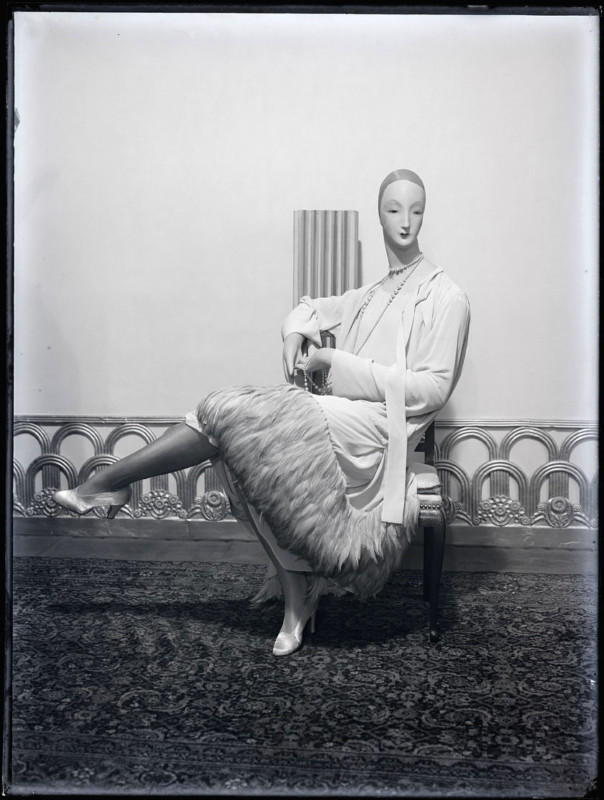
Man Ray. Pavilion of Elegance, International Exhibition Decorative and Industrial Arts, 1925 platinum proof, exhibition print made from the glass plate negative 23.5 x 17.5 cm Paris, Center Pompidou, National Art Museum, modern / Industrial Creation Center, purchased by order, print Jean-Luc Piété, © Man Ray 2015 Trust / Adagp, Paris 2020

May Ray at first found work by focusing on society portraits to put food on the table. As he was looking for ways to make money quickly, he was introduced to fashion designer Paul Poiret by art critic Buffet-Picabia, wife of artist Francis Picabia. Poiret wanted the human element that painters lacked, and Man Ray found a niche for himself in photographing Poiret’s fashions.

Man Ray freely admitted to not knowing much about fashion photography and initially had difficulty lighting the model, but he was quick to learn on the job.

Fashion photography was not very popular in the early part of the last century as it was challenging to compete with illustrators who dominated the fashion press.

“Reproducing photographs was still very difficult and expensive at the time,” explains Catherine Örmen, co-curator of the Man Ray and Fashion exhibition at the Musée du Luxembourg to the BBC.
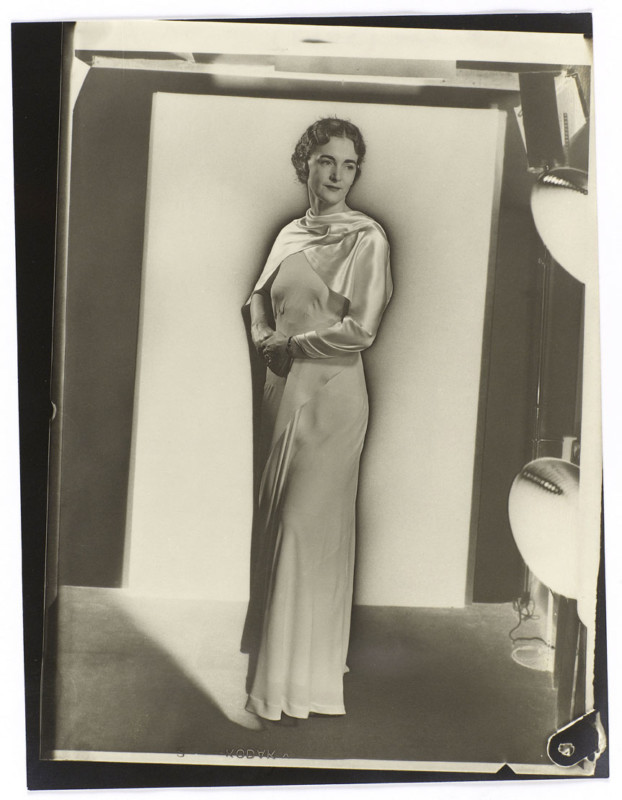
Man Ray. Portrait of Unidentified Woman, fashion? 1930 gelatin silver print (including solarization) 12.2 x 9.3 cm Paris, Center Pompidou, National Museum of Modern Art / Industrial Creation Center, founded in 1994, © Center Pompidou, MNAM-CCI, dist. RMN-Grand Palais / Image Center Pompidou, MNAM-CCI, © Man Ray 2015 Trust / Adagp, Paris 2020
Fashion photography was not easy a hundred years ago.

“For Man Ray, who worked before the development of ‘fast film’ and motor-drive cameras, there was no question of snapping pictures of models cavorting at hot spots or on the beach,” notes The New York Times in 1990. “The film was too slow; the model had to stand still.”

The models were not leaping off the page in vibrant poses, but the photographs showed excellent detail in the clothes, making the designers happy.

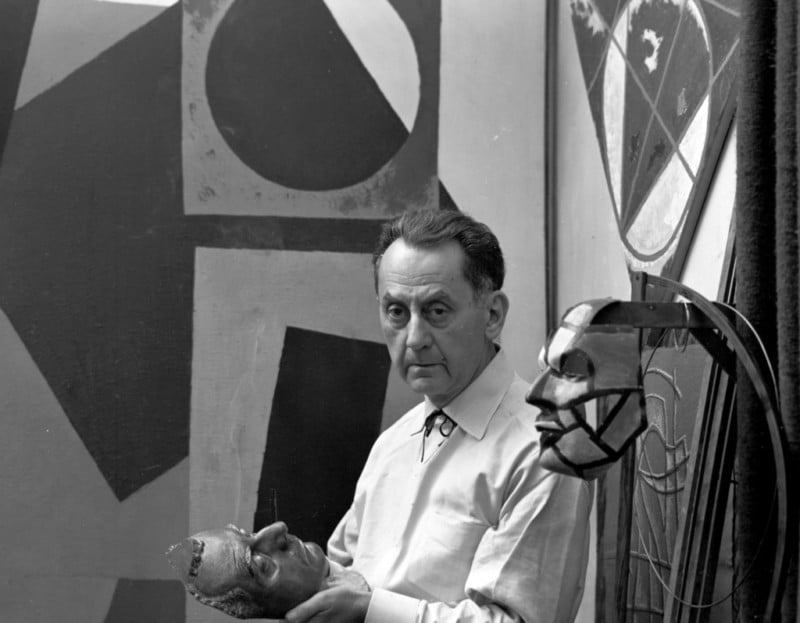
Man Ray in His Workshop. Photo PICRYL

As Man Ray perfected his photography, word of his imagery’s high quality, which bordered on the experimental, began to spread. He started getting approached by most of the great couturiers, including Madeleine Vionnet, Coco Chanel, Augusta Bernard, Louise Boulanger, and above all, Elsa Schiaparelli.

Fashion magazines were attracted to his work, and he began working with Vanity Fair, French Vogue, and Harper’s Bazaar.

Man Ray’s mother made clothes, and his father worked in a garment factory, which could also be connected to Man Ray’s interest in photographing fashion. Art historians have noted similarities between Ray’s collage and painting techniques and styles used for tailoring, as noted in Conversion to Modernism: The Early Work of Man Ray.

Kiki, Noire et Blanche (header photo above) was first published in French Vogue in May 1926. In this outstanding example of Surrealist art, Man Ray’s lover Kiki de Montparnasse poses with an African mask. The doubling of faces symbolizes divided subjects made up of the conscious and unconscious.

In the photo, as seen from left to right, it is white and black but the wordplay of the artist titled it “Noire et Blanche” or “Black and White”. If any of Man Ray’s imagery proves that he was more artist than a mere photographer, this is the supreme example.

Lee Miller his assistant would often take over Ray’s fashion assignments to enable him to concentrate on his painting. So closely did they collaborate that photographs taken by Miller during this period are credited to Ray.

Ray embraced all aspects of expressionistic art that flourished between World War I and II. Fashion photography was just a necessity for making a living.As an artist who worked in several genres – painting, film, sculpture, printmaking, and the essay – he did not like the designation “photographer.” The pictures he took of women in Paris haute couture were to pay for his studio, his brushes, and his paint, he said.

During his time, one of the major art movements was Dadaism, which believed that the ordinary could become extraordinary through art and his reinvent of photograms dovetailed neatly into that thinking. Photograms are created by placing objects directly onto photographic paper and then exposing them to light.
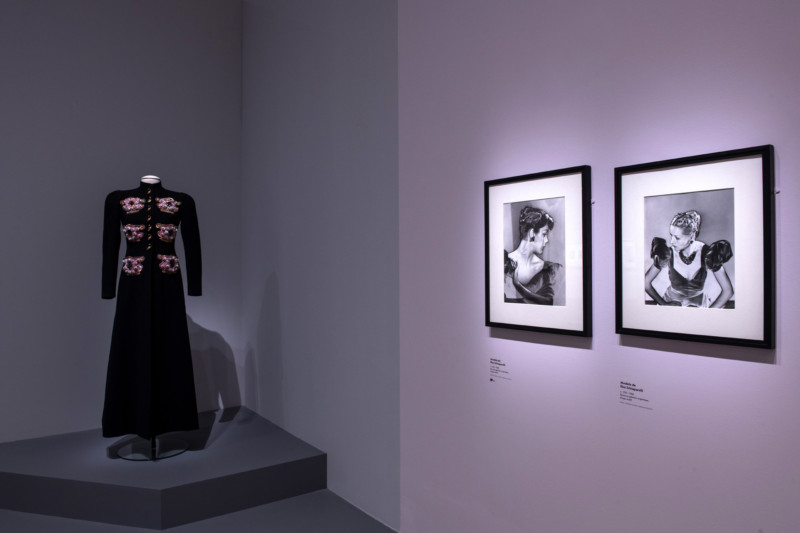
View of the Man Ray and Fashion exhibition (7) scenography Agence NC, Nathalie Crinière assisted by Lucile Louveau © Rmn-Grand Palais 2020 / Photo Didier Plowy

Man Ray reinvented this technique and called it “rayographs.” He even moved the object during exposure to give it more depth and tonal range. This kind of imagery probably gave him more satisfaction as an artist than fashion photography, which was essentially putting bread on the table. Vanity Fair printed four of his rayographs in a feature.

“He later characterized his discovery as an unconscious, ‘automatic’ darkroom happening that occurred in his tiny bathroom/darkroom when he placed a small glass funnel, the graduate, and the thermometer in the tray on the wetted paper and turned on the light,” writes Robert Hirsch in his book Seizing the Light: A History of Photography.

It is essential to keep in mind that Man Ray was a painter, and he had done similar techniques in painting when he had put an object on the canvas and painted around it.

Man Ray also reinvented solarization (see sidenote below & Portrait of Unidentified Woman, above) and started using it in his fashion photography to make them look painterly.

He started working with Harper’s Bazaar in 1934, and it was this fashion magazine that bestowed Man Ray’s image as a fashion photographer. Art director Alexey Brodovitch wanted to innovate the magazine’s layout, and Man Ray’s creations were a perfect technical match for his visualizations.
View of the Man Ray and Fashion exhibition (2) scenography Agence NC, Nathalie Crinière assisted by Lucile Louveau © Rmn-Grand Palais 2020 / Photo Didier Plowy
Man Ray’s strange compositions, plays of light and shadow, solarizations, colorizations, and other technical experiments sprouted, dreamlike images that would create magazine pages that were not seen before.

Bradovitch granted Man Ray total creative freedom and “allowed him to produce images bordering on abstraction which embodied the very essence of fashion,” says Catherine Örmen, a co-curator of the Man Ray and Fashion exhibit.

Paris got engulfed in the Second World War as the German Wehrmacht began its entry into France in 1940, and it was then that Man Ray fled to the USA and Hollywood. Man Ray never enjoyed commercial photography and was now even more concerned that he would be viewed as just another commercial photographer and not an artist.

With all this in mind, he decided to abandon fashion photography, even though this would have been very lucrative in Hollywood given his reputation and experience in the fashion capital of the world. He resided in Los Angeles from 1940 to 1951 and during that time concentrated on painting rather than photography.

It is said that while in the US, he would often track down old magazines to look for his photos only to find them torn out. This would give him immense pleasure that readers were excited by his imagery and collecting it.

While in Paris, he had almost tried to conceal his professional photographer’s trade, even then preferring to position himself as a painter. He kept the prints he made to a minimum, printing only the contact sheet, and then just the images chosen for the publication. At that time, magazines owned the negatives in addition to the prints.

Man Ray always wanted to return to Paris, and he finally did so in 1951. There he continued his creative practice across different mediums. He even recreated earlier work in new forms. He died in Paris in 1976 from a lung infection.
Over the course of his career, Man Ray elevated the craft of fashion photography to an art form. He inspired photographers like Sarah Moon, Guy Bourdin, Paolo Roversi, and many more. Bourdin was turned away from Man Ray’s door six times by his wife and, on the seventh, finally succeeding in gaining the artist’s company when Man Ray himself answered the door and invited Bourdin in.
So, was Man Ray a fashion photographer or even a photographer? Sure, but it would be more accurate, and even autobiographical, to say that “Man Ray was a reluctant photographer.”

Sidenote: Did Man Ray or his assistant/lover re-discover (read popularize) the technique of solarization?
I guess they both did jointly over a darkroom accident. The story is that Lee Miller*, his assistant thought she felt a mouse running over her foot while she was working in the darkroom in Paris, and promptly turned on the light (after screaming her lungs out!), exposing the photograph that was in the developer. Imagine Man Ray’s surprise when he saw that the photo had turned part negative and part positive to create a surrealistic image.
Although solarization was known to the early pioneers, including Daguerre, John William Draper, and J.W.F. Herschel, Man Ray helped popularize it by using it in his fashion photography published in major magazines.
* Miller was accredited with the U.S. Army as a war photographer for Condé Nast Publications during World War II. Miller was famously photographed by LIFE photographer David E. Scherman taking a bath in Hitler’s Munich apartment.

About the author: Phil Mistry is a photographer and teacher based in Atlanta, GA. He started one of the first digital camera classes in New York City at The International Center of Photography in the 90s. He was the director and teacher for Sony/Popular Photography magazine’s Digital Days Workshops. You can reach him via email here.

Image credits: Header photos “Kiki, Noire et Blanche” by Tim Evanson from Cleveland Heights, Ohio, USA, CC BY-SA 2.0, via Wikimedia Commons