Showing posts with label Australia. Show all posts

4.6.22

My adventures somewhere in-between medium & large formats on 120 format Kodak Gold 200


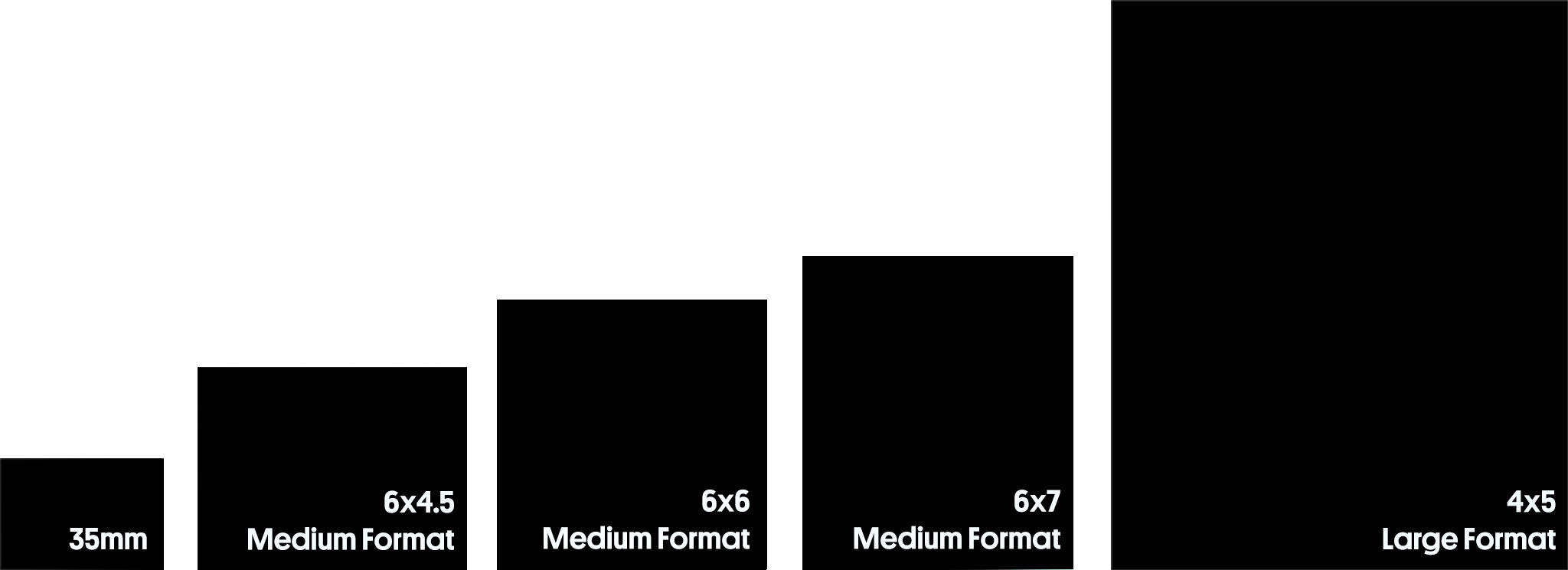
Large format photography issue #1 – is it a 5×4 camera or 4×5? The answer seems to depend on where you live, and I’m in Australia, so I’m calling it 5×4.

I’ve done a couple of workshops on large format cameras — a day learning the basics on a 5×4 field camera and another doing 5×4 tintypes. Both were lots of fun, but, thanks to the time developing sheet film takes (first workshop), how long setting up, shooting then developing tintype plates take, and having to share the equipment with others, I made a total of three images over the two days.
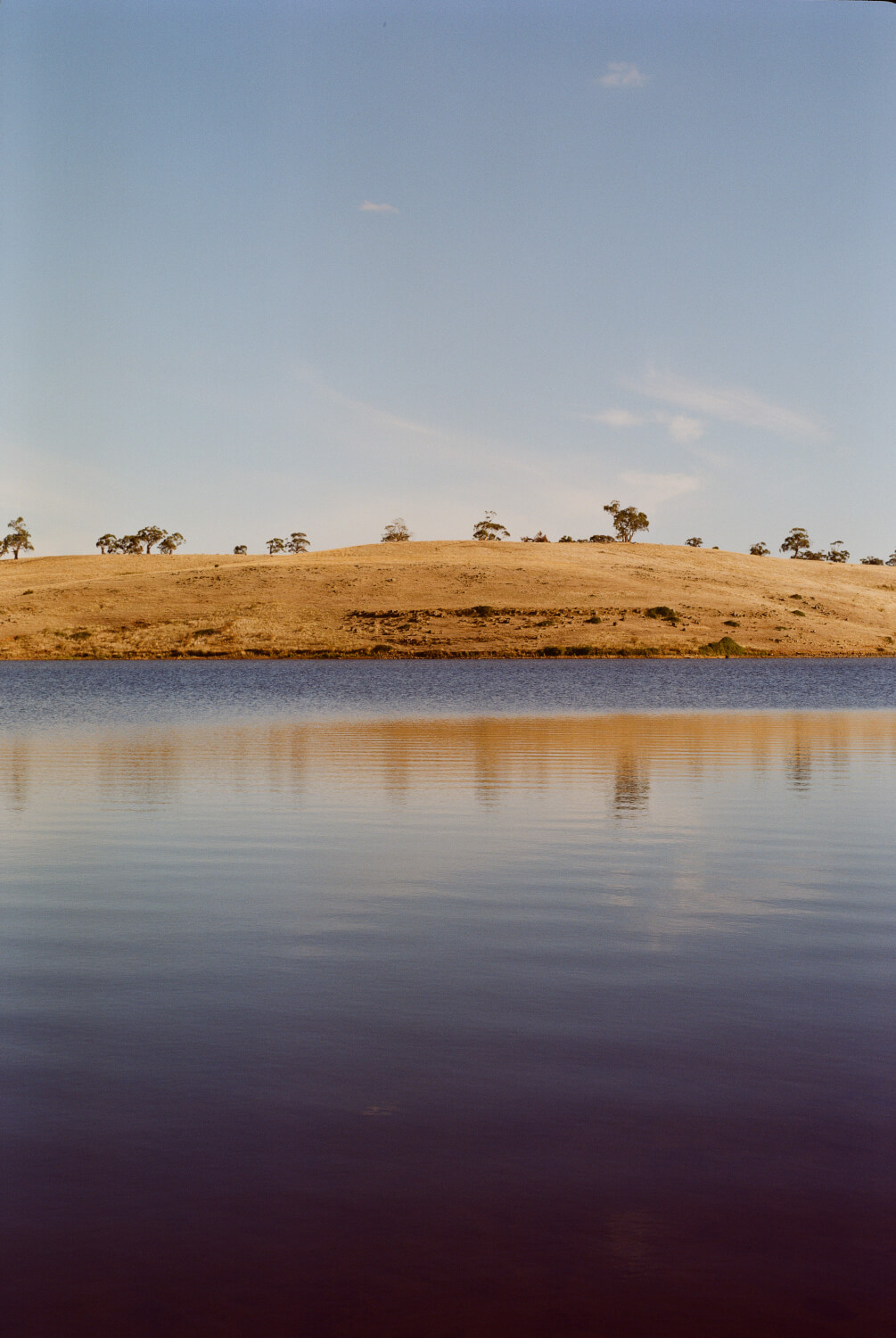
I was sure they were all going to look this good. Kodak Gold 200

When I was offered the use of a Toyo 5×4 with a 120 format film back that shot 6x9cm frames over the Easter break, I jumped at the opportunity!

After a lesson in setting the camera up, focusing and making an exposure, I carted what seemed like 100kgs of gear home with me on the bus. While the camera is made of plastic, its owner keeps it, along with two lenses, and associated some odds & ends in a Pelican case.

Oh, and its accompanying tripod seemed to be made of lead.

The camera’s ground glass has frame line marks for the 6x9cm back — as it’s hard to see much on the glass in bright daylight, even with a dark cloth over your head, I put some painter’s tape on to help me compose.
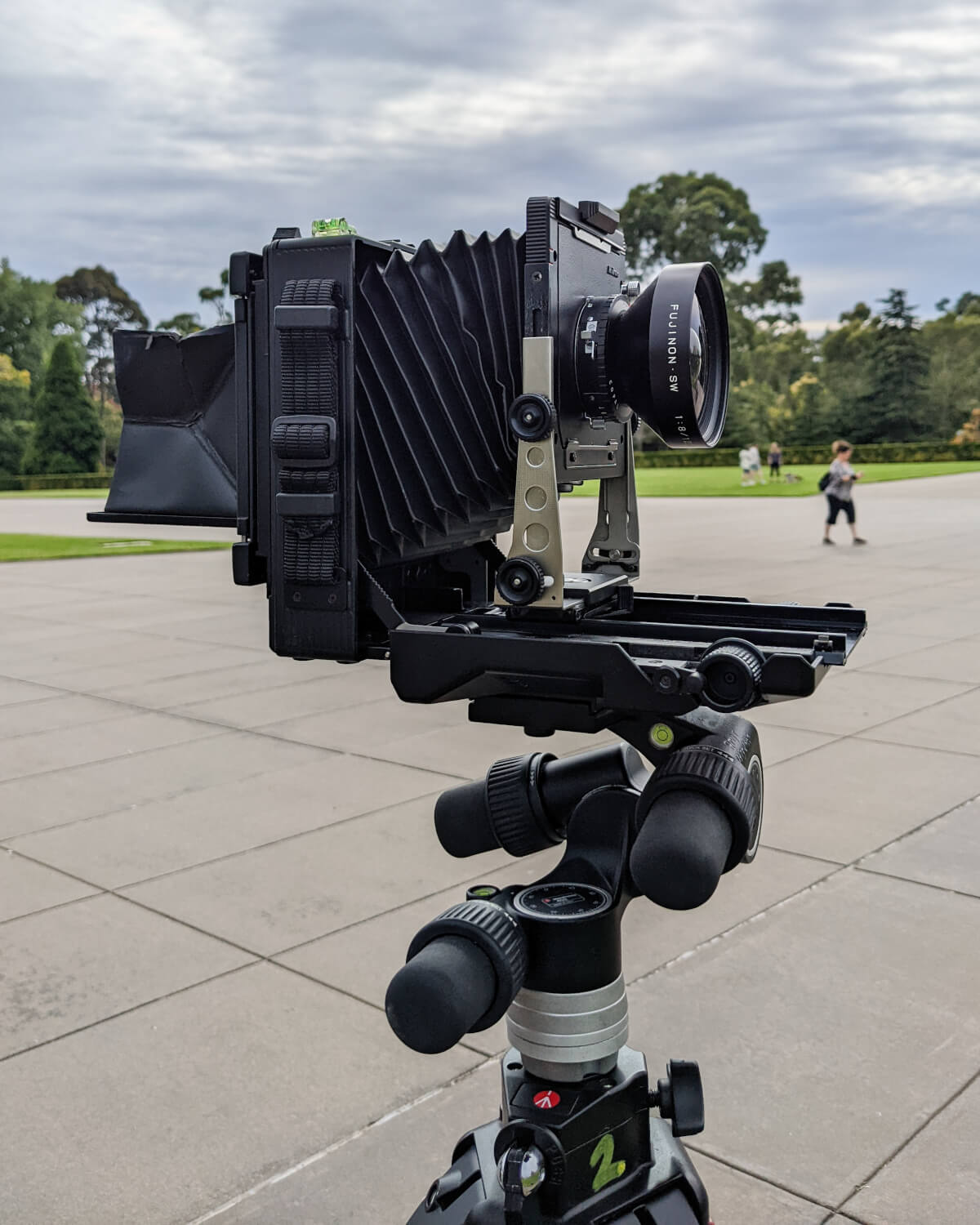
LOTS of rise, lots.

The 6×9 back yields 8 frames from a roll of 120 format film, so, relative to shooting 5×4 sheet film, it’s not all that expensive, and a great opportunity (or was it an excuse?) to buy a 5 pack of the new Kodak Gold 200 in 120.

I decided the roof of the apartment building I live in would be a great place to make the first couple of images … if I left anything behind, I only had to go downstairs to find it, and I really didn’t feel like hiking a long distance to discover that I couldn’t recall one (or all) of the setup and packing down steps.

Two flights of stairs later, I started setting up. The process goes something like this:

Setting upSet up the tripod, aim for reasonably level
Open the camera, and mount it on a tripod.
Use a bubble level app on your phone to make sure the base of the camera is level.
Pull the bellows out to the appropriate length for the lens you’re using, and lock them into place.
Put the lens & lens board into place, and make sure it’s locked.
Open the lens to its widest aperture. It’s really hard to compose & focus at f/22!
The ground glass back onto the camera, and make sure it’s locked.
Preparing the shotWith something over your head to keep the light out (I used a dark jacket) get focus close to correct.
Compose, maybe using some of the movements – I did a lot of rise & fall and had an attempt at the Scheimpflug principle (google it, I can’t even pronounce it, so I’m sure my explanation will be rubbish).
Use a loupe to nail focus on the ground glass.
Calculate exposure. I bought a Reveni Labs spot meter recently and it’s excellent. And there was something almost comical about using a tiny light meter with a huge camera.
Taking the shotSet the aperture & shutter speed, cock the shutter, test fire, re-cock the shutter.
Load film in the 6×9 back, wind to the first, or next, frame.
Take the ground glass out.
Double-check the shutter is cocked and closed – if it’s open and you take the dark slide out you’ll wreck that frame.
Put the 6×9 back on the camera.
Remove dark slide.
Fire shutter.
Replace the dark slide.

…and packing up is more or less the reverse order.

I decided that as it was a long process to set up for each location, I’d make a portrait and a landscape shot of my subject.

With the two first images made, I headed off to explore, taking my 20-year-old son as an assistant — he’s interested in film photography and was quite keen to have a play with the “watch the birdie” camera, although I think he was a little disappointed that it didn’t have an accompanying magnesium flash that went “Whoosh!”
What could possibly go wrong? A lot of things.

We headed to Melbourne’s war memorial, The Shrine of Remembrance. It’s an interesting building in a lovely large park. The first mistake: Even a few hundred meters from the car was a long way to carry very heavy equipment.

The first two images of the building — a landscape & a portrait — went fine, then an image of a tall part of the memorial, with the rise up as far as it would go, next we decided on a portrait of my son. As I clicked the shutter I said, “did I advance the film first?” No need to try to guess, no, I didn’t advance the film. So far, one unintended double exposure.
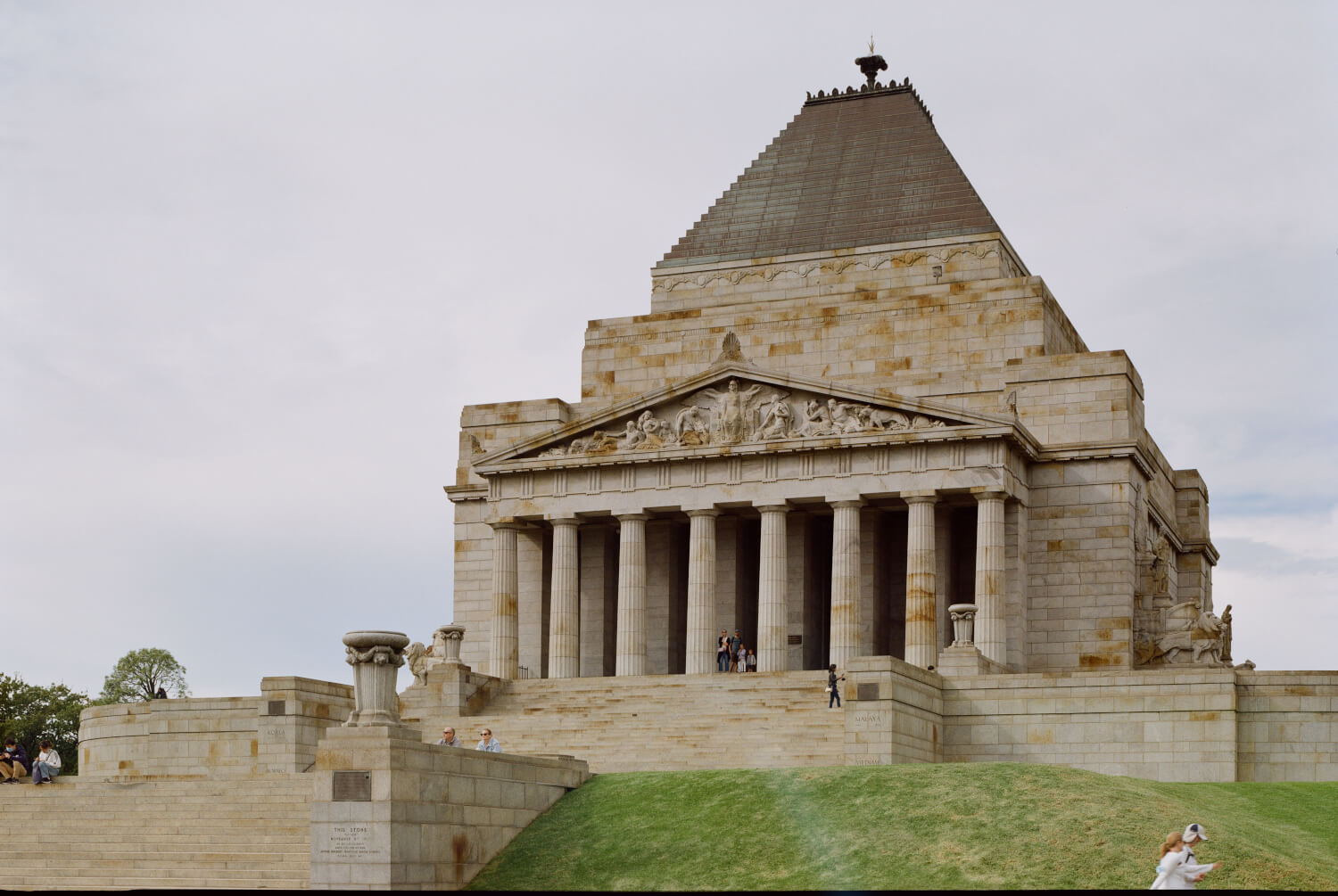
The landscape version
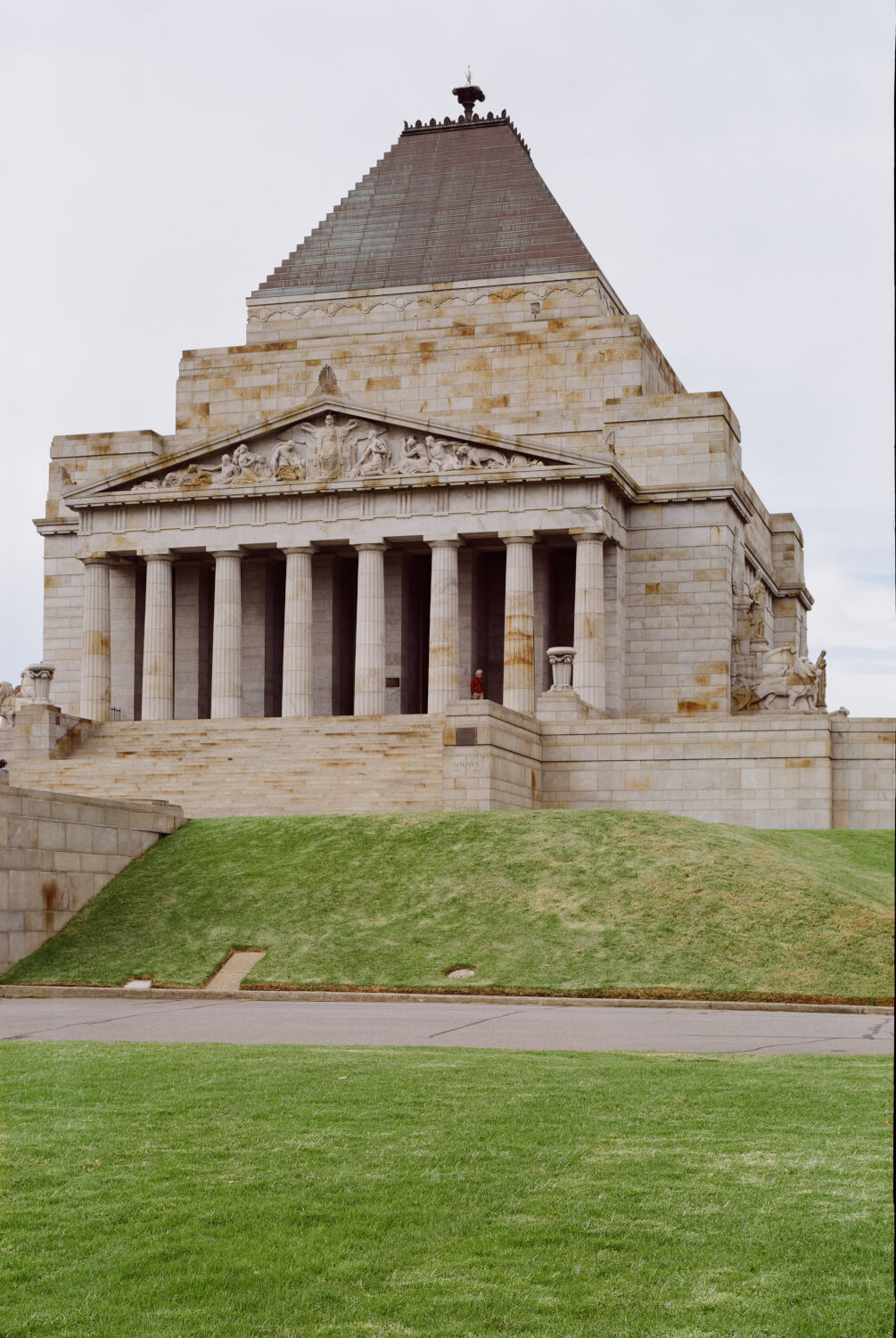
The portrait version

We CAREFULLY redid the portrait, but I didn’t quite nail the focus, then moved on to take a few more around the building, Our eight frames in the bag, we headed home.
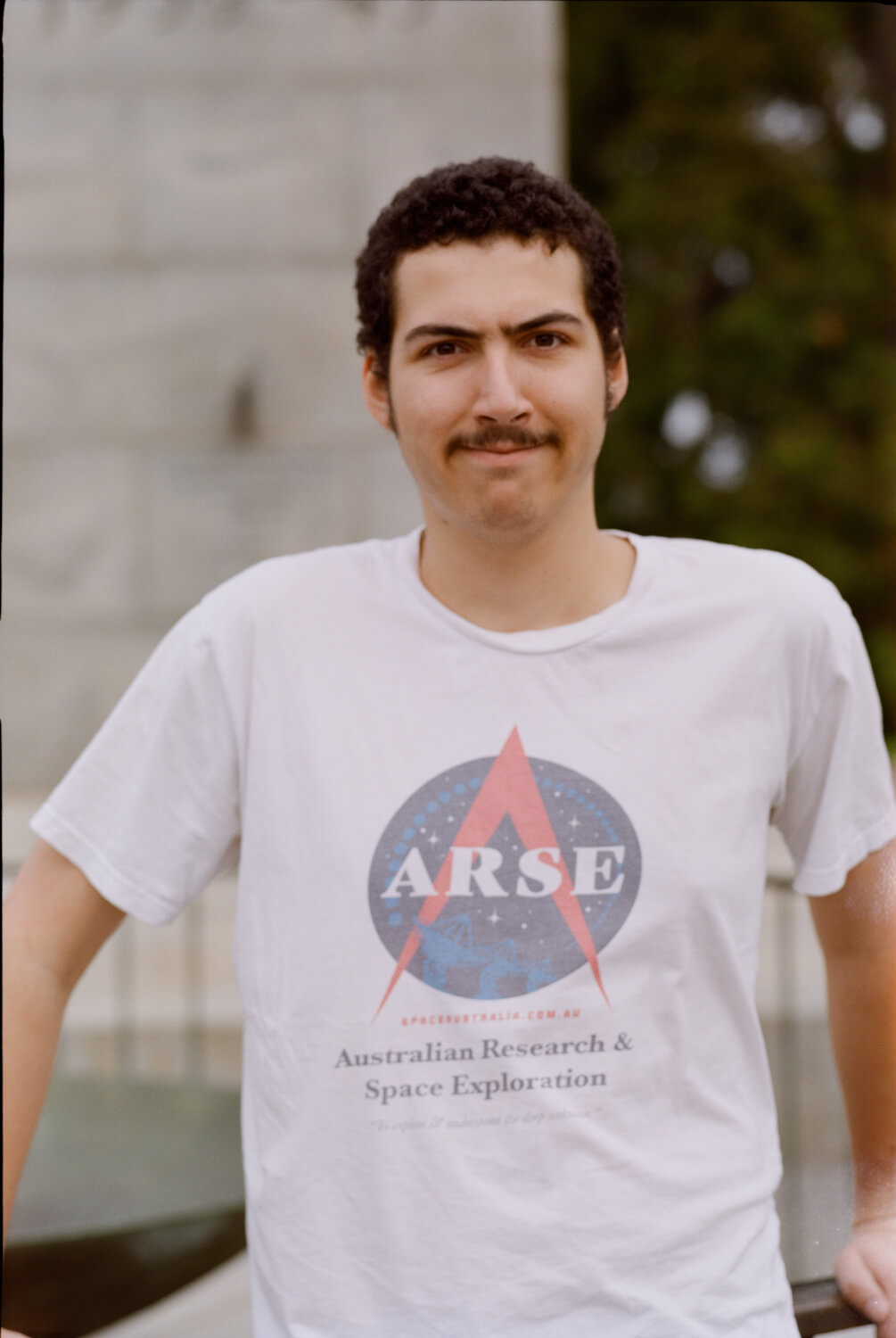
My son, a regular portrait subject of mine.
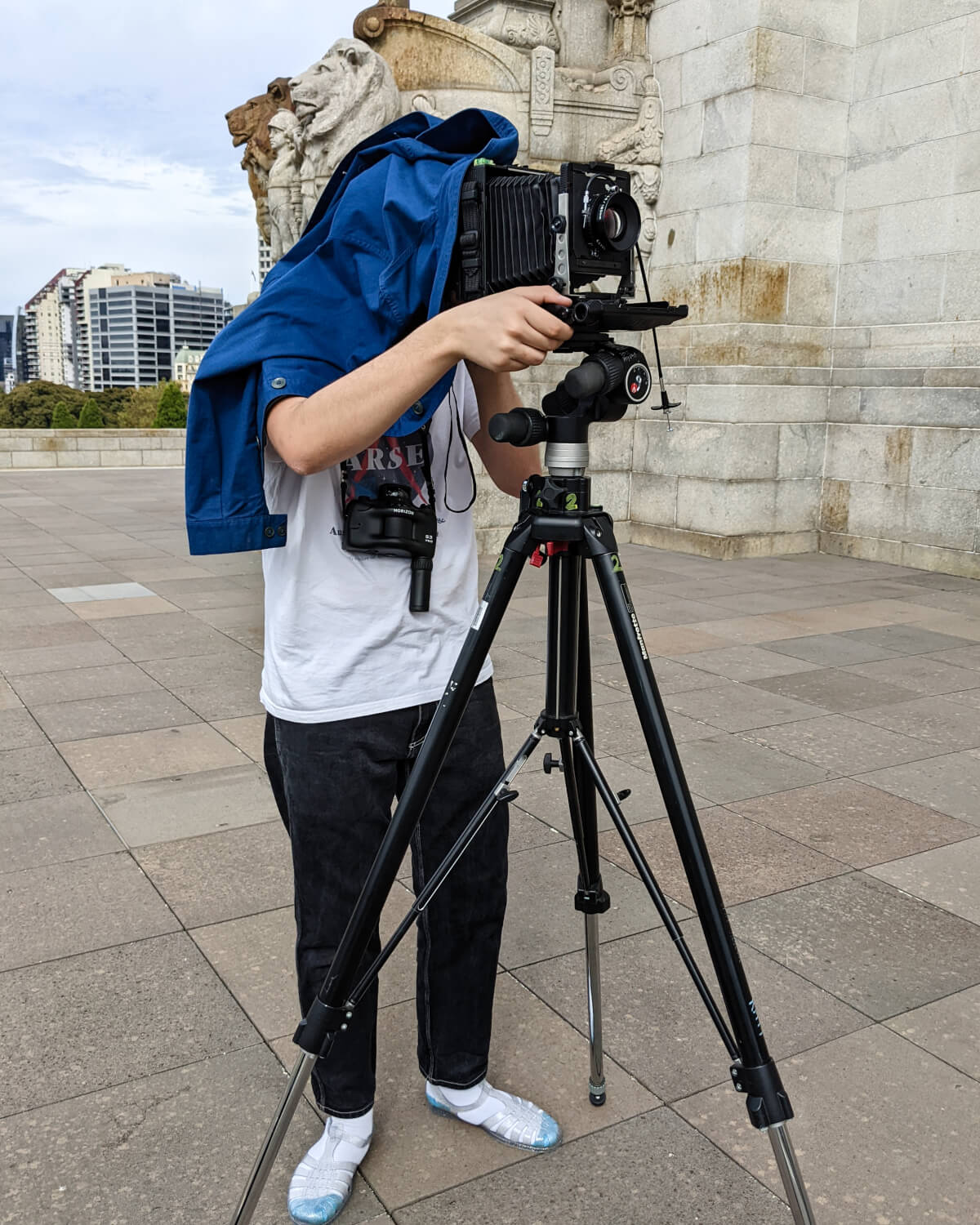
My son, setting up for an image that didn’t end up on the roll. NB: The Horizon camera casually slung around his neck,

Next up was the chance to use the camera on my Easter long weekend away in the countryside. A few landscapes, a portrait, some water infrastructure, and a few interesting trees later I’d put another two rolls through and decided that until I had them developed and scanned there was no point shooting anymore.

The camera certainly attracts attention – while I was setting up a number of shots people walking by stopped to ask me about it, and when I was getting ready to take the spillway image, a maintenance tech asked if I’d like him to open it for my photo. YES PLEASE!

By the time he’d opened, and then, 30 or so seconds later closed it, I still wasn’t ready, but I called out “THANKS VERY MUCH, I’M SURE I’VE GOT A GREAT IMAGE”

Here it is:
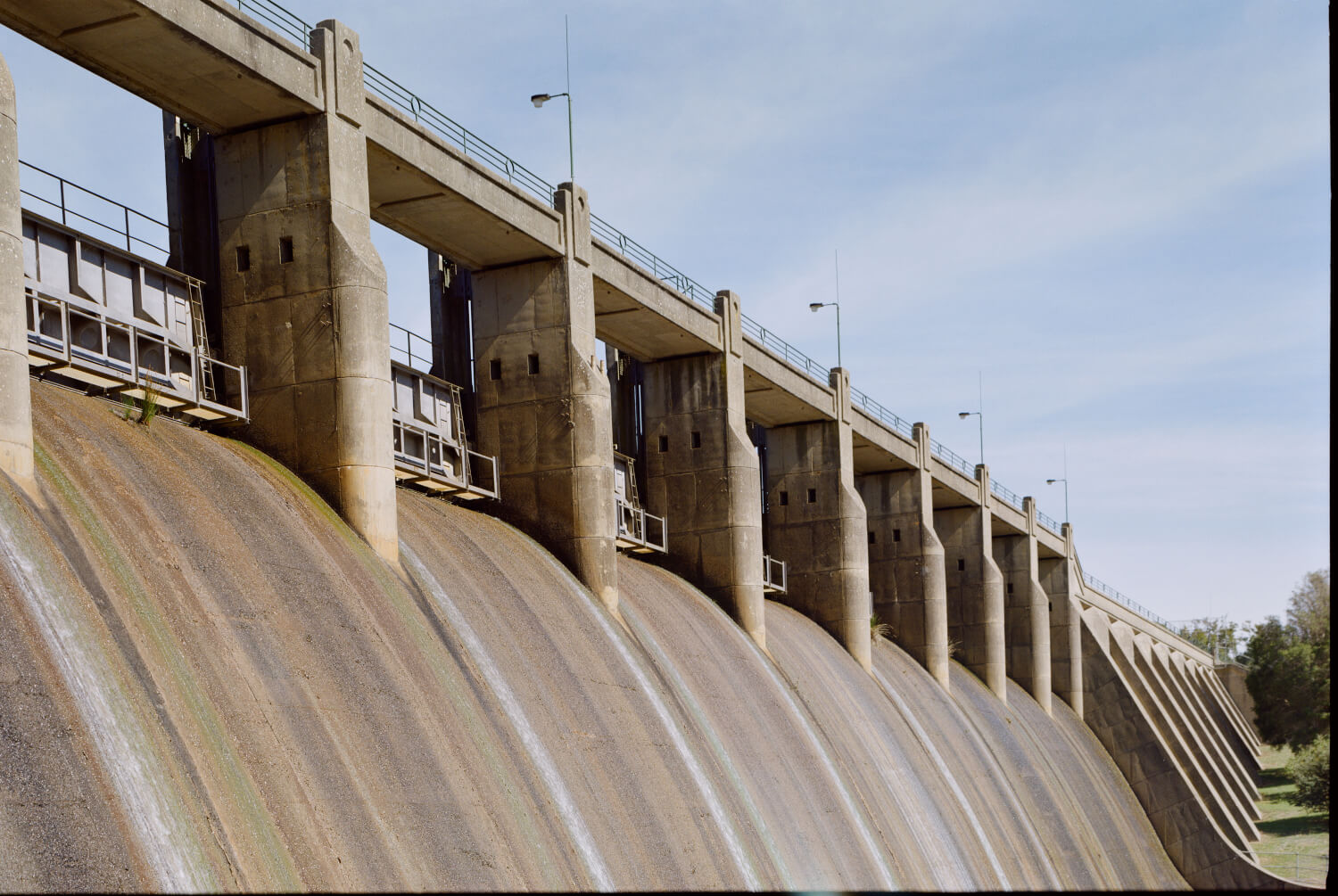

The reservoir spillway, just after the water was turned off

I had use of the camera for another week, so on Tuesday morning when I arrived at the lab I picked one film for express processing — I wanted to know how I’d done, and should I keep shooting? Was this the start of a new path on my ongoing photographic journey or just a quick side trip?

The lab emailed me a link late that afternoon to scans of 7 images, 4 with what looks like a light leak and 3 that I was happy with. I think the light leak has something to do with the dark slide, but I’m not sure.
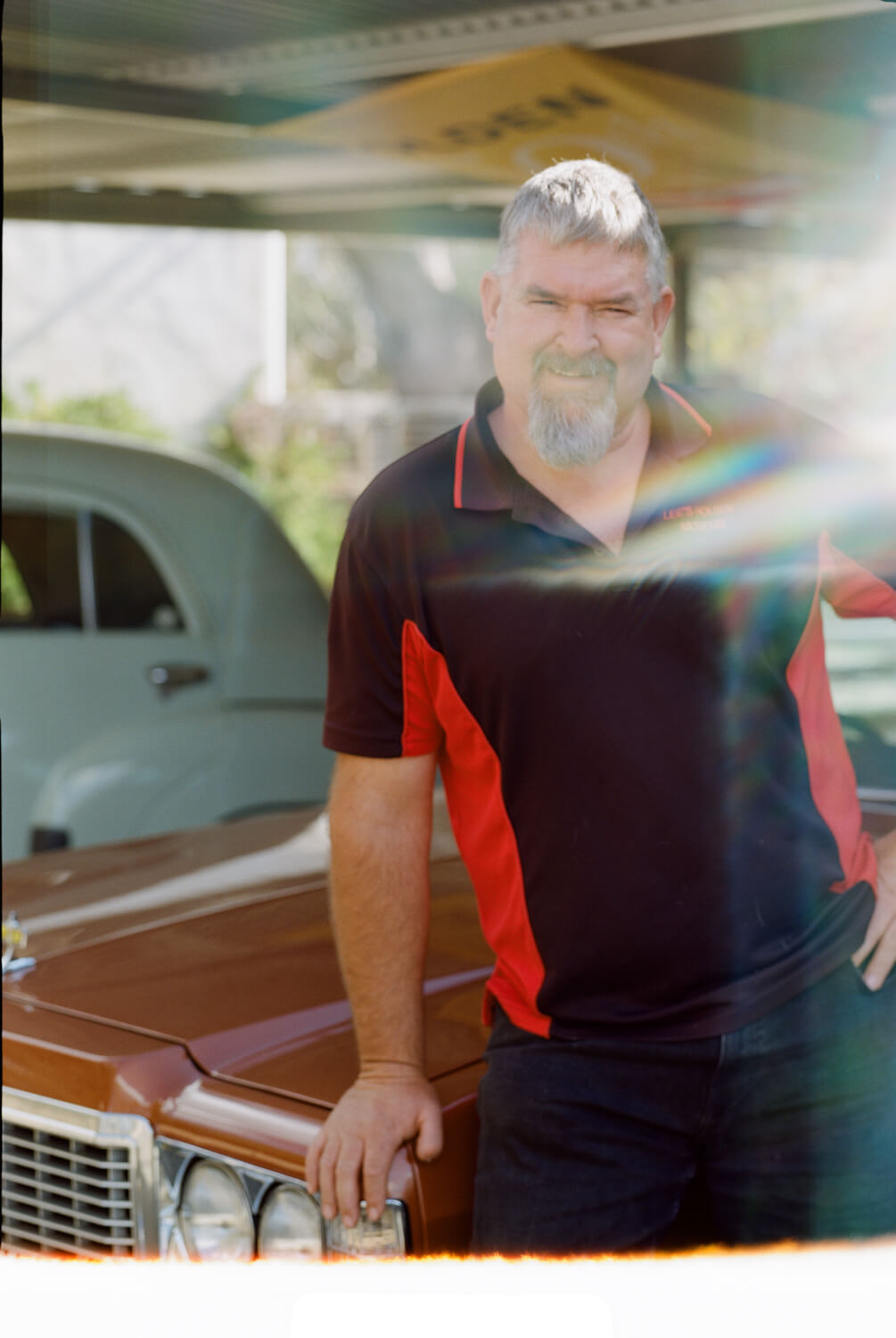
Light leaks!

The second roll processed, which was the first I shot, at The Shrine, resulted in 6 images, including the unintentional double exposure – I can only conclude that I didn’t load the film correctly, and roll three – ILFORD FP4 – yielded 7½ images, three of which I screwed up the metering on (I can’t blame the camera for that!) and one that’s only part of the frame.
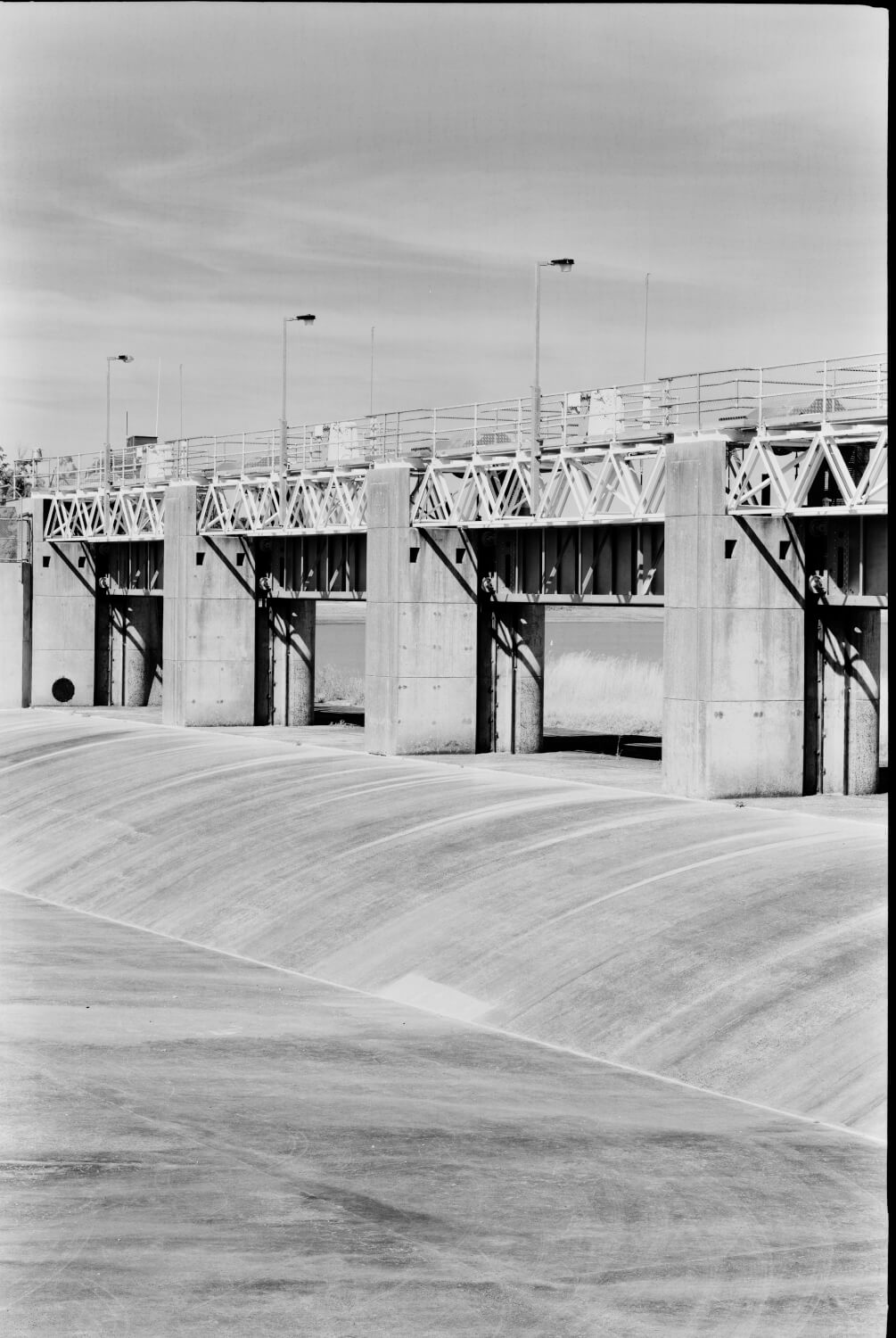
Ilford FP4
But what about the film?

As this was going to a ‘5 Frames…‘ post, I’d better say a little about the film. I can’t really put my finger on it, but it’s somehow better than the 35mm version. The colours are great, they’ve got a lovely softness without being muddy, and shadow & highlight details are nice too. All of that said, I need to run a few rolls through another 120 camera — I don’t know how much of what I’m seeing is down to the 5×4 camera’s lenses.

Price-wise, in Australia it’s not a cheap film. At A$17.00 for a roll of 120, it’s only $1.00 less than the various Lomo colour negative offerings, whereas in 35 it’s a cheap option: my local price for 35mm Gold 200 is $12.00 ($11.00/roll in a 10 roll brick) while the Lomo range is between $15.00 and $17.00/roll.
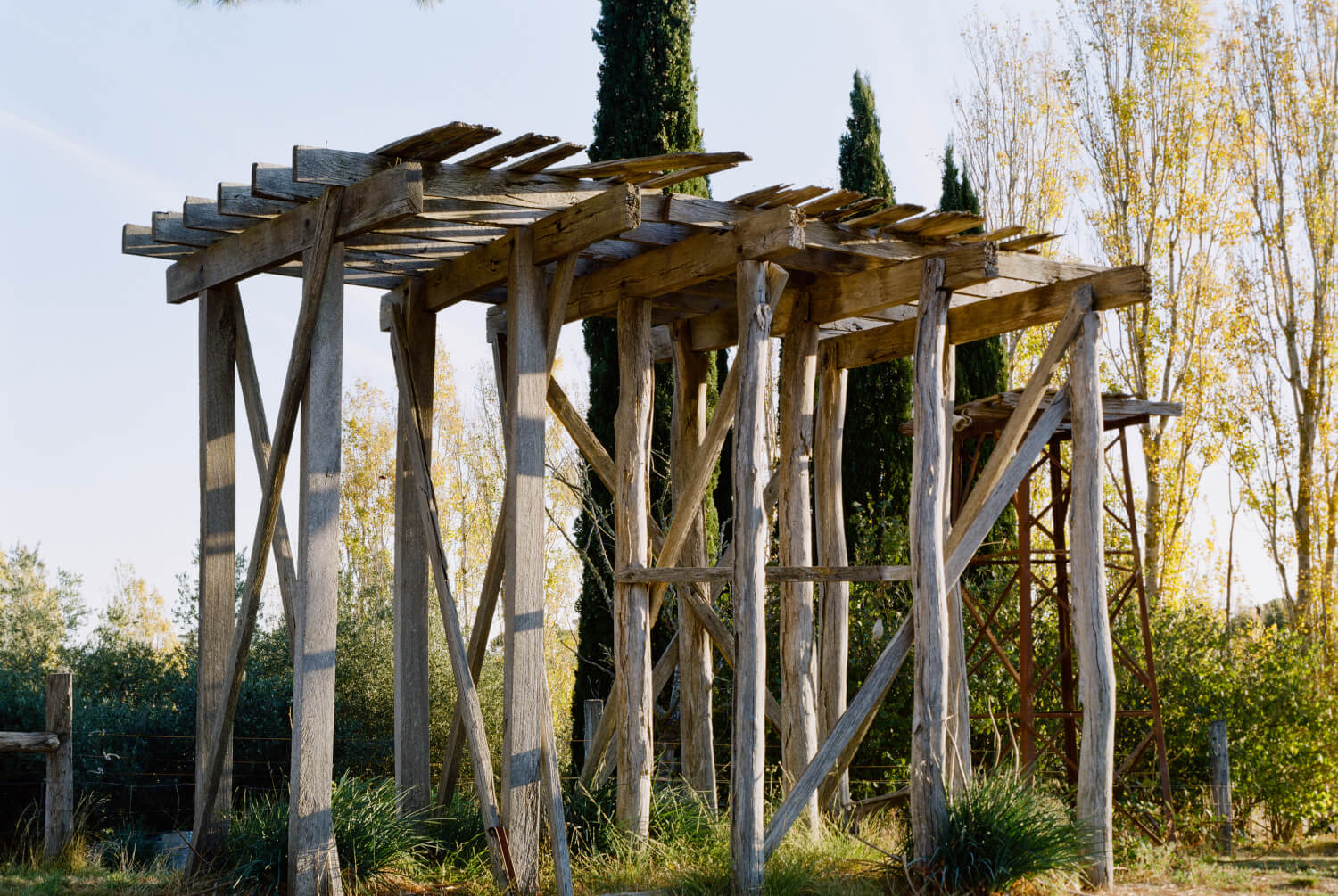
Afternoon light
Simple math

Out of a possibly 24 brilliant images, at least that was what I was expecting, I ended up with 20 frames, of which I’m impressed with maybe 2 or 3, and sort of satisfied with a couple more.

It was an interesting experiment, and after the second or third time I set up and packed down the camera, the process became relatively easy, and in some way relaxing. The time it took to setup, compose, focus and then pack away made me think about what was going in front of the camera rather than the habit a lot of photographers have — I know I certainly do — of shooting almost without considering what’s going to end up on the frame.
Am I watching eBay for a great deal on a field camera? No, I’m not.

I’m lucky to have a handful of wonderful 120 medium format cameras: a Hasselblad 503, a Pentax 67, a Yashica 635, and the Kiev I’ve written about here on EMULSIVE. And a Holga, if I ever remember who borrowed it.

They’ve all got their issues and their quirks; some are heavy, but I usually get all the frames I’m expecting from each roll (I’ll admit to an occasional unplanned double exposure with the Yashica), and I can shoot them all handheld, without needing a massively heavy tripod and a bubble level.

But I’m looking on the bright side – Imagine what it would have cost to shoot 24 5×4 sheets!

Nick Orloff
Emulsive

20.10.21

Kodak Snapshots 120 Years of Manufacturing in Australia


Between 1884 and 2004, Kodak and its local predecessors manufactured and marketed photographic products to the Australasian region. This digital showcase provides a snapshot of that 120 year history, told through Museums Victoria's Kodak Heritage Collection.

Kodak Australasia's long history stretches back over 140 years to the 1880s. Discover the entrepreneurs who founded Kodak’s photographic manufacturing and marketing operations in Australia.

In 1908, 24 years after Thomas Baker made his first dry plates in his home cellar, the company he co-owned with JJ Rouse, known as Baker & Rouse Pty Ltd, merged with George Eastman‘s American based company, Eastman Kodak Company, to become Australian Kodak Limited.

"…a splendid opportunity of acquiring a practical monopoly of the whole Australian trade in films…" Letter from Thomas Baker to George Eastman, 14 August 1907, Eastman Museum.

In September 1907, photographic manufacturer Thomas Baker, along with his wife Alice and sister-in-law Eleanor Shaw, left Australia in a hurry.

They boarded a ship to America with only about a week’s notice and weren’t back in Australia for ten months.

Earlier on in the year, the Australian government had announced that it was going to introduce a new duty on sensitised photography goods and cameras.

The new duty, which gave an advantage to British goods, would potentially devastate Thomas Baker’s business, Baker & Rouse Pty Ltd, which he co-owned with JJ Rouse.

As sole agents of Kodak, Baker & Rouse Pty Ltd was contracted to mainly sell goods from Eastman Kodak in America. If the duty went through, Baker & Rouse would suffer “a great blow” and probably be unable to fulfil its terms of contract with Kodak.

It wasn’t all bad news though. The potential tariff also gave Baker & Rouse a unique opportunity to create a monopoly in the Australian photographic industry by becoming a local manufacturer for Kodak, which would avoid paying the duty.

Baker had written to George Eastman in August of that year, “… it has occurred to me that the circumstances give a splendid opportunity of acquiring a practical monopoly of the whole Australian trade in films and to a considerable extent in apparatus.”
“…the question arises whether you would be prepared to join with us in the manufacture of films here and perhaps eventually of many forms of cameras… The present opportunity of starting the manufacture with so heavy a protective duty is not likely to recur in our time.” Thomas Baker

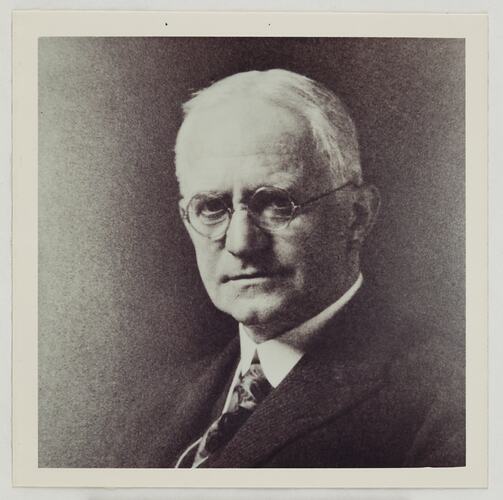
MM 140939 – Eastman Kodak Company founder, George Eastman, circa 1920s.


Kodak already had an option to buy out Baker & Rouse, but Thomas Baker wanted to propose a merger instead. On behalf of JJ Rouse and himself, Thomas Baker, the senior director of Baker & Rouse, put plans in motion.

The Baker party set out on the first steamer to America they could secure tickets for, to urgently negotiate with George Eastman about the future of their business.

It was a successful journey.

In December 1907 a contract was settled on for the creation of a new business known as ‘Australian Kodak Limited’.

George Eastman had wanted a Kodak ‘house’ in Asia for some time, and Baker & Rouse wanted to continue their success in Australia, so the new arrangement suited both parties.

On 7 August 1908 the transfer of business officially took place. The manufacturing component of the Baker & Rouse Pty Ltd business was acquired by Eastman Kodak. The Baker & Rouse retail operations became a subsidiary of Australian Kodak Limited, but under the terms of the contract it could still trade under the name Baker & Rouse.

The new company would take over the Australian and NZ agencies of Kodak and have the sole right to use the Kodak brand name in those countries.

The capital for the new company was 150,000 pounds, issued in £1 shares. Eastman owned 50.1% and Baker & Rouse owned 49.9%. This deal made both Thomas Baker, the primary shareholder of Baker & Rouse, and JJ Rouse, and their families, wealthy.

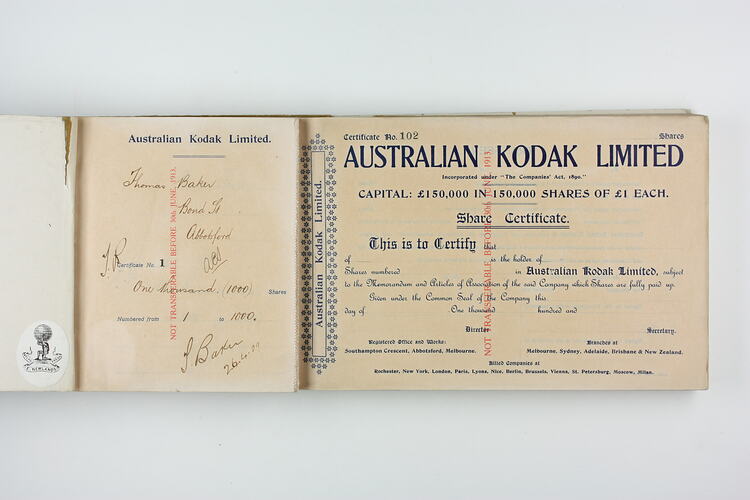
HT 25775.8 – Australian Kodak Limited’s first book of Share Certificates, with certificate number 1 issued to chief managing director Thomas Baker, 26 April 1909.


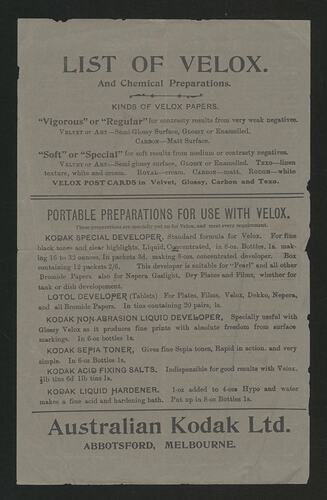
TL 63609 – User Guide - Australian Kodak Limited, 'List Of 
Velox And Chemical Preparations', Abbotsford, 1908-1911

As well as being shareholders, Thomas Baker & JJ Rouse were appointed as the founding directors. Thomas Baker oversaw the factory, while JJ Rouse was in charge of retail.

The new Australian Kodak Limited range was to include Kodak non-curling films, collodio-carbon paper, Aristo paper, Velox paper, Solio PO paper, and ferro-prussiate paper, in addition to a new brand of dry plates.

Thomas Baker and his party travelled to and fro between America, England and Europe for the six months following the negotiations at Kodak headquarters in Rochester. Baker was busy, arranging design plans and equipment for a new factory building to make Kodak products. This was going to be built at the original Baker & Rouse Austral Works in Abbotsford, at the cost of £25,000.

Ten months after they hastily had left Australia, Thomas and Alice Baker and Eleanor Shaw finally returned home. They returned as Kodak shareholders – their lives and those of JJ Rouse and family, and the local photographic industry, transformed forever.
Kodak (Australasia) Limited [1911-1920]

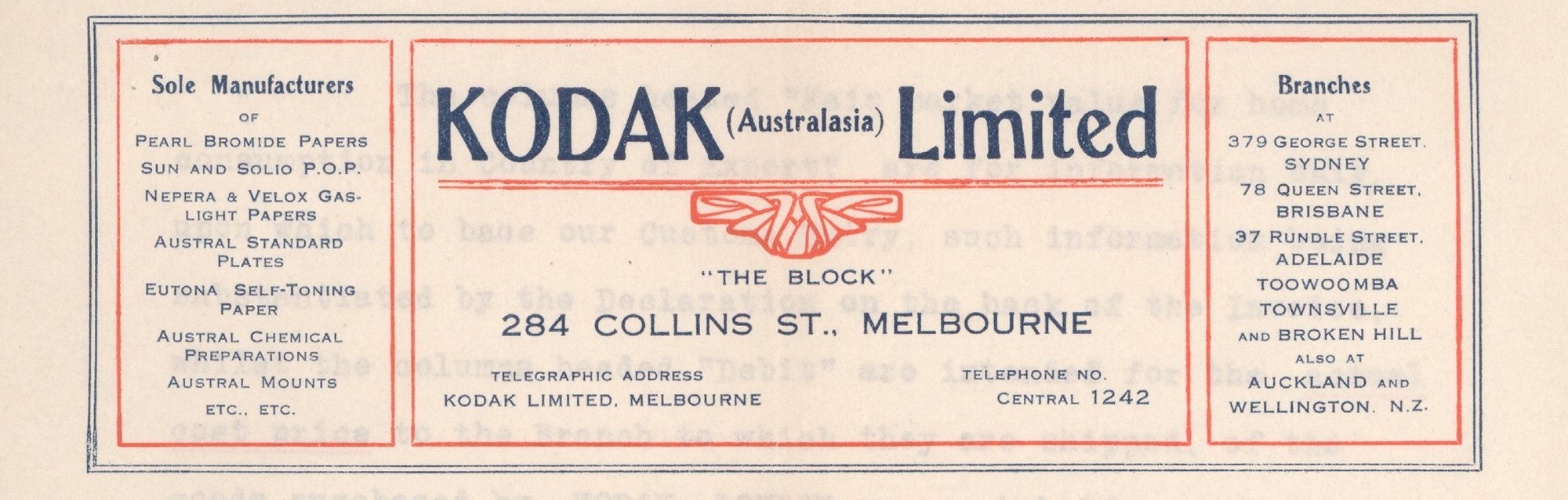
Kodak (Australasia) Limited letterhead from correspondence dated May 1914.

At two extraordinary general meetings at the registered Australian Kodak office in Bond Street, Abbotsford in September 1910, it was agreed that Baker & Rouse Pty Ltd would be wound up. Kodak company secretary John Sutherland was appointed liquidator.

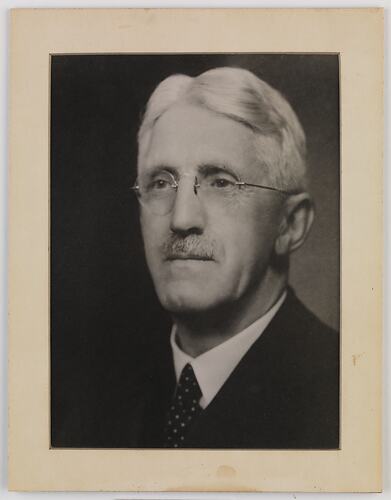
HT 23456 – Portrait of John Sutherland, was company 
secretary, and later a company director, circa 1930s.


The notion of closing Baker & Rouse had been entertained by Thomas Baker as soon as twelve months after Australian Kodak Limited was formed. Baker wrote to George Eastman of Eastman Kodak, telling him that liquidating the company would save paying double income tax, and provide other benefits.

Eastman Kodak had also not been happy with the way that Baker & Rouse was trading and wanted to bring all the distributed retail branches under the Kodak umbrella.

At the same time, it was suggested by JJ Rouse that the company name be changed to acknowledge the Australasian reach of the business, in particular its presence in New Zealand, where a branch had opened in 1909.

Thus, in 1911 the Australian Kodak Limited company structure was changed to be fully Kodak operated, with the retail branches now branded as Kodak. To legally manage these changes, a new company was formed.

The new company was known as Kodak (Australasia) Limited.

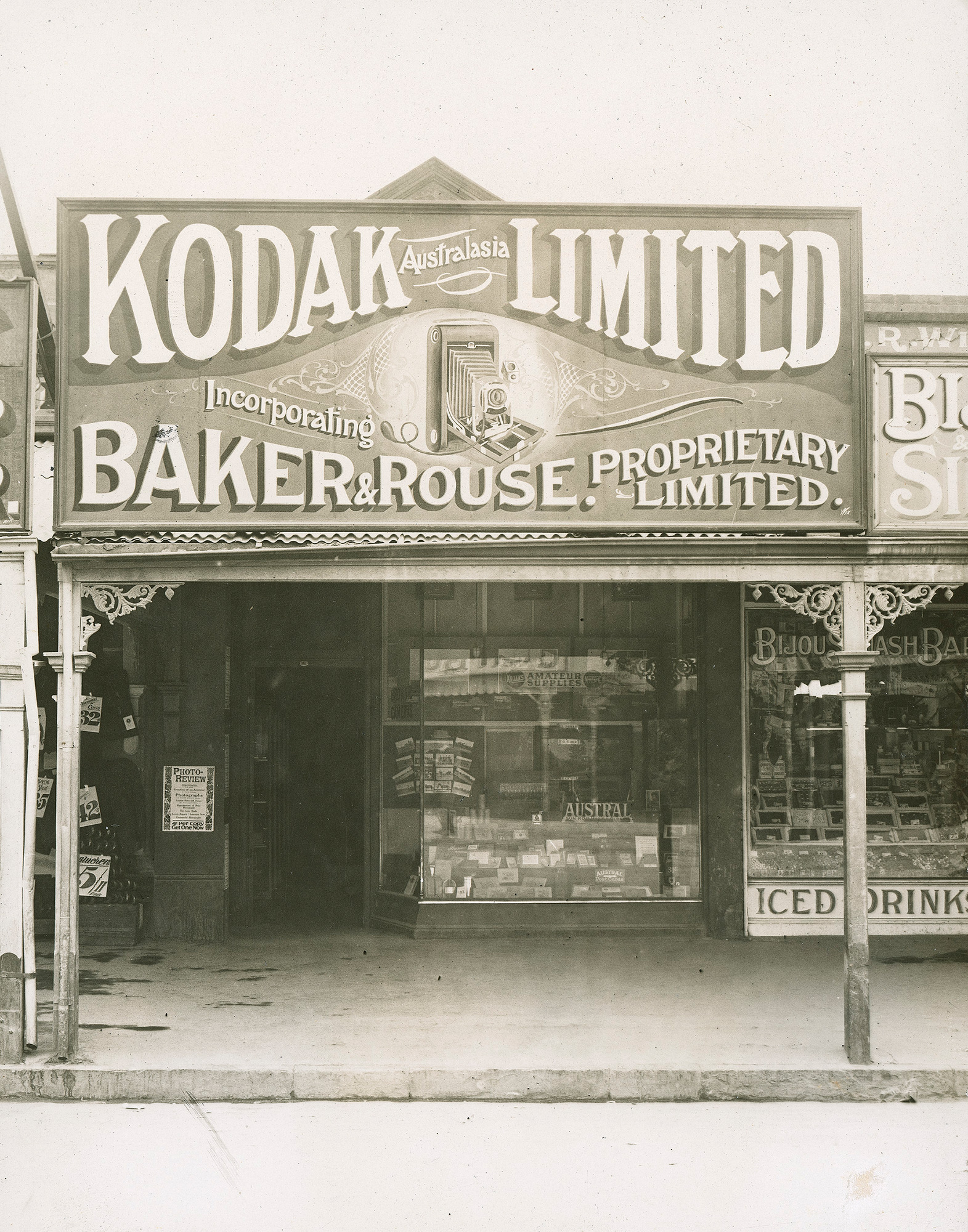
Baker & Rouse still held considerable currency in Australia, however, and it took some branches time to change over their shopfront branding.

Kodak Australasia Limited Shop in Argent Street, Broken Hill, 1912.

In 1920, Kodak became a proprietary limited company. This was the final change of name for the Australian subsidiary of Kodak.

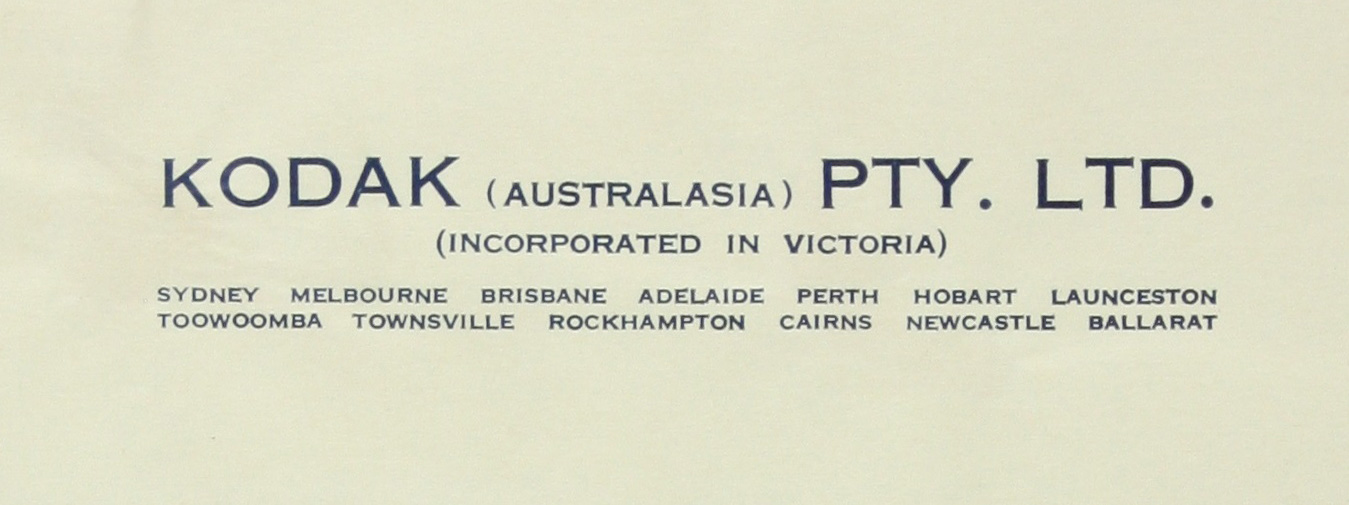
Kodak Australasia Pty Ltd letterhead from company letter dated December 1941.


However, a new addition to the Australasian Kodak family was made in 1931 when Kodak (New Zealand) Limited was formed. The managing director of Kodak Australasia Pty Ltd was responsible for the New Zealand operations.

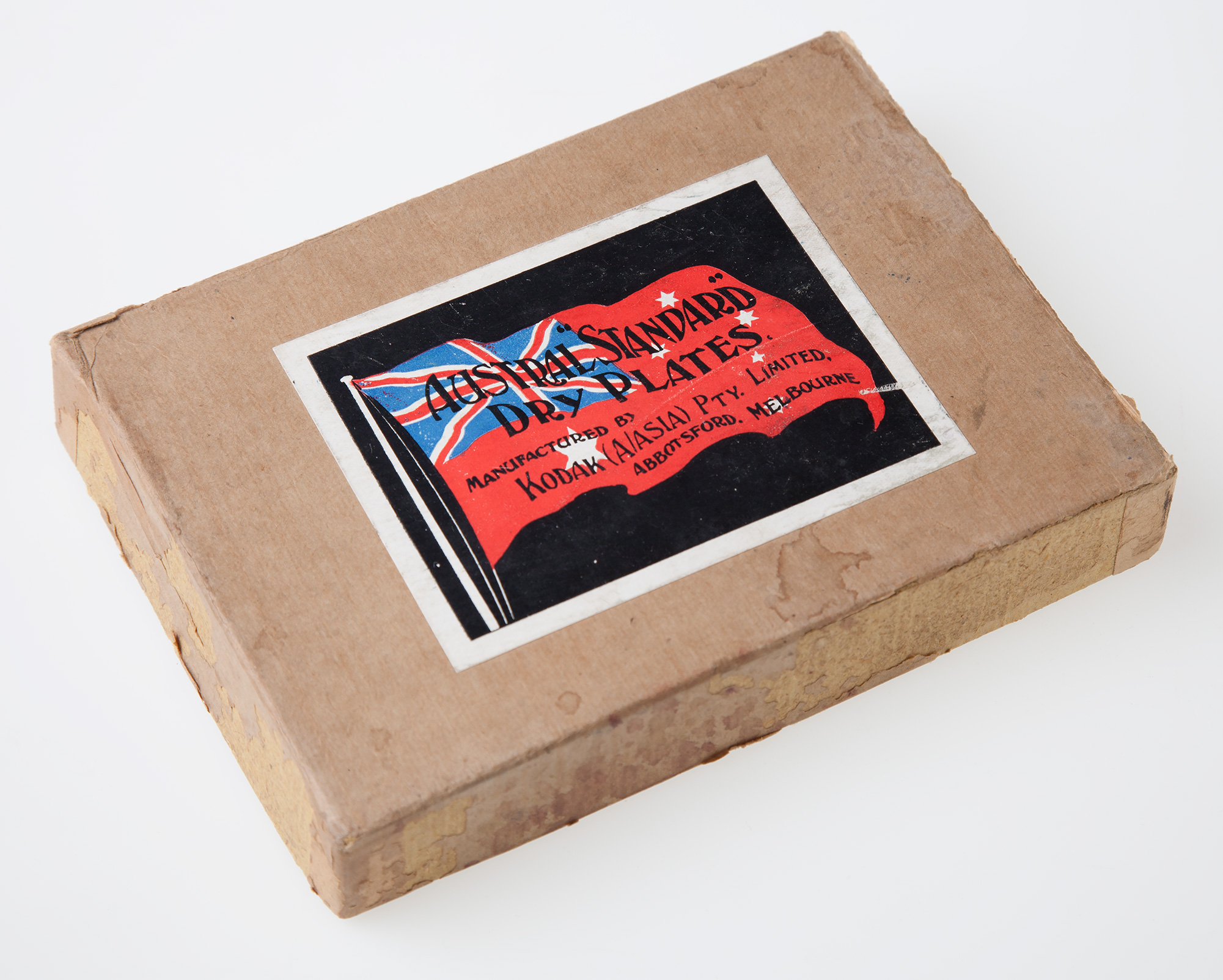
Austral Standard dry plates made by Kodak Australasia Pty Ltd at Abbotsford, circa 1930s.

Over coming decades Kodak Australasia underwent significant changes when Thomas Baker died in 1928, followed by JJ Rouse in 1938. JJ Rouse’s son Edgar subsequently became managing director and then chairman of the board.

When Edgar Rouse retired in 1959 it marked the end of half a century of Kodak leadership from Baker and the Rouses. It also signalled a shift away from the family led business towards a more corporate operation.

Two other key changes occurred that shaped the future of Kodak Australasia Pty Ltd. The first was when a new factory was finally opened, at Coburg, in 1961 – while the second was when this factory was closed down in 2004.

The transformation of photography by digital technology decimated Kodak’s worldwide profits and resulted in manufacturing plants around the world closing, with Melbourne’s factory being an early casualty.

Although manufacturing no longer happens in Australia, Kodak Australasia Pty Ltd continues to trade in the 21st century. It distributes imported photographic equipment and supplies throughout Australia, as the company always has - including now digital cameras.

Museums Victoria Kodak Collection


References
Advocate, 4 July 1908, p.39
Age, 19 Sep 1908, p.13
Ancestry, Year: 1908; Arrival: New York, New York, USA; Microfilm Serial: T715, 1897-1957; Line: 9; Page Number: 8; Ancestry.com. New York, Passenger and Crew Lists (including Castle Garden and Ellis Island), 1820-1957 [database on-line]. Provo, UT, USA: Ancestry.com Operations, Inc., 2010
Argus, 31 March 1908. p.4; 19 Sep 1908, p.14
Australasian Photo-Review, 21 September 1908, p.331; 15 November 1930, p.532
George Eastman Museum, Correspondence - Thomas Baker to George Eastman, 2 Sep 1907; 14 August 1907; 22 May 1908; 31 July 1909; 17 August 1910; 1 Oct 1918
Museums Victoria Kodak Collection, HT 25783.3, Balance Sheets - Kodak Archive, Series 12, Australian Kodak Ltd & Baker & Rouse, 31 May 1908; The History of Kodak in Australia, Nigel Beale (unpublished, 1983)
University of Rochester, Kodak Historical Collection #003, Series II, Corporate papers National & International, Subseries 10: National and International Kodak Locations, Box 59: Annual Reports and Data, Folder 9: Information on Foreign Companies (File 1 of 3), Report
Victorian Gazette, Thomas Baker, 12 October 1910, p.4743; JS Sutherland, 13 December 1911 p.5960

5.6.20

Bondi Icebergs Club: Swimming at Bondi’s Iconic Ocean Pools

Bondi Icebergs Club, Swimming Club dates back to 1929 and owes its origin to the desire of a band of local life savers trying to maintain their fitness during the Winter months.Adicionar legenda 


They formed the Bondi Icebergs Winter Swimming Club, drew up a constitution and elected office bearers. Included in the constitution was a rule that to maintain membership it was mandatory that swimmers compete on three Sundays out of four for a period of five years. This rule, known as the “15B rule” still exists and has been the source of much commentary over the years.

The Bondi Icebergs become licensed in 1960 and the members moved from a tin shed into comfortable premises with bar & poker machines. A further update took place in the 1970’s enabling the Club to operate on two floors.

In 1995 female members were admitted, and in 2002 the Club opened their new premises.

The Bondi Icebergs is the only licensed Winter Swimming Club in the world.

Since its beginning back in 1929, the Club has forged a reputation as one of Australia’s most famous Winter Swimming Clubs. We could not have reached where we are today without the support of all the members who have been involved with this great Australian swimming club.Yes, it’s an icon, and 100% a must-visit venue for those who love swimming with a wide, beautiful view.


Beautiful people to the right and their beautiful kids to the left. Thank goodness for the slightly daggy changing rooms and pool area itself. Come in summer to soak up the sun, come in winter to see the real club and its die hard members, and let the chilly water shock you into renewed vigour and vitality.

Bondi Icebergs Club with its two pools, sauna and places to eat are on the headland at the southern end of Bondi Beach.The very first Bondi Baths were built in the 1880’s.

Nowadays, there’s a 50 metre adults pool and the shallower 25 metre children’s pool set at right angles to it.The pools are open all year round and there are lifeguards there at all times the pools are open.

Visitors are welcome at all times and the entry fee is very modest.

The rather grand building at Icebergs houses a typical Australian club, with bars and a brasserie. Anyone can use this facility, you just need to sign in.


Icebergs Swimming Club

The Icebergs Swimming Club began in 1929 as a winter swimming club for local life guards who wanted to maintain their fitness over winter.


It is now one of the biggest winter swimming clubs in the world and claims to be the only licensed one!

The Icecubes

The Bondi Icecubes swim every Winter Sunday morning from the 2nd Sunday in May to the last Sunday in September from 8.30am. Our club is open to all children – our only criteria is an ability to swim 40 metres! When a ‘Cube’ turns 18 they are welcome to join the World Famous Bondi Icebergs.

The Bondi Icebergs Club for Kids

Children who can swim will enjoy a splash here. For very young children there is less appeal, as there’s just the pool itself and its surrounds.

The little cave areas at the back of the kids pool give some shade and could be good for a play.

Warning: Icebergs can be very very busy, with many many serious swimmers…. so if you come for fun, pick a quiet time e.g. mid-mornings during the week.

If you have pre-swimmers, you might be better staying on the beach at Bondi, with its kids rock pool at the far north end of the beach and the excellent playground.