Showing posts with label black & white film. Show all posts

17.4.25

The most expensive photograph in history is once again of Man Ray and sold for 12 million

Le Violon d’Ingres (1924), by Man Ray, in a period test
Rosalind Gersten and Melvin Jacobs/Christie’s Collection

It depicts a woman whose bare back evokes the shape of a violin. We can’t see her arms or legs, and only her profile reveals the identity of the model, Kiki de Montparnasse, singer, painter and lover of Man Ray, the artist to whom we owe Le Violon d’Ingres (1924), one of the most celebrated photographs of the 20th century.

A copy vintage of this work, which we immediately associate with its author and the surrealist movement, of which he is one of the main references, was sold this Saturday at an auction in New York for 12.4 million dollars (12 million euros, which already includes the fees that the transaction involves), greatly exceeding the most optimistic estimate, which was set at seven million.

Le Violon d’Ingres (silver gelatin print measuring 48.5 x 37.5 cm) was one of the lots that had generated the most expectations around the prestigious Christie’s auction and was part of the surrealist art collection of Rosalind Gersten and Melvin Jacobs.

According to the American art magazine Art News It took ten minutes, under the watchful supervision of the auctioneer, Adrien Meyer, for two of the auctioneer’s photography specialists, Darius Himes and Elodie Morel, on the phone with two bidders, to settle the dispute. Morel and the collector he represented ended up winning, setting the price at 10.5 million dollars (10.1 million euros) and drawing applause from the room.

This portrait of Kiki de Montparnasse, one of Man Ray’s muses, is what in the specialized world is called an “original photographic copy”, since it was made at the same time as the artist created the corresponding negative, which makes it very rare and therefore particularly valuable to any collector or museum.

The Jacobs, executives linked to the fashion world and with friends in the surrealist circle, which also included Marcel Duchamp, René Magritte, Max Ernst and Dorothea Tanning, bought Le Violon d’Ingres directly to Man Ray (1890-1976), in 1962, and they never abdicated it. Rosalind outlived her husband (Melvin died in 1993), eventually dying in 2019, aged 94. It fell to the heirs to sell the couple’s collection.

The auction offer of this iconic work by the American artist, which on the eve of his visit to Darius Himes square, he called “something unprecedented in the art market”, set a new record for photography and by a wide margin. The former belonged to Andreas Gursky, the German photographer who in 2011 saw one of the proofs of his The Rhine II (1999) to be sold for 4.3 million dollars (4 million euros). Gursky then broke the record previously held by Man Ray, author of Noire et Blanche (1926), sold four years earlier for three million (2.8 million euros).

“At once romantic, mysterious and mischievous, this image has captured everyone’s minds for nearly 100 years,” said Christie’s specialist Himes, quoted in a statement in which, weeks earlier, the prestigious auctioneer had publicized and promoted the sale of the portrait. unique by Kiki de Montparnasse.

With copies in the collections of the Pompidou Center in Paris, one of the most important museums of modern and contemporary art in the world, and in the J. Paul Getty Museum in Los Angeles, Le Violon d’Ingres it is a work built in stages: the artist photographed the model, then printed the resulting negative and, on the proof that gave rise, drew the typical openings of the violin, in pencil and ink, a type of ink. Only later did he pick up the camera again to record the result, which gave rise to a new negative and the proofs that would lead to the title of the one that was now sold at auction.

Le Violon d’Ingres it is, according to some art historians, a tribute by Man Ray to one of his favorite painters, the Frenchman Jean-Auguste Dominique Ingres, who liked to play the violin in his spare time. The model’s pose, they note, is also reminiscent of that of the women who appear in two famous paintings by Ingres: Le Bain Turkish (the one in the center wearing a turban, playing a stringed instrument) and la baigneuse.

7.1.23

4 Favorite Medium Format Film Cameras


If you love film photography, you’re missing out if you don’t use medium format film cameras. Arguably, this is where you’ll really to start a major advantage over digital photography. There’s also things like the look, the feel, and the overall approach to how you work with subjects. You have to be a million times more conservative with how you shoot photos. So we dove into the Reviews Index to find some of the best medium format film cameras we’ve used.

Why We Chose These Medium Format Film Cameras

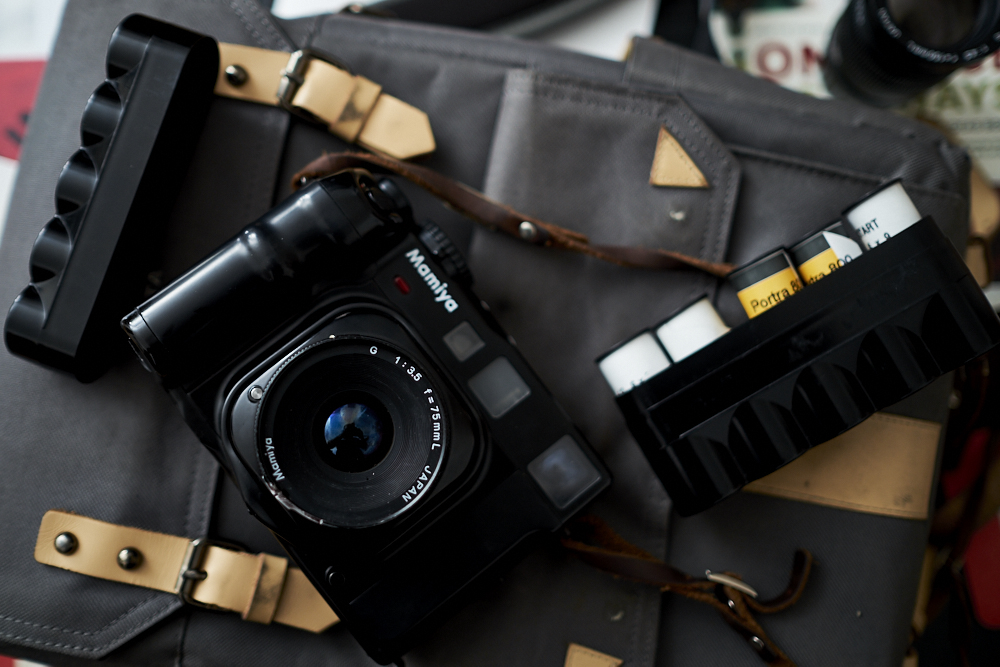
First off, we’ve reviewed a bunch of medium format film cameras over the years. And we’ve specifically chosen these for a variety of reasons. With the exception of the Mamiya 6, all of these cameras are completely analog and don’t need batteries at all. Of course, if you get a metered prism for the two SLRs, that’s the exception. But a fully analog camera will always work no matter what. The Mamiya 6 was chosen because the system has arguably some of the best lenses ever made. It’s also incredibly versatile, and I love the square format.

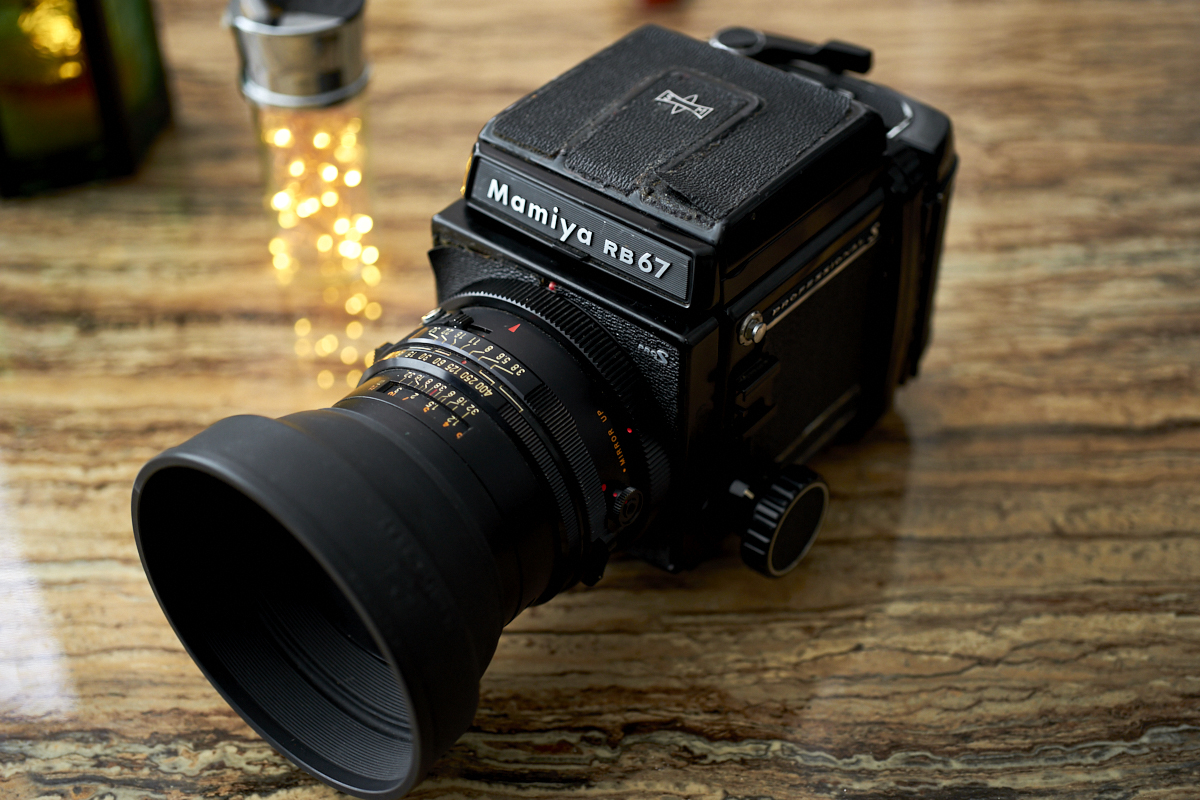
No Hasselblad? Yes. The reason for this is because of the pricing. That’s also why we haven’t reviewed or listed the Contax 645, Mamiya 645, etc. We also chose the Mamiya RB67 because it’s often more reliable than the RZ67. We also didn’t choose a 645 format camera because digital 645 arguably outdoes film at this point.

Mamiya 6: Square Medium Format
“I’ve been on the search for the perfect medium format film camera for me for years now. This, the Fujifilm GW690 III, and the Mamiya RB67 Pro S are amongst my favorites. I prefer to have a multitude of formats and cameras that can handle different situations accordingly. But of any of those, the Mamiya 6 seems to offer the most versatility. I can use it for documentary work, studio work, landscapes, portraiture, and so much. It’s just meant to be a damned good professional film camera.”

Mamiya RB67: 67 Medium Format
“The Mamiya RB67 Pro S is a camera meant for the serious photographer that wants to stick to analog. It’s a studio and landscape camera that will most likely require a tripod from you. They’re fantastic to use; but also keep in mind its difficulty.”

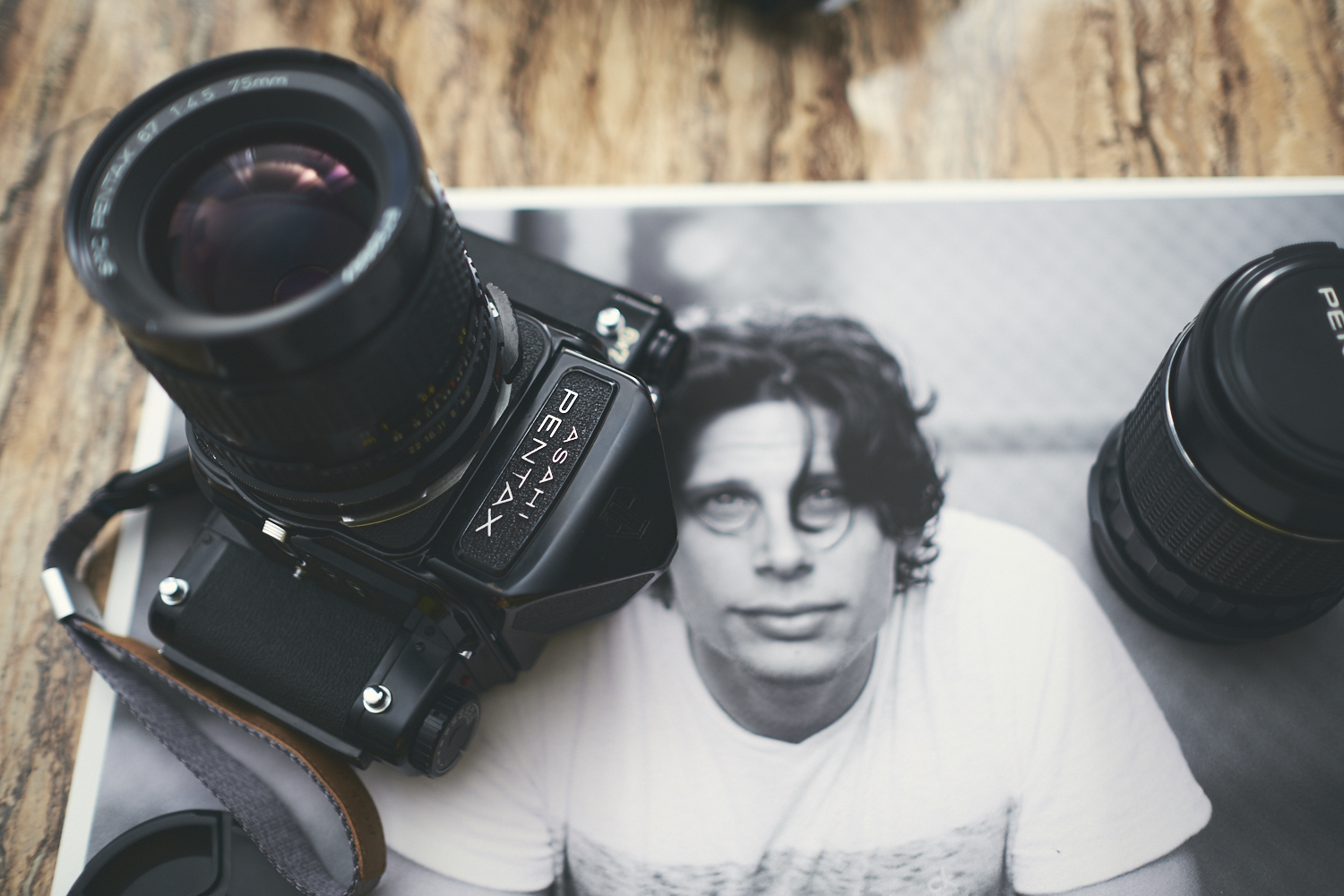
Pentax 67: Obviously, 67 Format
“The Pentax 67 is honestly a fantastic medium format SLR camera. It has found a way into the heart of so many photographers. With a plethora of fantastic lenses, it is surely best used when shooting with natural light outdoors. It’s not the best for studio work and location work with a flash due to the long flash duration of 1/30th. You’ll also want to use wider lenses for something like that.”

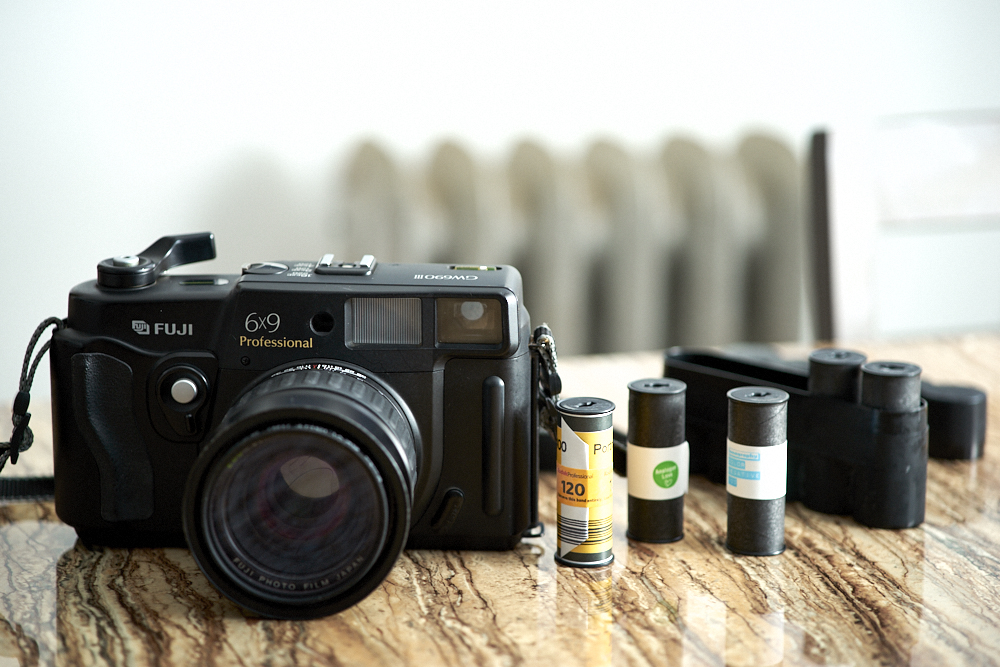
Fujifilm GW 690 III: Big is Beautiful
“I’ve been using the Fujifilm GW690 III for a really long time now. By far, it’s my most used medium format film camera, even over my Mamiya RB67 Pro S. That’s because it’s got a small(ish) size, fantastic lens, rangefinder focusing, and it’s reliable. Sure, you’re only getting eight shots per 120 film roll, but if you’re careful then that’s enough.”

16.7.22

Philippe Halsman: American Portrait Photographer to the Stars


Philippe Halsman was born in Riga, Latvia, on May 2, 1906. He discovered an old view camera in the family attic when he was fifteen, bought some glass plates, and started making photographs. Like many other photographers, when he first saw that image appearing in the darkroom tray, it was a life-changing moment, and he knew what he was going to be doing with his life.
He became the family photographer and in addition to family vacations and holidays, he spent his time and money photographing friends and friends of friends.

His sister moved to Paris to study and married a Frenchman. Attending their wedding, he fell in love with Paris and decided to move there to continue working on his engineering degree. He was far more interested in art and literature than he was in technology and mechanics, so after he graduated, he announced that he was a professional photographer. He bought a photoflood lamp and a used enlarger to go with his old view camera and launched his career.

He soon became well-known in Paris for his creative and strong portraits of actors, writers, and musicians. He married his apprentice, Yvonne Moser. Soon Philippe and Yvonne Halsman became a famous photography team in pre-war Paris. He bought another floodlamp, a light stand, and a Zeiss Tessar lens. The ultra-sharp images and creative two-light setups became his signature.

Visually Striking Images Meld Photography andDigital Art


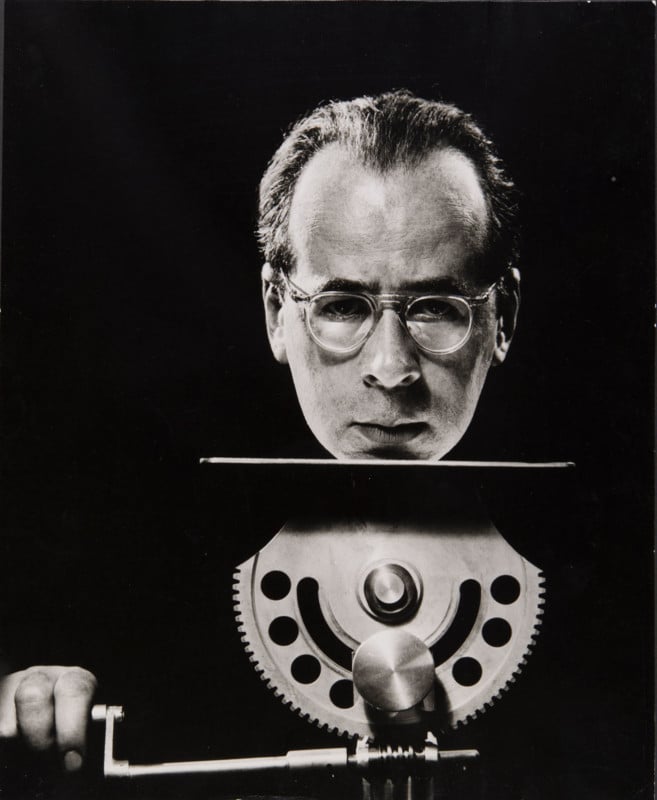
A self-portrait by Philippe Halsman.
Halsman Camera

Halsman soon realized that in the seconds that he lost loading the film holder and pulling the dark slide, he had missed the decisive moment of a photograph. This caused him to design a 9×12 cm twin-lens reflex. There were a number of TLR cameras that he designed and had built or sold as “The Halsman” camera, most notably 4×5 TLRs.

“The camera I have constructed for myself is a very important part of my technique,” Halsman once said. “My head is covered by the focusing cloth, I am looking at the subject through the lens. From the sitter’s point of view, the camera’s lifeless mechanism suddenly becomes almost alive.


“Later, in the darkroom I sometimes get a new idea. The creative process doesn’t stop with the taking of the picture, it continues also with the making of the print — because by changing the tonal values you can change the mood or emphasize the statement you originally intended in the studio.”

He also used Hasselblads, Rolleiflexs, and other twin lens reflex and single-lens reflex cameras. He wanted to be able to be continually seeing the subject through the viewfinder as he fired the shutter.
World War II

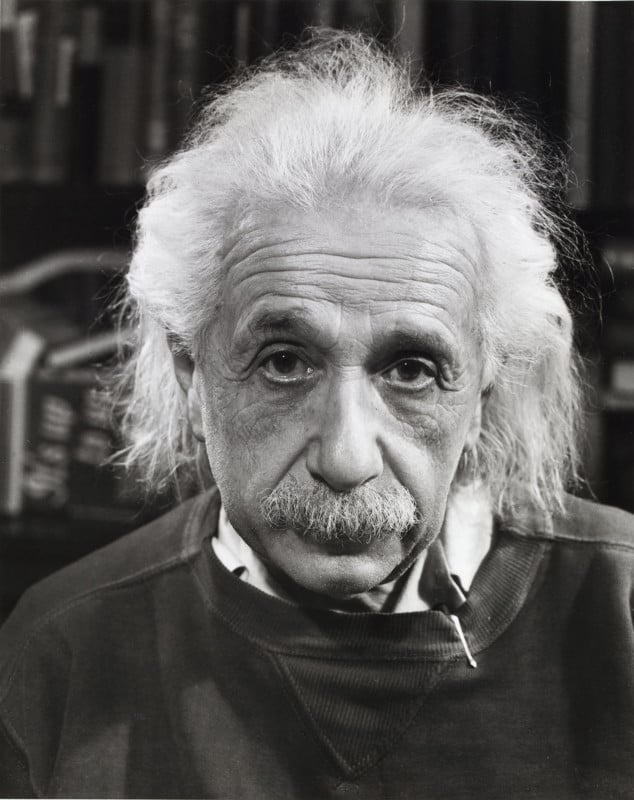
When the war started, he was able to send his wife and first-born daughter Irene to the United States. When the Germans overran Paris, he fled south with many other Parisians to Marseille. There, he found that he would not be permitted to go to the U.S. because he had a Latvian passport. The U.S. allowed only eighteen Latvians per year to enter the country and there was a seven-year wait. Because he was acquainted with Albert Einstein, he asked his wife to contact Einstein to see if he could help. Einstein did indeed help and Halsman was soon on his way to New York.


Albert Einstein. Photo by Philippe Halsman.

Halsman arrived in New York on November 10, 1940. Even though he was a famous photographer in France, he was unknown in New York. He spoke five languages, but English was not one of them, so he was at a big disadvantage. His breakthrough came when his photograph of an aspiring model named Connie Ford was picked up by the beauty company Elizabeth Arden and used for a lipstick ad. The photo won The Art Directors Medal, and his career took off in America.
Salvador Dali

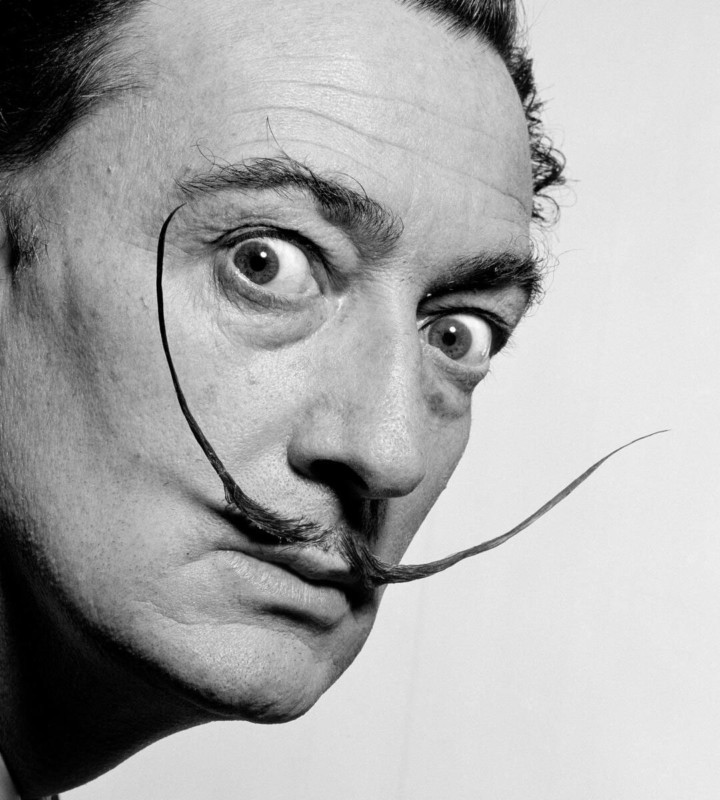
Halsman met Salvador Dali in the early 1940s and they became lifelong friends. Over the years Halsman photographed Dali many times.

Spanish painter Salvador Dali. Photo by Philippe Halsman.
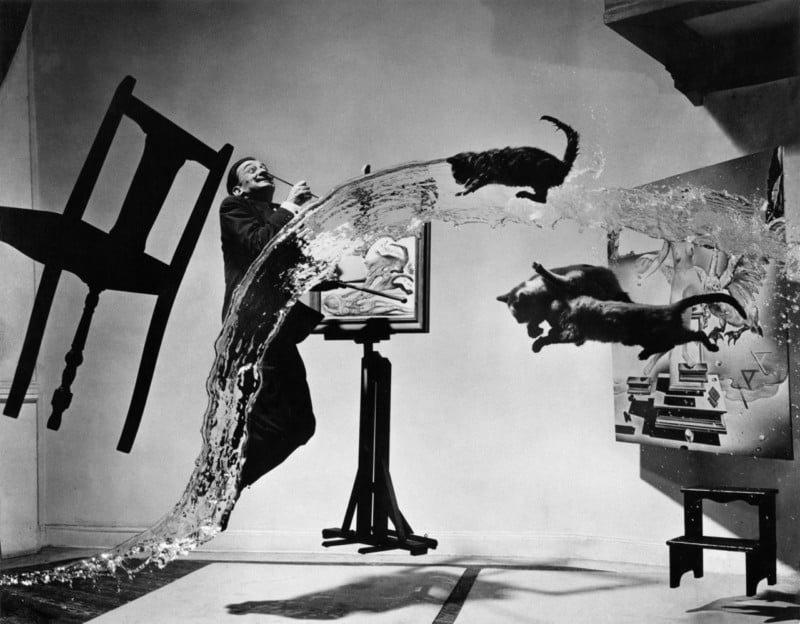

One of the most famous images Halsman made of Dali was Dali Atomicus in 1948 — the photograph with the cats, water, and a chair.

Dali Atomicus. 1948. Photo by Philippe Halsman.
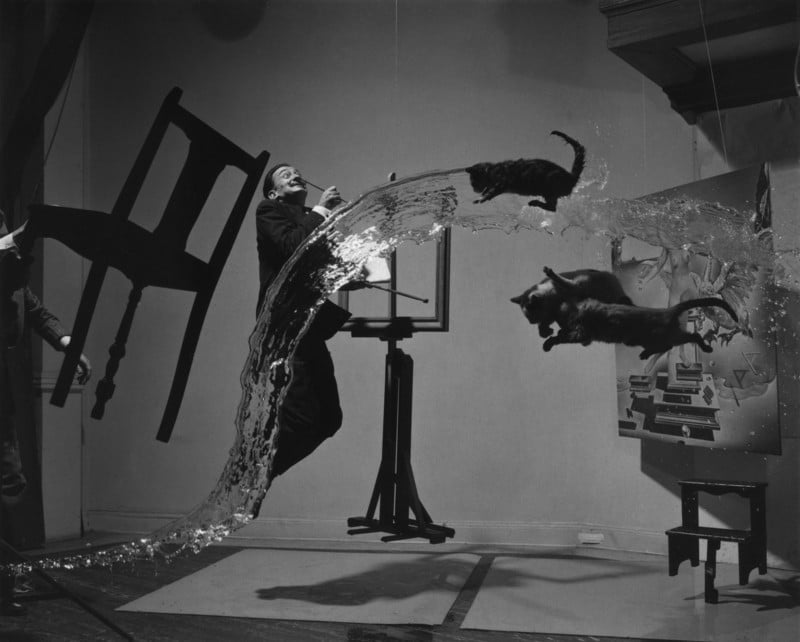
Hearing Halsman describe this photo shoot in person was hilarious. In the mid-1970s, the local college in my town held a series of lectures called “The Masters of Photography.” They invited several famous photographers of the day to speak at the monthly public event. I attended all of the events and was able to meet many of the most famous 20th-century photographers. The evening with Philippe Halsman was one of my favorites.

He described throwing the water in the air while his wife held the chair his sister Liouba and daughters were the “cat wranglers.” It took 26 shots to get this image. That meant 26 times wiping up the floor, 26 throws, and 26 times catching the cats.

The original, unretouched version of Dali Atomicus in which the support strings are still visible. Photo by Philippe Halsman.
Jump Book

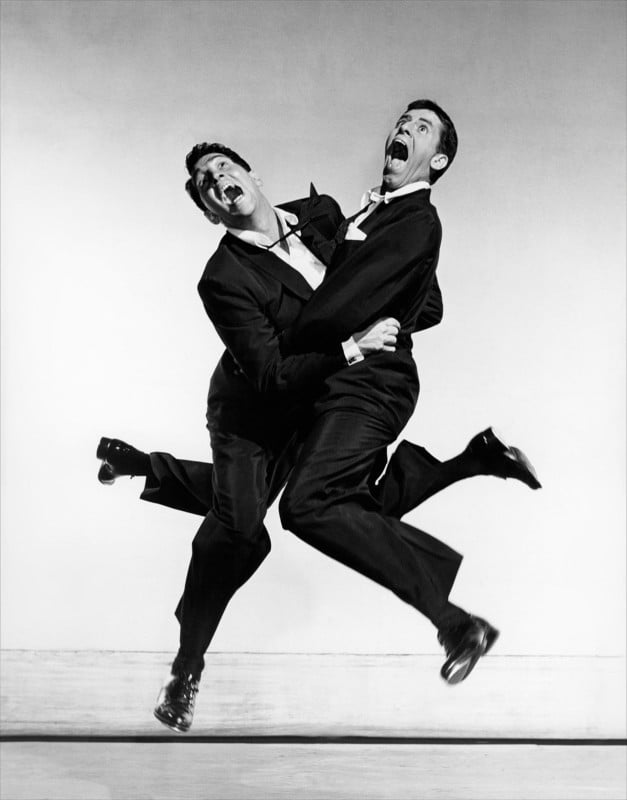
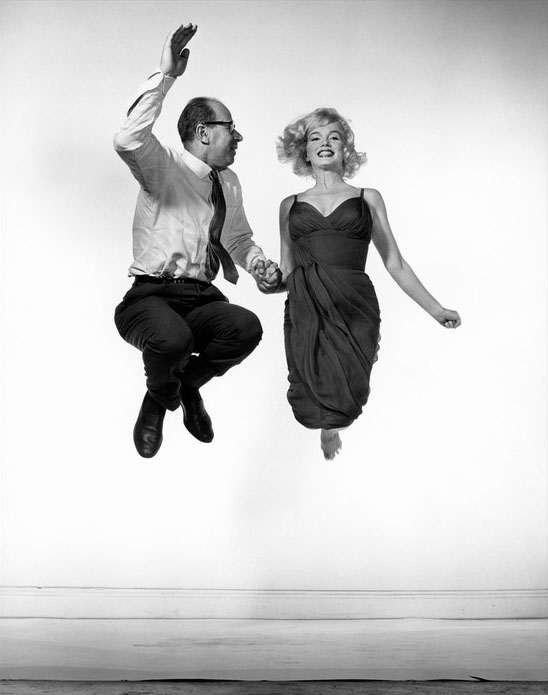
Early in his career, he got in the habit of asking his portrait subjects to jump. This was usually the last photo of the session. Over the years he made hundreds of images of famous people jumping that he published in a series of books called The Jump Book.


Dean Martin and Jerry Lewis. Photo by Philippe Halsman.

“Starting in the early 1950s I asked every famous or important person I photographed to jump for me,” Halsman once said. “I was motivated by a genuine curiosity. After all, life has taught us to control and disguise our facial expressions, but it has not taught us to control our jumps.

“I wanted to see famous people reveal in a jump their ambition or their lack of it, their self-importance or their insecurity, and many other traits.”

Using jumping as a pose to gain insight into his subjects’ psyche was a psychological tool the Halsman termed Jumpology.

Philippe Halsman jumping with Marilyn Monroe. Photo by Philippe Halsman.
Life Magazine

A fashion story about ladies’ hats led to a Life magazine cover. He soon was shooting portraits for Life magazine. In the post-war era, having a photograph on the cover of Life magazine was the highest achievement a photographer could have. Halsman eventually had 101 Life covers, more than any other photographer. The 100th cover was of Johnny Carson in 1970, and Life published an inset featuring a self-portrait of Philippe and Yvonne with the title “The King of Covers Shoots his 100th.” That portrait of the duo was actually the photograph that the Halsmans made for their 1969 Christmas card.


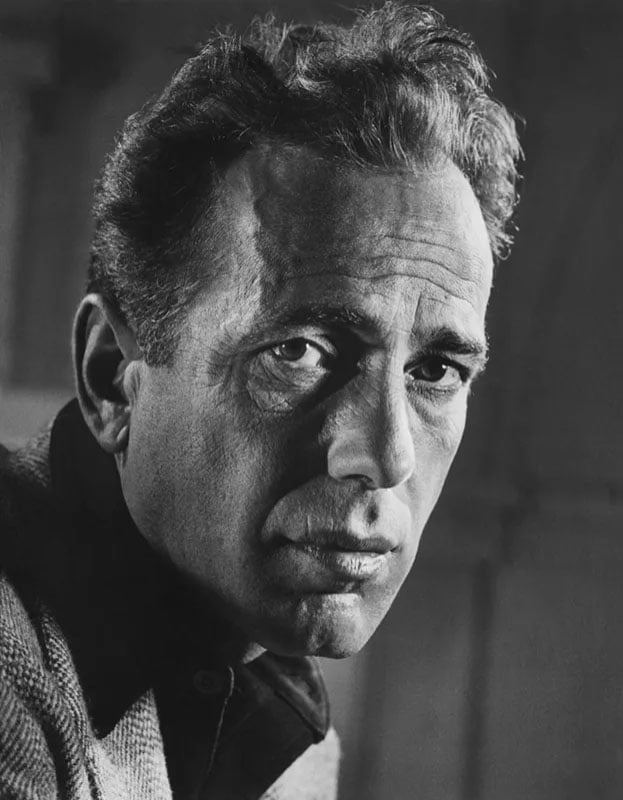
Humphrey Bogart. Photo by Philippe Halsman.

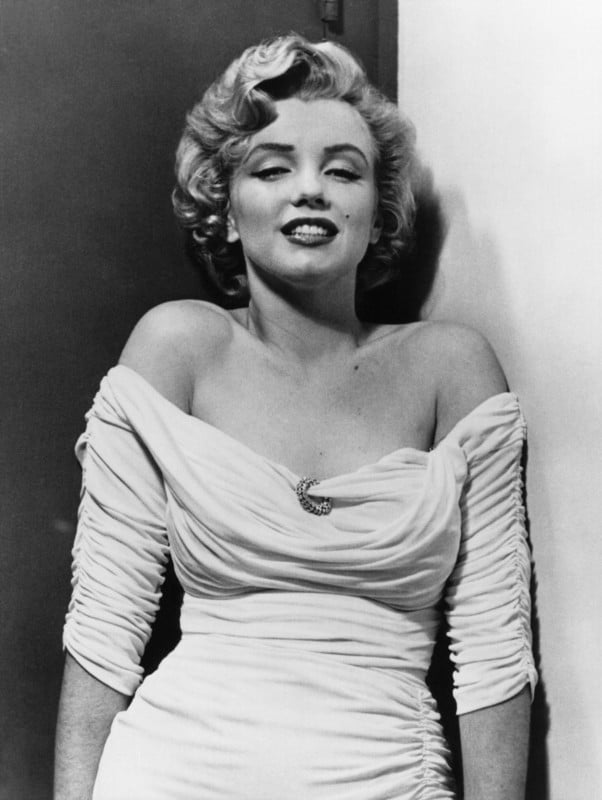
Marilyn Monroe. Photo by Philippe Halsman.

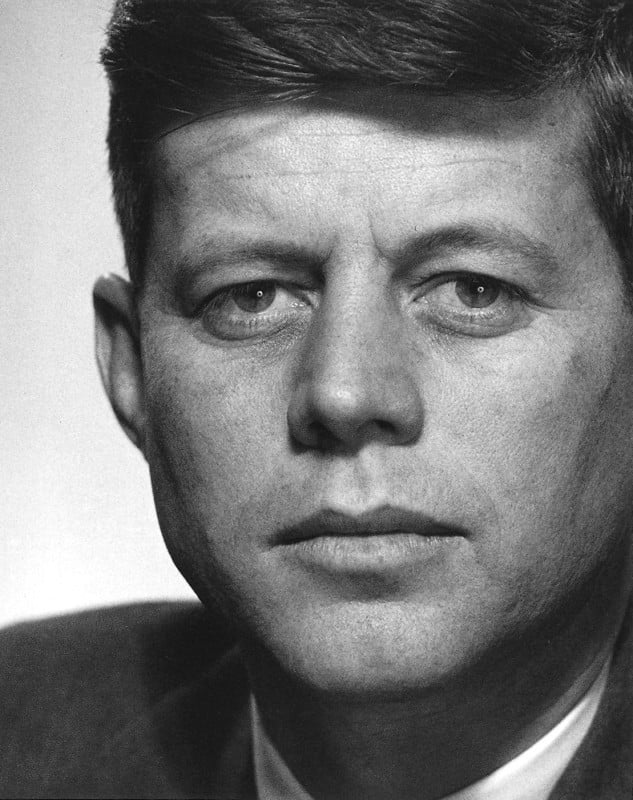
John F. Kennedy. Photo by Philippe Halsman.

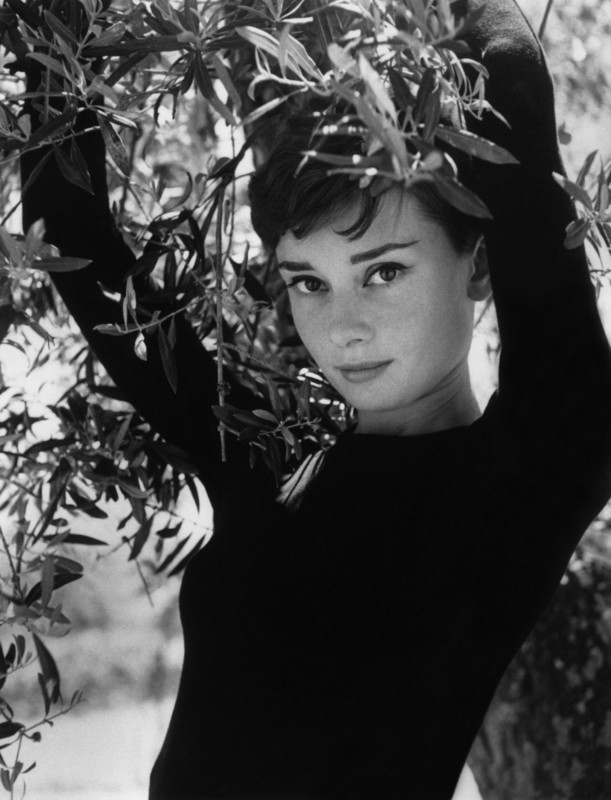
Audrey Hepburn. Photo by Philippe Halsman.

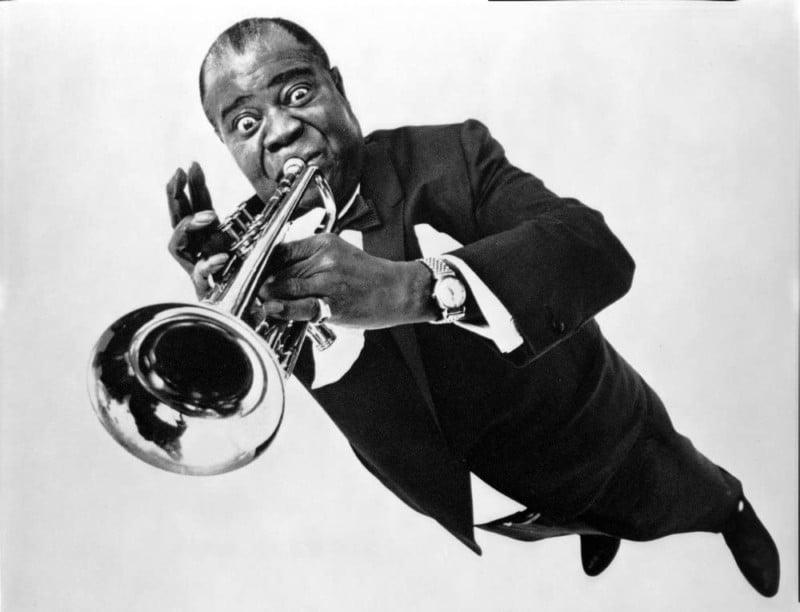
Louis Armstrong. Photo by Philippe Halsman.

In Halsman’s description of his work, he said, “It is important to remember that a portrait sitting is an extremely artificial situation. Very few people are able to lose their self-consciousness immediately and behave in front of the camera as though it were not there. In almost all cases the photographer has to help the subject reveal himself. In many sittings I have felt that what I said to the subject was more important than what I did with my camera and my lights.

“My great interest in life has been people. A human being changes continuously throughout life. His thoughts and moods change, his expressions and even his features change. And here we come to the crucial problem of portraiture. If the likeness of a human being consists of an infinite number of different images, which one of these images should we try to capture? For me, the answer has always been, the image which reveals most completely both the exterior and the interior of the subject.”

“Such a picture is called a portrait. A true portrait should, today and a hundred years from today, be the testimony of how this person looked and what kind of human being he was.”


Philippe Halsman died in New York City on June 25, 1979, at the age of 73 after a brief illness.

Much of the information for this article was from the book, Halsman Portraits by Yvonne Halsman.

25.6.22

Valoi 360 Aims to Make Scanning Film Cheaper and Easier


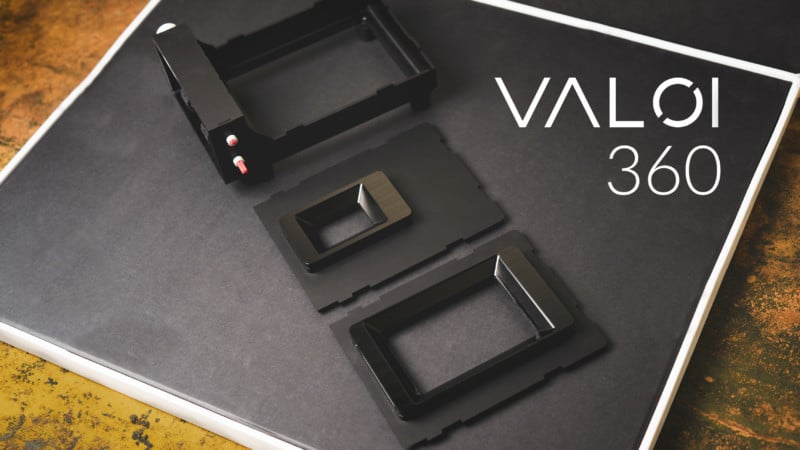
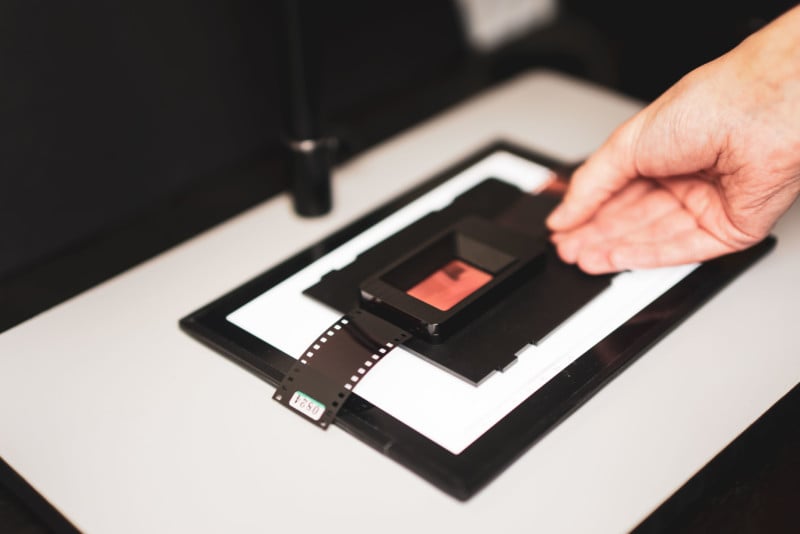
The Valoi 360 is a system of modular tools that aims to make it much easier and cheaper to digitize 35mm or 120 film negatives using a digital camera. It’s made to be faster and more effective than a flatbed scanner.

The project was started by photographer Arild Edvard Båsmo who partnered with mechanical engineer Wicher van Lambalgen to mass-produce a design Båsmo created to combat the generally expensive and slow methods of film scanning that are commercially available.


The system consists of three main components: Two film holders – one for 35mm and one for 120 – and the Film Advancer. 

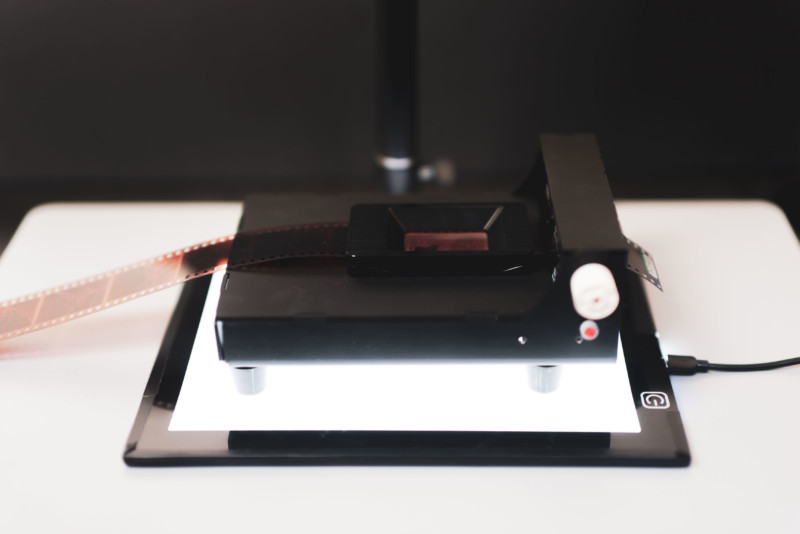
The film holders can be used on their own and are supplied with rubber dome feet, while the Film Advancer is an upgrade that will help you scan more quickly and with more precision.


Advancing with a thumb-knob has several benefits: By rotating the knob to forward film instead of pulling directly at the film, there is less chance of knocking the device out of place. 

It also makes forwarding to the next frame much quicker. Finally, the roller assures that you don’t accidentally touch your film direclty.


It’s a very simple design that appears to do exactly what it promises. 

The reason the two started a Kickstarter is that in order to maintain a low cost, they had to switch from a machined design to an injection-molded one. If you’ve ever worked in manufacturing, you’re well aware that while injection molding allows for mass production much faster and cheaper, the initial mold is extremely expensive. 

Specifically, the holders use an s-curve shaped track to mechanically flatten the film to better allow it to be scanned, and Valoi founders say that design specifically is expensive to create molds for. Båsmo says that this design was chosen because it makes the film lay flatter than any other solution he’s found on the market and is therefore worth the extra effort to bring to life.


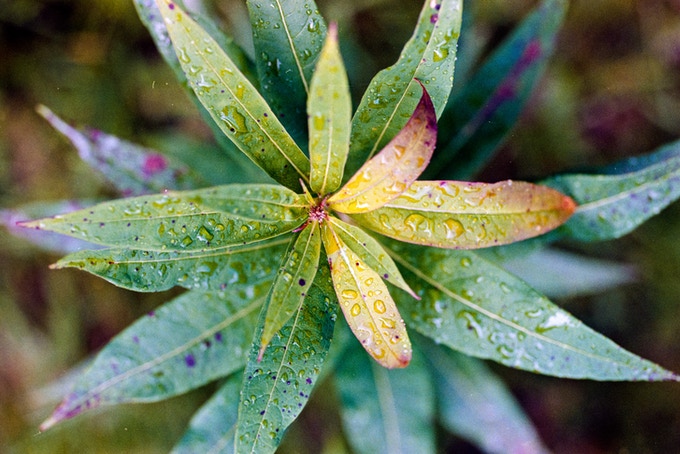
Film: Fujifilm C200, 35mm, taken on a Nikon FA. Scanned with VALOI 35mm Holder and Sony a6300 digital camera.

Here is the same image, but cropped to show detail.

The options start as low as $22 for a single holder but can get as expensive as $212 if you want the Film Advancer and multiple holder sizes. Still, the Valoi team argues this is less expensive than other options on the market.

The production value of the video above harkens back to the early days of the crowdfunding platform and to what Kickstarter was originally intended for. Big companies with larger budgets that use Kickstarter mostly as a hype platform can become exhausting, but what Båsmo and van Lambalgen feels very down to earth and earnest. On the flip side, it’s not clear if either of the founders has enough experience in manufacturing to deliver a finished project even if they hit their goal: neither has completed a Kickstarter project before.


JARON SCHNEIDER

23.6.22

8 New Film Photography Announcements Ranked in 2022


It didn’t seem like there was much to cheer for film photographers in 2021. Supply chain issues, global film shortages, and price rises led to a wave of discontent among film photographers, leading many to cry into their soy lattes and burn their berets.

But over the last few months, the sun has started to shine through the clouds with announcement after announcement gladdening the hearts of film photographers and emptying out our wallets. In this article, I’m ranking eight of the recent new film announcements.
8. Kosmo Foto Agent Shadow

Collecting the wooden spoon in 8th place is Kosmo Foto’s Agent Shadow. Things looked so bright for our secret agent friend following a successful Kickstarter campaign in August 2021. The film community was excited to get their hands on the beautifully designed film box, and rewards, which included a graphic novel, a briefcase, and even working Soviet film cameras.


Like Kosmo Foto’s first film Mono, this is not a new film, but an existing film rebranded with new packaging. Unfortunately, the production of the film was delayed several times. Perhaps Agent Shadow was caught behind enemy lines while on a secret mission?

In Kickstarter updates, Kosmo Foto’s founder Stephen Dowling clearly identified the delays were from the manufacturer. Industry rumours suggest this film could be Harman Technology’s Kentmere 400, but the identity of the film is officially unknown. Harman is also the manufacturer of Ilford film lines.


Although I’ve put Agent Shadow in last place, there are some positives. Agent Shadow is now beginning to make its way out into the world, with film being dispatched over the last couple of weeks. And it must be said, Kosmo Foto has the coolest branding and packaging in the film community. Who wouldn’t want a box of this on their shelf?
7. Kodak Gold 200 in 120 format

In what could be a controversial move, I’ve put Kodak Gold in 120 format in 7th place. Kodak Gold 200 is not a new film stock, and it’s not even new to the 120 format, but we welcome it back with open arms after a 25-year hiatus.


A lot of people have been asking for Gold 200 in 120 format, so this is a positive sign that Kodak is listening to consumers. I’ve enjoyed seeing how happy photographers are to finally buy and shoot this, and the images posted to social media look fantastic.

I’m happy that Gold has been made available in 120 format. However, the downside is the lack of supply of Kodak’s consumer line: Gold 200 and Ultramax 400 in 35mm. Many stores have had a limited supply for well over a year.


It’s been said that due to pandemic supply chain shortages, Kodak prioritized the production of the professional Portra film over those lines. If you look carefully at the Gold 120 pro pack, what do you see? The word "professional" right there on the box. So, it’s great they’ve brought Gold 200 to 120, but it’s seem to come at a cost of other consumer films not being available.

Added to this mix is the crazy situation where Fujifilm is selling 200 speed film in North America, which, by all reports, has an identical data sheet to Kodak Gold 200.
6. Orwo Wolfen NP100

The last decade has not been great for the European film industry, but with some key developments in Germany recently, hopefully things are on the up.

In late April 2022, Orwo announced a new black and white film, WOLFEN NP100. The company describes the film as “an exceptionally fine grain 100 ASA, 36 exposure, black and white photographic film.” It’s being made in a strictly limited run of 36,000 DX-coded canisters.


It’s the first brand new and professionally finished photo film launched by Orwo in decades. The film is still produced on the original site in Bitterfeld-Wolfen, north of Leipzig, where film manufacturing started in 1910.

Orwo say that Wolfen NP100 differs from its stablemate Wolfen UN54 because it has an additional dyed anti-halation layer which improves sharpness. This layer is positioned between the base material and the emulsion layer and has the task of preventing the formation of a reflection halo. Wolfen UN54 has been sold by Lomography under the Potsdam name.

Along with this announcement, Orwo has launched a new online shop selling their films directly to the public. Some of these films have previously only been available to consumers in bulk rolls, while others have been available in single rolls for under other names such as Lomography.
5. Orwo Color NC 500

In fifth place, I’ve put a very exciting announcement from Orwo, a new color cinema film. This returns the German manufacturer to color film production for the first time in around 50 years.

Orwo teased a new colour film in late 2021, but many assumed it would be a motion picture stock with remjet that would need to be processed in the ECN-2 process. This is not as accessible a product for many film photographers, as most labs do not process film with remjet.


Orwo went and surprised us, though: the newly announced NC500 is a color cinema film for C41 processing. They say that at the core of our new color film lies a unique chemical formula based on the wonderful and legendary Agfa stock last used in the Oscar-winning film "Out of Africa." They go on to say: “Famous for their greens, desaturated shadows and enhanced grains, these are all aspects that we are embracing for our new addition.”

As with Wolfen NP100, this is a limited edition run, which is kind of puzzling. One theory is that during their research and development, they made a viable product that they are now releasing, and future films will be improved and refined.

Preorders launched on June 1, 2022 with NC500 going on sale at 14.90 Euros a roll. Shipping is expected to begin in July 2022.
4. Japan Camera Hunter FuguFilm

Hot on the heels of the Gold 120 and Cinestill announcements, Japan Camera Hunter got in on the act to announce their new ISO 400 color slide film called FuguFilm.


Fugu is, of course, Japanese for pufferfish, the consumption of which can be lethal to humans if not prepared correctly. In an article on their website, JCH explained the name started as a joke during a conversation about a Simpsons episode where Homer eats a fugu in Japan. The film branding looks bright, fun, and dare I say, a little garish.

When this product was teased online, there wasn’t much detail, which led many people to assume this was some long-forgotten freezer stock that would be rebadged under the JCH brand.

A few days later, they came out and said that Fugu was an entirely new emulsion that had been in the works for three years. Not only that, it would be the first new color slide film in around a quarter of a century, since Fujifilm launched Fortia.


To bring a new color slide film to market without any crowdfunding is quite a feat. We all know that there were big delays between Kodak announcing the return of Ektachrome and when it actually hit the shelves. Added in the mix is the banning of certain chemicals used in the production and processing of slide films. Bringing a new 400 speed color slide film to market is truly impressive.
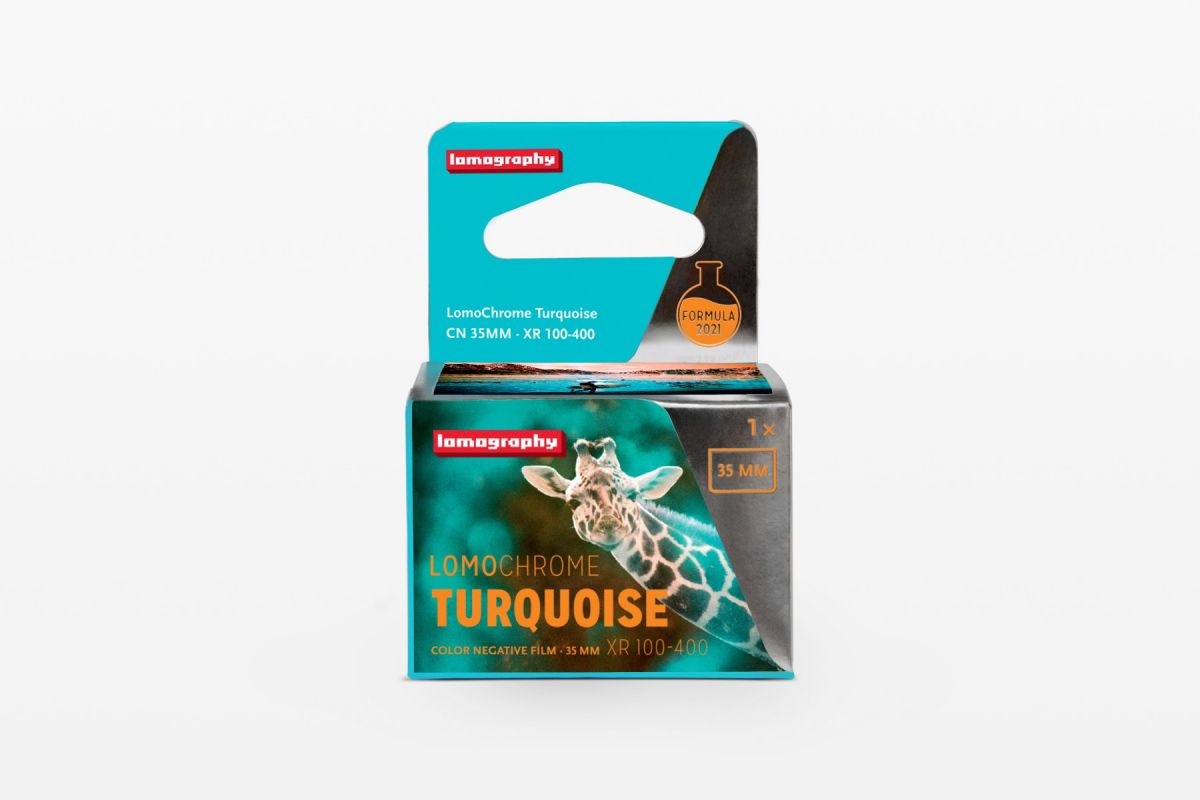
3. Lomography LomoChrome Turquoise

If you’d asked me at the start of this year which film announcement I was looking forward to most, it would’ve been this one.

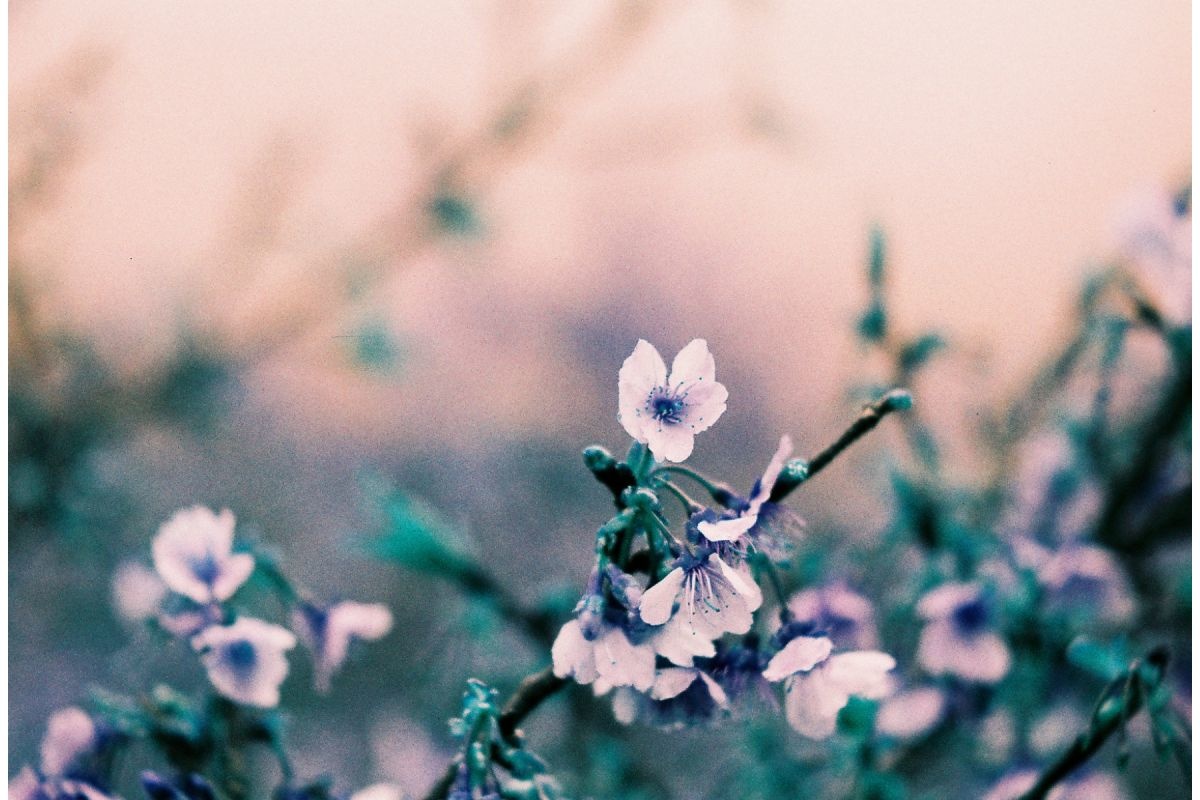
Lomography Turquoise was a popular color shift film that was first released in 2015. The film transforms everyday colors into shades of deep emerald, cobalt, and cyan, while tints of blue fade into gorgeous golden gradients.


Since it was discontinued in 2017, rolls have changed hands on eBay for ridiculous sums of money. If you were sitting on a few rolls waiting to make a killing, you might have missed your chance.

Lomography announced the return of Turquoise in November 2021 and wasted no time opening up preorders in three formats: 35mm, 120, and 110. This time around, it’s a brand new formula for turquoise, so it will be interesting to see if there're any differences to the old version. Customers who got in last November should have their film shipped in June 2022.


The full name of the film is LomoChrome Turquoise XR 100-400. Like Lomography’s Purple film, Turquoise is a variable ISO film; you can rate it anywhere from ISO 100 to ISO 400 for different results. In the second half of 2022, I’m running a Turquoise film competition and community zine via my podcast Matt Loves Cameras.

2. CineStill 400D

It was tough deciding who to put in second and first place, but after much deliberation, I’ve put CineStill 400D in second place. Through their successful preorder campaign, CineStill has confirmed they are making 400D in 35mm, 120, large format, and hopefully also 220.


Cinestill says that 400D is a new film they have been developing for years with their manufacturing partners around the world. In the FAQ on their website, CineStill says that it is not a repackaged motion picture stock without remjet, but it was specifically designed for still photography. “This new film is based on advanced technology found in motion picture emulsions, and at the same time delivers features exclusive to still photography materials in both unexposed and processed states.”


CineStill 400D shot on the Fujifilm Klasse S. Image Copyright © Matt Murray

As for the term "dynamic" in the title, CineStill claims that 400D has “pretty amazing exposure latitude.” It can be exposed at EI 200 to EI 800 with normal processing and push-processed up to EI 3200. On the canister, there are little checkboxes for you to label how many stops you’ve pushed the film: 1 stop, 2 stops, or 3 stops. That’s right, this film is practically begging for you to push it.


I love the look of the CineStill 400D shots rated at ISO 1600 (pushed two stops). It was almost dark when I took this photo on my Fujifilm Natura Black f/1.9. Image Copyright © Matt Murray.

When this film was announced, I ordered 20 rolls straight away. Much to my delight, my order arrived from California in late May, and I’ve shot two rolls already.


I shot my first roll in my Fujfilm Klasse S at box speed. I loved the images from this roll; the film seems to have a soft palette of colours compared to other color negative films on the market. Many images on the roll featured subtle and not-so subtle halation.


Not the best photo I've ever taken, but check out the halation in this 400D photo shot in bright sunlight on my Fujifilm Klasse S. Image Copyright © Matt Murray.

Some photographers have commented on my images to say that 400D has a similar to Kodak Vision3 250D.

The second roll I’ve shot was my favorite. I put an ISO 1600 sticker on it and shot it through my Fujifilm Natura Black f/1.9. I asked my lab to push it two stops, and the results look fantastic. I’m looking forward to shooting more. Perhaps this will become my favorite film by the end of 2022.


Dial a Cliché: a gas station shot on CineStill 400D rated at ISO 1600, pushed two stops. Fujifilm Natura Black f/1.9. Image Copyright © Matt Murray.
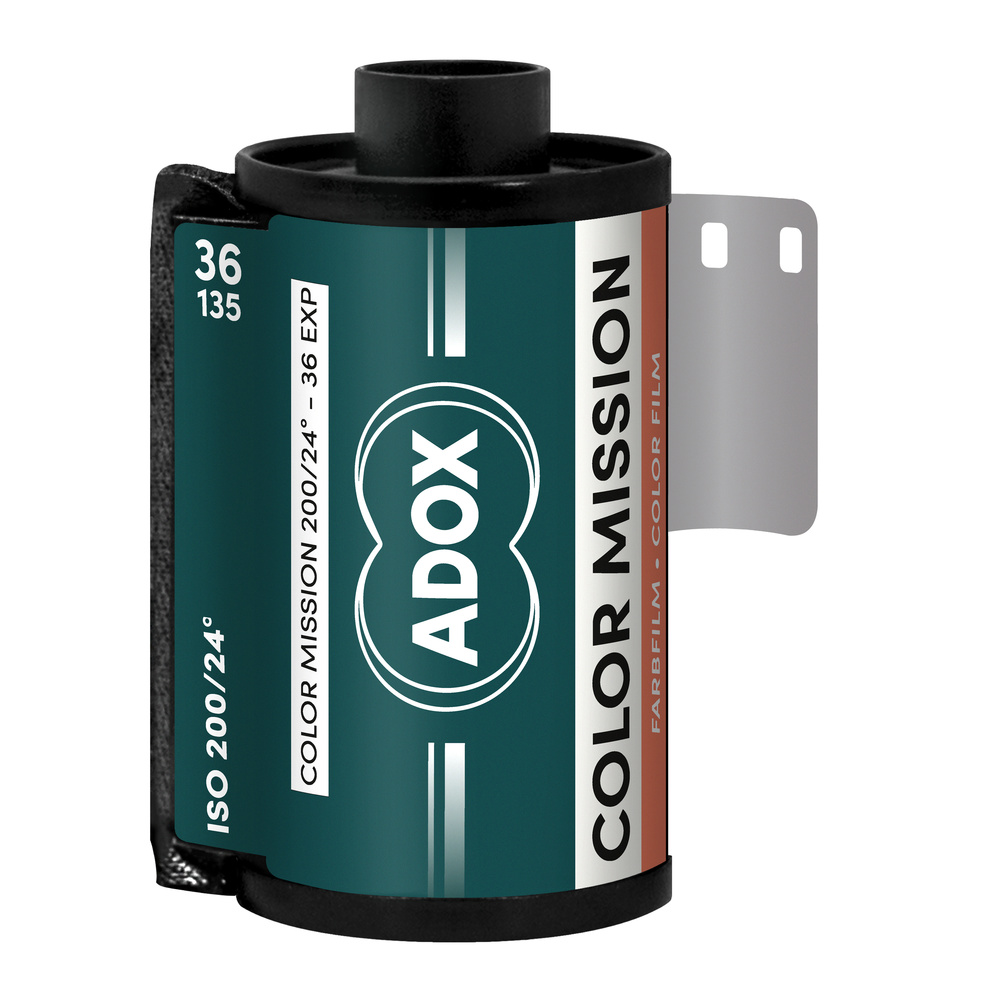
1) Adox Color Mission 200

In first place is the impressive Adox Color Mission 200. This was yet another surprise announcement: a new color film coated by one of Adox’s partners before they went bankrupt. The film has been kept in cold storage until its release in March 2022.


Adox are selling this film to fund research and development of a brand new color film in a few years' time. They claimed to have enough Color Mission until that new film was produced, but that was before everyone went completely bonkers and bought up the first batch, so who knows how long it will last.


Adox Color Mission shot on the Contax T3. Image Copyright © Matt Murray.

What made me give this the number one spot was the rich vibrant colours you can capture: minty greens, orangey reds, shades of blue and deep rich oranges. The film doesn’t have huge dynamic range, so it is interesting to compare with Cinestill 400D.

I love the four rolls of Color Mission I've shot so far, and I'm looking forward to shooting more. My first two rolls were shot on Contax G1 cameras and my second two rolls were shot on premium point and shoot cameras. Often, the highlights are a little bright, with some images looking like cross-processed slide film.


I love the vibrant colors of Adox Color Mission. Shot on Contax T3. Image Copyright © Matt Murray.

Matt Murray