Showing posts with label 35mm. Show all posts

25.6.22

Valoi 360 Aims to Make Scanning Film Cheaper and Easier


The Valoi 360 is a system of modular tools that aims to make it much easier and cheaper to digitize 35mm or 120 film negatives using a digital camera. It’s made to be faster and more effective than a flatbed scanner.

The project was started by photographer Arild Edvard Båsmo who partnered with mechanical engineer Wicher van Lambalgen to mass-produce a design Båsmo created to combat the generally expensive and slow methods of film scanning that are commercially available.
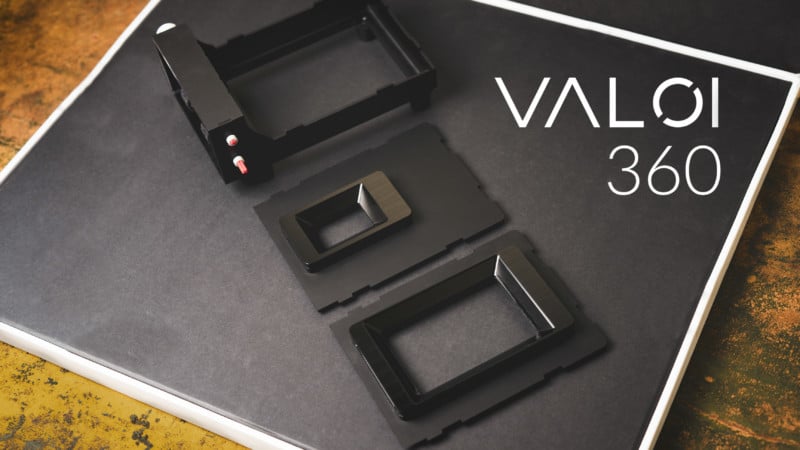


The system consists of three main components: Two film holders – one for 35mm and one for 120 – and the Film Advancer. 

The film holders can be used on their own and are supplied with rubber dome feet, while the Film Advancer is an upgrade that will help you scan more quickly and with more precision.
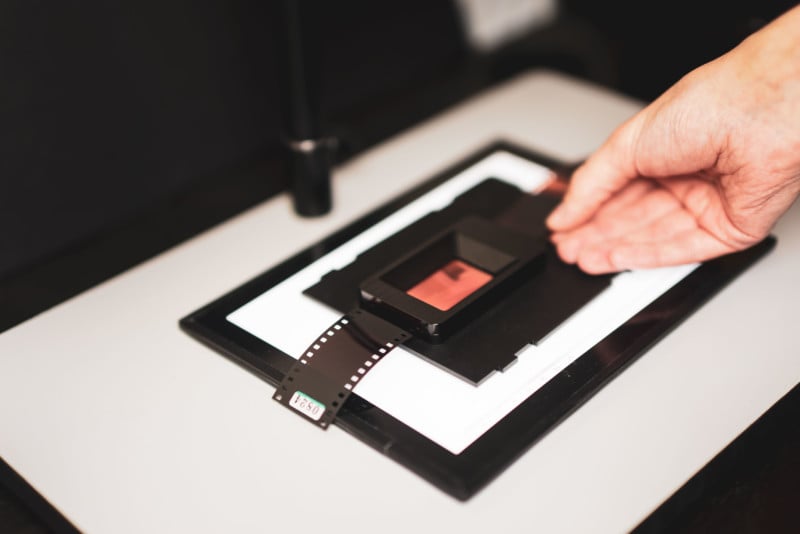

Advancing with a thumb-knob has several benefits: By rotating the knob to forward film instead of pulling directly at the film, there is less chance of knocking the device out of place. 

It also makes forwarding to the next frame much quicker. Finally, the roller assures that you don’t accidentally touch your film direclty.
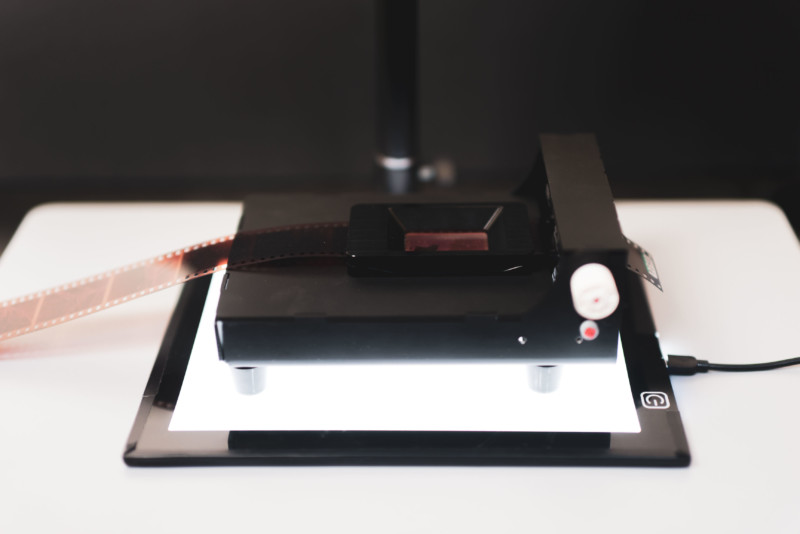


It’s a very simple design that appears to do exactly what it promises. 

The reason the two started a Kickstarter is that in order to maintain a low cost, they had to switch from a machined design to an injection-molded one. If you’ve ever worked in manufacturing, you’re well aware that while injection molding allows for mass production much faster and cheaper, the initial mold is extremely expensive. 

Specifically, the holders use an s-curve shaped track to mechanically flatten the film to better allow it to be scanned, and Valoi founders say that design specifically is expensive to create molds for. Båsmo says that this design was chosen because it makes the film lay flatter than any other solution he’s found on the market and is therefore worth the extra effort to bring to life.


Film: Fujifilm C200, 35mm, taken on a Nikon FA. Scanned with VALOI 35mm Holder and Sony a6300 digital camera.

Here is the same image, but cropped to show detail.

The options start as low as $22 for a single holder but can get as expensive as $212 if you want the Film Advancer and multiple holder sizes. Still, the Valoi team argues this is less expensive than other options on the market.

The production value of the video above harkens back to the early days of the crowdfunding platform and to what Kickstarter was originally intended for. Big companies with larger budgets that use Kickstarter mostly as a hype platform can become exhausting, but what Båsmo and van Lambalgen feels very down to earth and earnest. On the flip side, it’s not clear if either of the founders has enough experience in manufacturing to deliver a finished project even if they hit their goal: neither has completed a Kickstarter project before.


JARON SCHNEIDER

9.12.21

This ‘Kodak Memory’ Concept Printer Pays Homage to the 35mm Film Roll


Who doesn’t cherish the nostalgic memories of the good ol’ Kodak camera and the camera roll that defined the late 1990s and early 2000s? 
A single photo click was a precious memory etched on the roll, like a priced possession more than anything one owned. Fast-forward to the current era where you can virtually click thousands of pictures of a beautiful landscape or portrait of an attractive buddy. All that without even realizing, there are almost limitless possibilities as opposed to the yesteryears when a single click was the option you had to showcase your photography skills with cameras having film rolls!

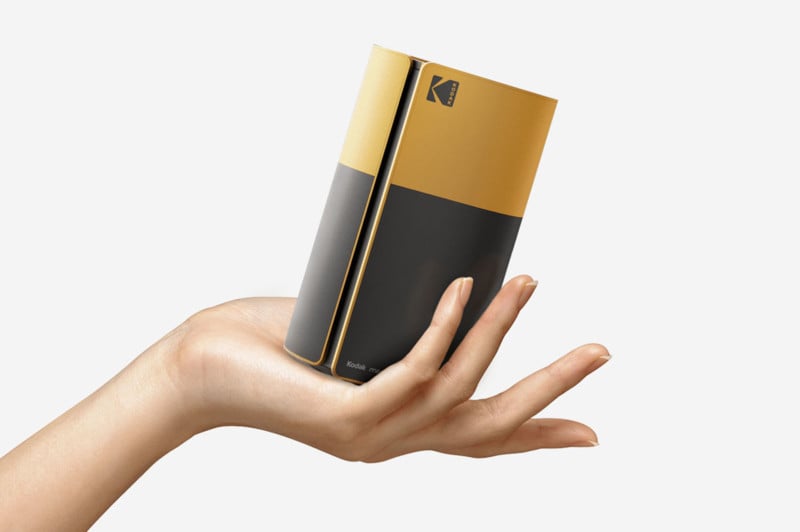
A group of product designers have come up with a sleek new design for a thermal paper photo printer that’s inspired by the 35mm film roll. They call it the “Kodak Memory.”


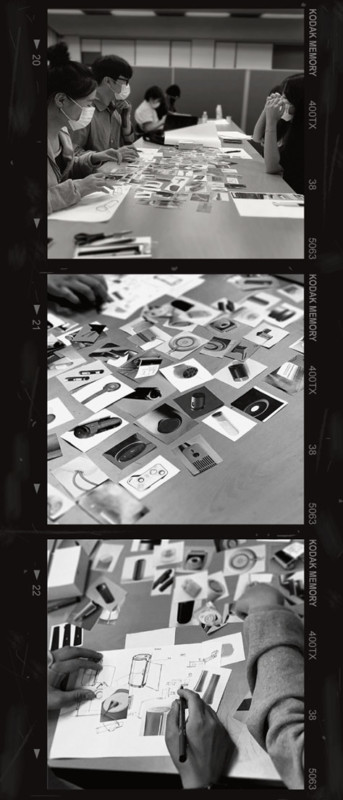
The design (first spotted by Yanko Design) is part of a project by South Korean industrial design students Minsu Kim, Yeon Ju Do, and Sunjin Baek.


The Kodak Memory is cute memorabilia of those times a millennial would never ever forget in life. This smart accessory prints out photos in monochrome in the most cherished way one can think of. 

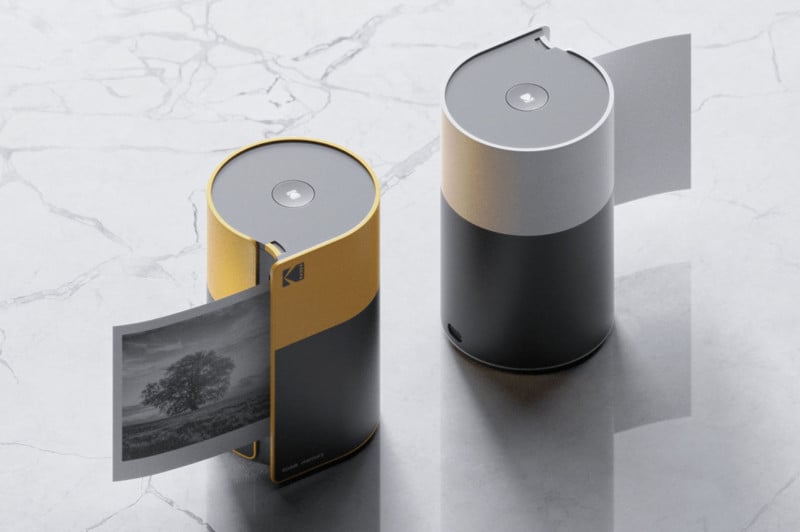
The design of the Kodak Memory grayscale printer is such that it reminds me of the film coming out of the roll. Yes, once you connect this monochrome printing accessory with the phone, and hit the print button in the compatible app interface, the black and white photo comes out in this manner. Now, how amazing is that!

Rather than using instant photos or ink, both of which are pricey, the Kodak Memory uses cheap thermal paper — the kind that receipts are commonly printed on. A roll of thermal paper costs less than $50, so the black-and-white photos printed by this printer would be extremely economical.


The myFirst Camera Insta 2 is a camera already on the market that uses thermal paper, though that camera is designed specifically for children.

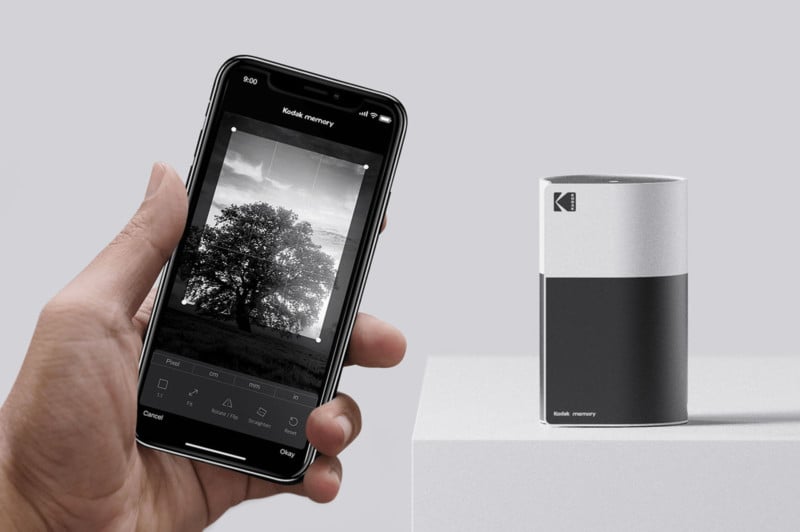
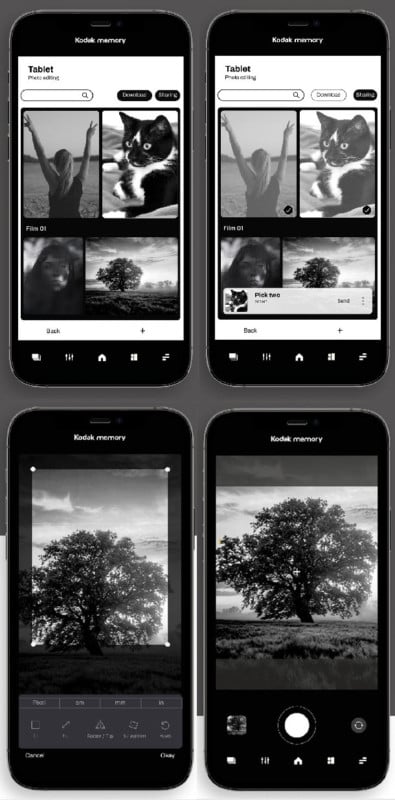
After loading a roll of thermal paper into the Kodak Memory, the user then connects to the printer using a special app on their smartphone. Photos imported into the app can be shared, downloaded, and printed via the printer.


Imagine shooting a photograph of a walkway surrounded by beautiful trees, and instantly getting a printed version in monochrome with this palm-sized printer. Just take it anywhere you wish, and when needed print such amazing photographs for the best memories with the Kodak Memory. 

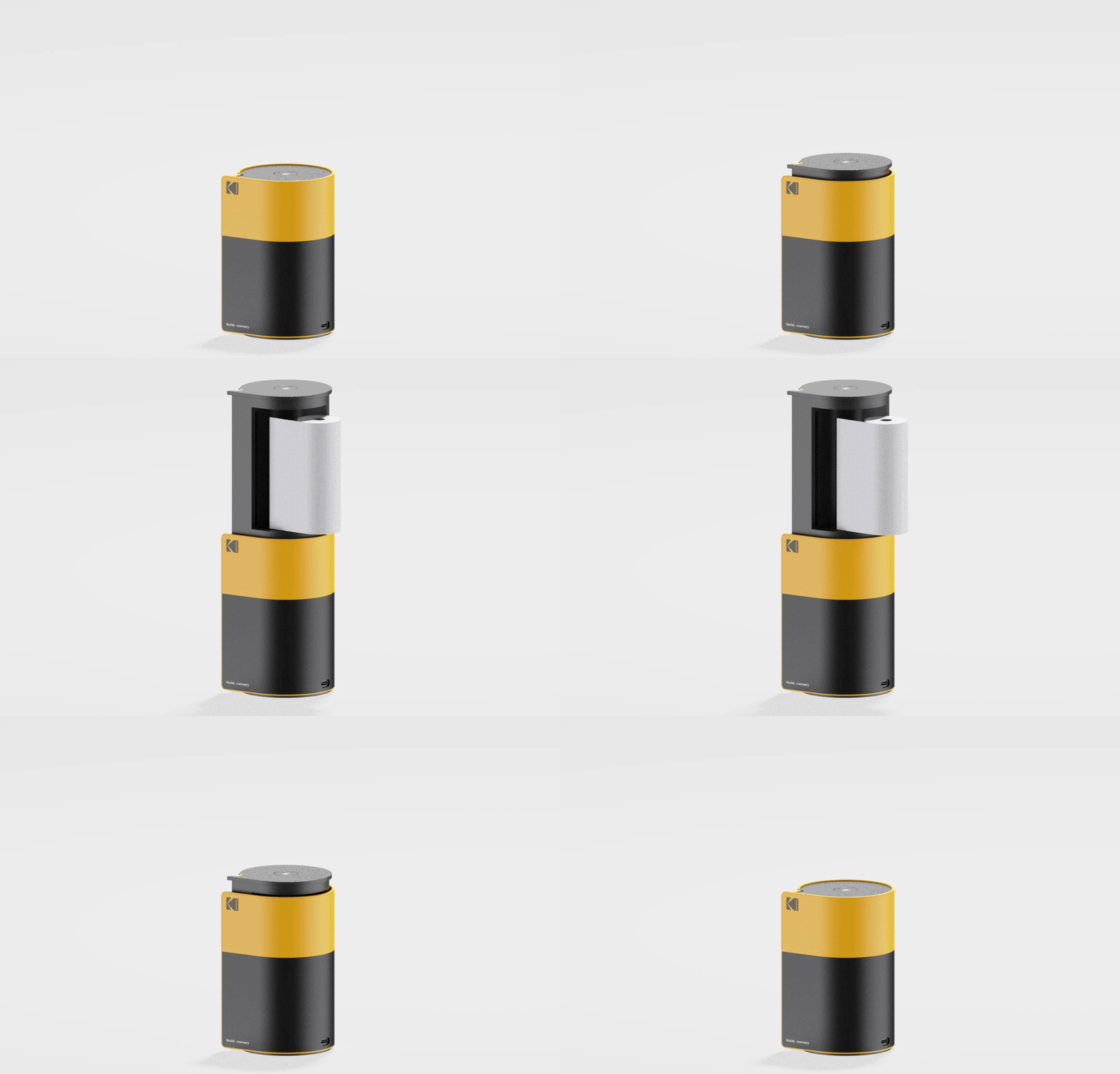
The accessory charges via USB connection and once the thermal paper roll is finished, simply press the OPEN button to perform the quick swap. The meticulously designed printer comes in the classic Kodak Film roll hues and a black and white version too for the totally colorless overall theme. For sure, a nice accessory to have in the bag pack for passionate travelers who like to photograph life as it comes!

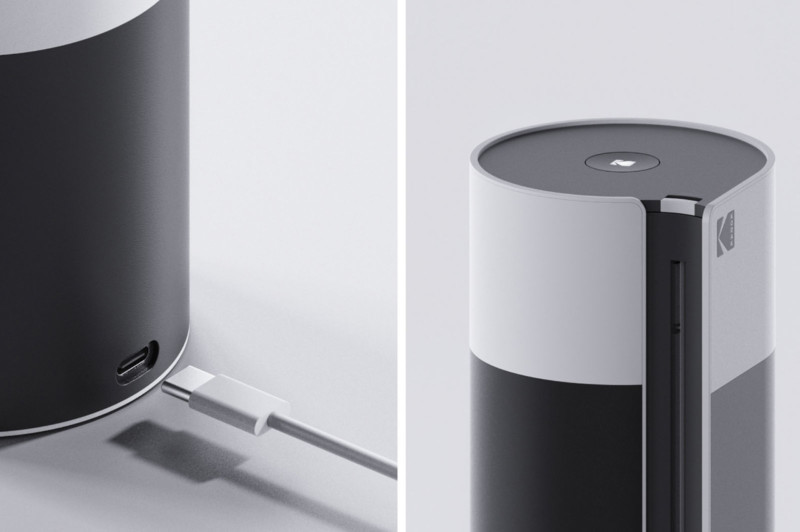
Loading new paper is done by pressing the “open” button on top and lifting the internal cartridge out of the printer.


The printer is recharged by plugging it into a power source via the USB connection.


The designers say they wanted the process of printing with the printer to look like a strip of 35mm film being pulled out of a roll.

As with any 3rd-party concept design of this sort, it’s highly unlikely we’ll ever see it materialize into a real commercial product. But with Kodak licensing its brand for everything from Android tablets to Bitcoin miners in recent years, who knows? Perhaps someone will license this design and the Kodak brand name and turn this printer idea into a real device one day.

20.7.21

Befinitiv's Digital Film Cartridge Adds a Raspberry Pi


Using a 3D-printed housing, a Raspberry Pi Camera Module, Raspberry Pi Zero, and LiPo battery, befinitiv has given an old camera a rebirth.

Pseudonymous maker "befinitiv" has shown off a Raspberry Pi-powered upgrade for film cameras, turning them into digital cameras capable of stills, video, and even live streaming — albeit with considerably different zoom from their stock designs.

"This was state of the art 50 years ago," befinitiv explains of a Cosina Hi-Lite film camera. "Back then, of course, you shot your films or photos on these films, and this was rather expensive back in the day — but today it's even more expensive and a bit cumbersome."

"So, of course, I did the obvious and replaced this film cartridge by a digital cartridge based on a Raspberry Pi — so you have a digital camera that looks like this and can do everything that you expect from a digital camera nowadays. It can do video, it can stream video over Wi-Fi, and store things on an SD card."
The secret behind the hack: A Raspberry Pi Camera Module with its integrated lens removed — something you don't have to do on the Raspberry Pi HQ Camera Module, which requires an external lens — fitted into a 3D-printed housing that secures it in the camera and aligns it at the focal point of the lens.

The Camera Module connects to a Raspberry Pi Zero W single-board computer, which handles the capture, streaming, and storage. A lithium-polymer battery powers everything through a DC-to-DC boost converter.

The result is functional, but a far cry from how images would have looked captured on film. "This is really far zoomed in," befinitiv notes — a result of the significantly smaller sensor size of the Raspberry Pi Camera Module compared with the 35mm film the camera and lens were originally designed to use."

"I can only recommend to also build something for your cameras because it is really fun and gives 
these things a new life, which is I think always great for these nice high quality 'retrotech' items."

24.10.20

Lomography's new 35mm camera has a lens you can fill with liquid


It looks like a fun way to manually add vintage aesthetics to panoramic shots.

Lomography's latest panoramic 35mm camera has a trick up its sleeve. You can pour liquid into the lens of the HydroChrome Sutton’s Panoramic Belair Camera (yep, that’s the full name) to add some colorful effects to your panoramic shots. Lomo suggests that you’ll be able to capture photos with “vintage aesthetics, washed-out tones and radiant blur” simply by adding clear water to the lens.

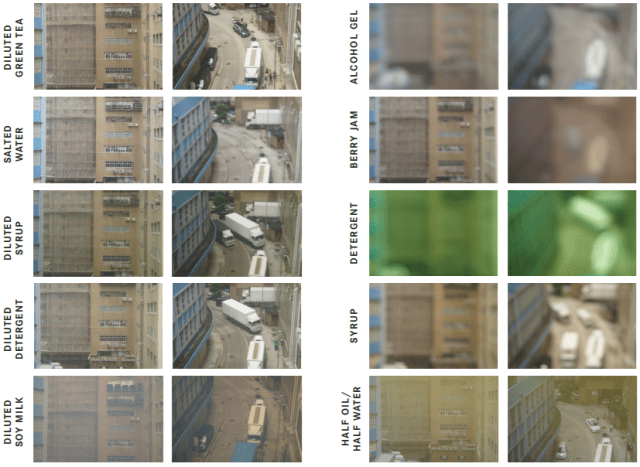
It issued a Liquid Guide to give you some ideas on what to inject — ideally particle-free, water-soluble substances like watercolor paint or food coloring. You might use tea or coffee as well, but alcohol, glue, oily solutions and corrosive substances will probably damage the lens.


Lomography

This isn’t the first Lomography camera with a liquid-filled lens, as Peta Pixel points out. Lomo introduced the idea in the cardboard LomoMod No.1 camera it brought out last year. That camera used 120 film instead of 35mm. Effectively, the HydroChrome brings the lens from that model to the sturdier body of a Belair.

The HydroChrome has a fixed-focus lens with a built-in f/11 aperture, though you can swap in f/16, f/22, f/32 and f/168 pinhole aperture plates. It looks like a fun way to manually bring Instagram-esque filters to your analog 35mm shots. 

Pre-orders for the $79 HydroChrome are now open.

Kris Holt