Showing posts with label leica. Show all posts

1.7.22

Best lens for wildlife photography in 2022


Best lenses for wildlife photography – When it comes to wildlife photography then getting in close is key. There are many long lenses on the market and depending on your budget and what camera type and brand you own will determine what is available to you.


To help you make a better informed decision we’ve rounded up the very best wildlife lenses from those that are compatible with DSLRs to Mirrorless, and we’ve included all the major brands so there is something in there for everyone.


When it comes to purchasing longer lenses unfortunately prices get pricey! For those on a tighter budget we have thrown in a couple of budget suggestions, but it’s also worth having a look at the second hand market to see what is available. Often you can save at least a third of the full retail price when shopping second hand.


So without further ado, here are our recommendations for the best lenses for wildlife photography:


Best Nikon DSLR lenses for wildlife photography
1. Nikon AF-S NIKKOR 200-500mm f/5.6E ED VR – £1,399


Nikon AF-S NIKKOR 200-500mm f/5.6E ED VR

At a glance:Minimum aperture f/32
Maximum aperture f/5.6
Lens construction 19 elements in 12 groups (including 3 ED glass elements)
95mm filter thread
Weighs 2300g (including tripod collar)

The versatile 200-500mm Nikon lens is perfect for those wildlife photographers needing to shoot at a variety of distances. The f/5.6 maximum aperture setting will feel slightly limiting in low light but during daylight is more than adequate. Weighing in at 2300g this lens will add a lot of extra weight to your camera bag, however the variable focal length makes up for this.


2. Nikon AF-S NIKKOR 300mm f/2.8G ED VR II – £6,299

Nikon AF-S NIKKOR 300mm f/2.8G ED VR II

At a glance:Minimum aperture f/22
Maximum aperture f/2.8
Lens construction – 11 elements in 8 groups
52mm filter thread
Weighs 2900g

If you’re after high quality imagery then the Nikon AF-S NIKKOR 300mm f/2.8G ED VR II is a beauty of a lens but at just shy of £6,300 it is by no means affordable to most! You can get it cheaper by shopping around and on the second hand market we found one at £3300 making it more of a viable option for some.

There is no doubt that having those extra stops of light up to f/2.8 with the 300mm reach will get you superb results and the 9 blade circular aperture diaphragm helps produce perfect background blur. This lens also uses a 4 stop Vibration Reduction system meaning you can be confident when out in the field that you are eliminating camera shake. Any Nikon user wanting high quality and professional looking results should consider this lens.

Best Canon DSLR lenses for wildlife photography
3. Canon EF 70-200mm f/2.8L IS III USM – £ 2,200

Canon EF 70-200mm f/2.8L IS III USM

At a glance:Minimum aperture f/32
Maximum aperture f/2.8
Lens construction – 23 elements in 19 groups
77mm filter thread
Weighs 1480g

You can’t go wrong with a 70-200mm f/2.8 lens. Their versatile nature makes them not only useful to wildlife photographers but also almost for every other genre of photography too!

This lens comes with a 3.5-stop image stabilisation guard against camera shake and can track with precision thanks to a ring-type USM autofocus system.

The Canon EF 70-200mm f/2.8L IS III USM is also water and dust resistant, which will give you great peace of mind when out in the field in harsher conditions.

4. Canon EF 75-300mm f/4-5.6 III – £240

Canon EF 75-300mm f/4-5.6 III

At a glanceMinimum aperture f/45
Maximum aperture f/4
Lens construction – 13 elements in 9 groups
58mm filter thread
Weighs 480g

For those who are just starting out or on a tight budget then the Canon EF 75-300mm f/4-5.6 III lens is well worth considering. This affordable lens is by no means perfect and comes with some restrictions such as its variable maximum aperture range, however when it comes to value for money you can’t argue with what you get. Its lightweight construction and flexible zoom are ideal if you are travelling, and thanks to its integrated AF motor it’s also fast to focus and track moving subjects.

The Canon EF 75-300mm f/4-5.6 III is compatible with Canon DSLR cameras and EOS-M mirrorless cameras with an EF-EOS M Mount adapter.

Best third party DSLR lenses for wildlife photography
5. Sigma 150-600mm f/5-6.3 DG OS HSM S – £1,329

Sigma 150-600mm f/5-6.3 DG OS HSM

At a glanceMinimum aperture f/22
Maximum aperture f/5
Lens construction – 24 elements in 16 groups
105mm filter thread
Weighs 2860g

The Sigma 150-600mm f/5 – 6.3 DG OS HSM is not only incredibly versatile having a reach from 150mm to 600mm, it is also built to withstand. This is thanks to its dust and splash resistant structure and its oil-repellent coating on the forefront and rear lenses that can be easily wiped to prevent oil and fat from sticking to the surfaces.

The lens comes with an intelligent OS (Optical Stabiliser) function feature that includes 2 modes. Mode 1 is for general photography and mode 2 helps track moving subjects with accuracy making it ideal for wildlife photographers.

On the downside the variable maximum aperture setting between f/5 and f/6.3 (which is determined by where the focal length is set) is restrictive in lowlight conditions, however this lens still works out as great value for money at just over £1300.

6. Tamron 100-400mm F/4.5-6.3 Di VC USD – £819

Tamron 100-400mm F/4.5-6.3 Di VC USD

At a glance:Minimum aperture f/45
Maximum aperture f/4.5
Lens construction – 17 elements in 11 groups
Minimum object distance 1.5m
Weighs 1135g (Canon fit), 1115g (Nikon fit)

If weight is an issue then the Tamron 100-400mm F/4.5-6.3 Di VC USD is comparably much lighter to many of its market rivals. The Canon fit weighs slightly more than the Nikon fit, which comes in at a light 1115g.

Key features of the Tamron 100-400mm F/4.5-6.3 Di VC USD are the autofocus system and a moisture resistant construction and fluorine coating aimed to give you peace of mind in bad weather. The lens also has three low dispersion lens elements that compensate for chromatic aberrations.

Finally this lens is compatible with Tamron’s 1.4x teleConverter, which if you want that extra reach but can’t afford to upgrade to a longer lens is a great solution.

Best mirrorless Canon lenses for wildlife photography
7. Canon RF 100-500mm F4.5-7.1L IS USM – £2,980

Canon RF 100-500mm F4.5-7.1L IS USM

At a glance:Minimum aperture f/32 at 100mm / f/54 at 500mm
Maximum aperture f/4.5
No. of diaphragm blades 9
Filter thread 77 mm
Weighs 1530g

For Canon mirrorless shooters the Canon RF 100-500mm F4.5-7.1L IS USM Lens is an excellent option that comes with a large variable focal length and also produces high quality results.

This lens comes with a 5-stop Image Stabilisation feature giving greater flexibility in lowlight, and includes ASC technology, which stands for Air Sphere Coating to prevent flare and ghosting in images. The Dual Nano USM motor is also worth a mention that enables fast, smooth and near silent AF shooting. It isn’t cheap though at just shy of £3000, however it has much to offer wildlife shooters.

8. Canon RF 800mm F11 IS STM – £1,100

Canon RF 800mm F11 IS STM

At a glance:Minimum aperture f/11
Maximum aperture f/11
Lens construction 11 elements in 8 groups
Filter thread 95mm
Weighs 1260g

If you need a long reach then the Canon RF 800mm F11 IS STM should be on your list. This lens is aimed at the enthusiast, and ideal for any wildlife photographer needing to keep their distance but wanting to get shots close in on the action – for example on a safari.

On the downside the fixed aperture setting at f/11 will feel restrictive at times, however in good light this won’t be an issue. On the positive side this lens only weighs 1,260g which is incredibly light for a lens with this kind of reach. It also only measures 281.8mm in length making it easier to transport. It’s worth noting Canon makes a similar 600mm model that retails at £860.

Best mirrorless Nikon lenses for wildlife photography
9. Nikon Nikkor Z 70-200mm f/2.8 VR S – £2,419

Nikkor Z 70-200mm f/2.8 VR S

At a glance:Minimum aperture f/22
Maximum aperture f/2.8
No. of diaphragm blades 9
Filter thread 77 mm
Weighs 1440g

The Nikon Nikkor Z 70-200mm f/2.8 VR S is an excellent lens and produces superb quality results. This model comes with ghosting, flare and chromatic aberration combative features and is pinpoint sharp thanks to its accurate tracking and AF feature. This lens has a minimum focus distance of just 0.5m at the wide end of the zoom, and 1m at the telephoto end.

The versatile nature of a 70-200mm f/2.8 lens is not only great for capturing wildlife – for example bird photography – but it’s also useful for shooting other genres as well so is a worthy investment.

10. Nikkor Z MC 105mm f/2.8 VR S – £1,049

Nikkor Z MC 105mm f/2.8 VR S

At a glance:Minimum aperture f/32
Maximum aperture f/2.8
No. of diaphragm blades 9
Filter thread 62mm
Weighs 630g

For those Nikon mirrorless users who want to capture the smaller animal kingdom like butterflies and insects then the Nikkor Z MC 105mm f/2.8 VR S should be at the top of your list! This professional macro lens produces excellent results and includes Nikon’s anti-reflective ARNEO and Nano Crystal coatings, which combat flaws like ghosting and unwanted image flare.

With a minimum focusing distance of 0.29m the Nikkor Z MC 105mm f/2.8 VR S lets you get extremely close into your subject, and produces images at a 1:1 reproduction ratio for detailed results.

Best Sony FE mount lens for wildlife photography
11. Sony FE 200-600mm f/5.6-6.3 G OSS – £1,700

Sony FE 200-600mm f/5.6-6.3 G OSS

At a glance:Maximum aperture f/5.6
Dimensions 111.5 x 318 mm
No. of diaphragm blades 11
Filter thread 95mm
Weighs 2115g

For wildlife Sony shooters who are after a versatile lens the Sony FE 200-600mm f/5.6-6.3 G OSS is a strong contender. This lens is fast and accurate to focus thanks to Sony’s DDSSM (Direct Drive SSM) system, and the image quality is also excellent.

This lens comes with an 11 blade aperture mechanism creating desirable bokeh. It’s worth noting though the lens is limited to a maximum f/5.6 or f/6.3 depending on where the focal length is set.

This lens is centre weighted so feels balanced when out in the field, which is reassuring to know. If you want to extend your reach even further the Sony FE 200-600mm f/5.6-6.3 is compatible with a 1.4x or 2.0x teleconverter. This gives a maximum focal length of 840mm (with a 1.4x) or 1200mm (2.0x) at f/13.

Best Fujifilm XF mount lens for wildlife photography
12. Fujinon XF 100-400mm f/4.5-5.6 R LM OIS WR – £1,699

Fujinon XF 100-400mm f/4.5-5.6 R LM OIS WR

At a glance:Maximum aperture f/4.5
Minimum aperture f/22
No. of diaphragm blades 9
Filter thread 95mm
Weighs 1375g

The Fujinon XF 100-400mm f/4.5-5.6 R LM OIS WR is a super telephoto zoom lens capable of producing high quality results. With a 5 stop image stabilisation system this lens combats issues like camera shake and has automatic detection when panning.

At 1375g this lens is light enough not to cause too many issues whilst in transportation, and the 100-400mm reach gives most wildlife photographers a decent focal range to play with. This lens is dust and water resistant and will operate in conditions down to -10 °C. A great all rounder for those who need something versatile.

Best Micro Four Thirds lenses for wildlife photography
13. Olympus M.Zuiko Digital ED 300mm f/4.0 IS Pro – £2,599

Olympus M.Zuiko Digital ED 300mm f/4.0 IS Pro

At a glance:Minimum aperture f/4
Dimensions 92.5 x 227mm
Filter thread 77mm
Weighs 1270g

Weighing in at 1270g the Olympus M.Zuiko Digital ED 300mm f/4.0 IS Pro is an excellent choice for many wildlife pros and enthusiasts. Although Olympus have priced it at £2,599 with some shopping around you can get it around £500 cheaper than their suggested full price.

This lens benefits from Olympus’ sync IS system that provides enhanced camera shake reduction with the correct setup. Finally this lens is dust, freeze and splashproof, and gives a 600mm equivalent reach.

14. Panasonic Leica DG Vario-Elmarit 50-200mm F/2.8-4 ASPH Power O.I.S. – £1,399

Panasonic Leica DG Vario-Elmarit 50-200mm F/2.8-4 ASPH Power O.I.S.

At a glance:Minimum aperture f/22
Maximum aperture f/2.8
Lens construction – 21 elements in 15 groups
Weighs 655g

This lens offers micro four third users great flexibility thanks to its variable focal length and wide maximum aperture settings that vary between f/2.8 and f/4 depending on where the focal length is set.

These wide aperture settings will come in handy in lowlight and produce brilliant bokeh when blurring out the background. This lens is weather sealed giving users greater peace of mind when out in the field. It also gives a 100-400mm equivalent.

20.6.22

Oskar Barnack’s Leica Sells for $15M, is Now World’s Priciest Camera


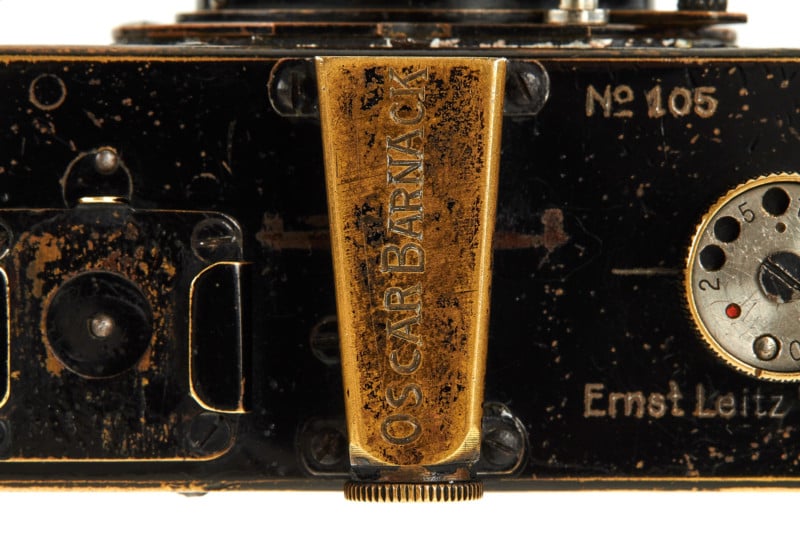
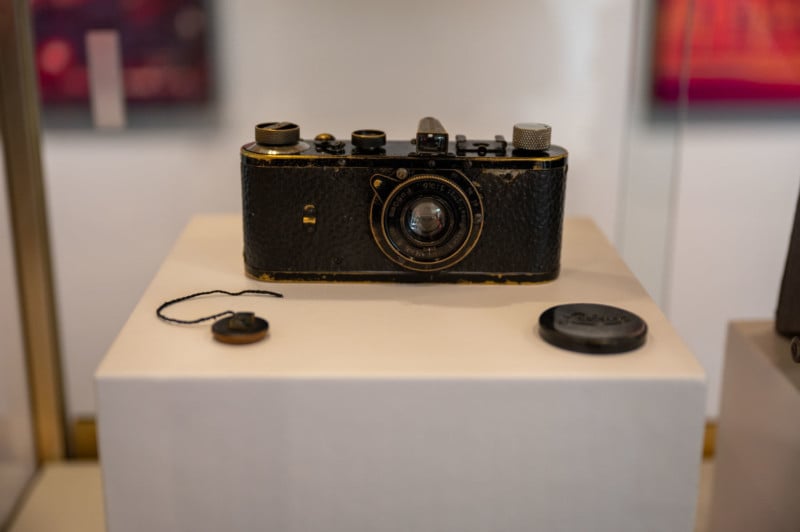
The 40th Leitz Photographica Auction has concluded with the sale of the most expensive camera ever. Oskar Barnak’s Leica 0-Series No. 105 sold for nearly five times the highest estimation: over $15 million.

This particular camera is unique because it cames from a batch of approximately 23 0-Series prototypes which were manufactured before the Leitz Camera — later to become Leica — went into series production in the mid-1920s and made the 35mm format the new standard for professional photographers.

“Only approximately 23 of 0-Series Leicas were produced in 1923 to test the market, two years before the commercial introduction of the Leica A. Only around a dozen survived to the present day,” the Leitz Photographica Auction says. “Among these extremely rare cameras, one is of particular historical importance.”

Leica 0-Series, No. 105 “Oscar Barnack” | Photo by David Crewe
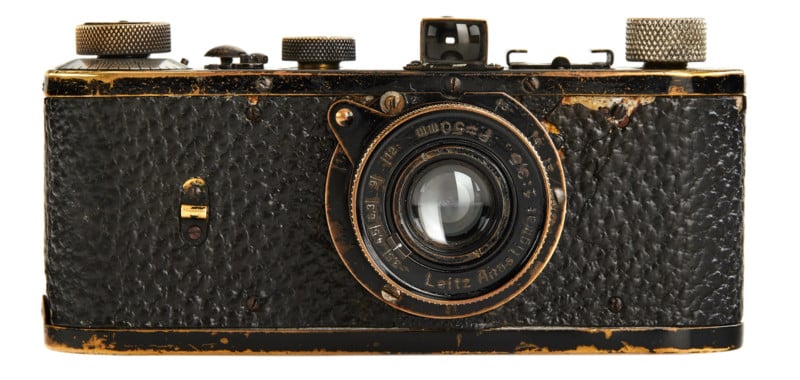
While already rare, this camera becomes even more valuable when it is considered it was the personal camera of Oskar Barnack, the inventor of the Ur-Leica, which was the first commercially successful 35mm camera. Barnack’s name can be found on the viewfinder of the camera.

“The inventor used the camera until 1930, when he gave it to his son, Conrad, and began using a Leica I Model C with interchangeable lenses. It stayed in the family ownership until 1960, when it was sold to a passionate U.S. collector,” the auction house continues.

“The lot includes an original leather lens cap on a string, later aluminium cap, engraved with initials ‘O.B.’ and heavily-modified Nettel camera that Barnack used for his photographic research studies, as well as numerous documents and letters concerning the Barnack’s camera. The Leica 0-Series no.105 we have a pleasure to offer for sale is not only the most distinguished Leica existing but also one of the major historical milestones from the history of photography.”


The Leica 0-Series No. 105 was expected to draw considerable attention and a high value — the auction house estimated a price of €2,000,000 ($2,194,640) to €3,000,000 ($3,291,960) with a starting bid of €1,000,000 euros ($1,097,320) — but the reality shattered expectations when it sold for 14,400,000 euros, or $15,035,832.

The bid demolishes the previous record-holder for the most expensive camera ever sold, which also happened to be a Leica 0-Series (No. 122). That camera sold at auction in March of 2018 for about $2.96 million.

Jaron Schneider

10.6.22

Limited Edition Gold Leica is Being Released in Honor of the Thai King


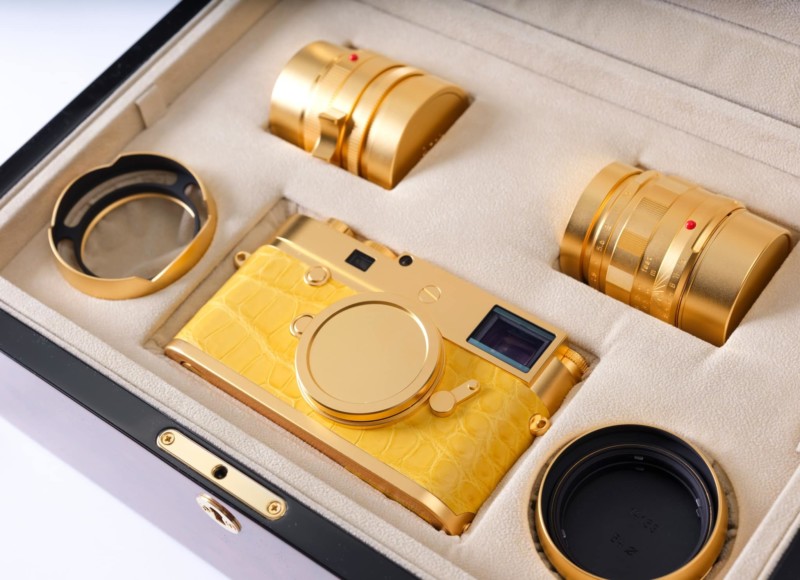
In a collaboration with Thai Beverage, Leica is set to make 10 gold Leica M10 cameras available in honor of the coronation of King Maha Vajiralongkorn, and each is expected to cost around $50,000.


As reported by Photography Daily Theme, the cameras are being made through a partnership between the German camera company and Thai Beverage, also known as ThaiBev, to celebrate the coronation of Thailand’s King Maha Vajiralongkorn. It is unclear how a large beverage company is related to either Leica or the current King of Thailand, and PetaPixel’s request for comment went unanswered.


Vajiralongkorn, currently aged 69, ascended to the Thai throne on May 4, 2019, although the Thai government retroactively declared his reign to have begun on October 13, 2016 which is the day his father, King Bhumibol Adulyadej, died.

The gold camera — and it should be noted, it is a layer of actual gold and not just a colored nonprecious metal — is paired with gold-colored crocodile leather and will come with two similarly gold-plated lenses — an APO Summicron 50mm f/2 ASPH and a Summilux 35mm f/1.4 ASPH — packaged in a custom wooden box for what is expected to be $50,000, although final pricing has not been revealed.


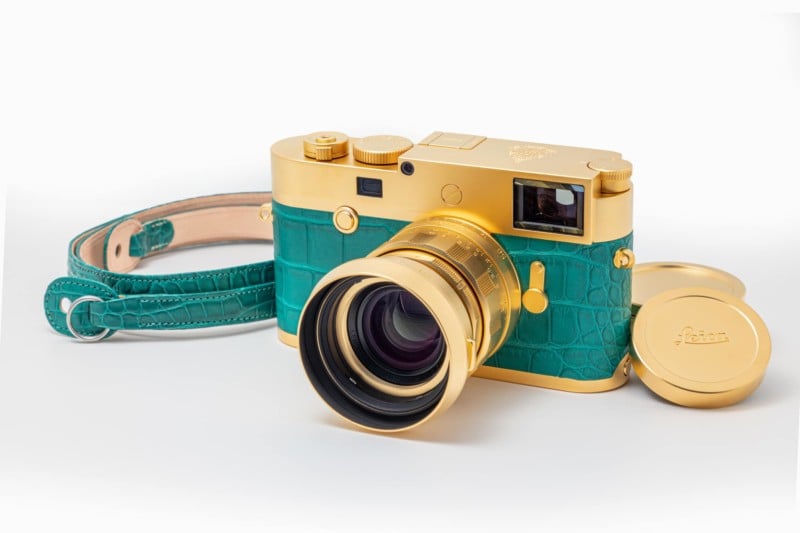
Only 10 of this particular model will be made, but for collectors who want something a bit less audacious, Leica is also producing 10 in a jade-green crocodile leather that compliments the gold-plated metal exterior. The green version only ships with one gold-plated lens, which also reduces the asking price to what is expected to be around $30,000.


Leica was unable to comment with any details regarding the limited edition cameras and while it appears to be a Leica M10 or M10-P, that was unable to be confirmed.

In addition to the gold exterior and uniquely colored crocodile leather, the limited edition cameras bear an imprint of the royal Thai emblem on the top plate to the left of the hot shoe mount.


Leica is no stranger to producing unusual and extremely limited edition cameras, and it’s not even the first gold camera produced for a Thai monarch. In 2016, the company made a special edition M6 camera to celebrate the 50th anniversary of King Bhumibol Adulyadej — who at the time was the longest-serving monarch — and in honor of his death. It featured a similar gold metal exterior but a red leather wrap and matching red tint to the Thai emblem. That camera was sold for 399,999 Baht, or about $11,200.

Jaron Schneider

4.5.21

Leica launching a budget line… starting with a rebadged Sigma 24-70mm?


Leica will reportedly release an "economy line" of lenses, starting with a rebranded Sigma 24-70mm… but it's still $3,000.

Leica is set to launch a new "economy line" of lenses, starting with the Leica Vario-Elmarit-SL 24–70mm f/2.8 ASPH – which, according to a new report, is actually a rebranded Sigma optic.


The words "Leica" and "economy" aren't typically uttered in the same sentence, but the Leica Vario-Elmarit-SL 24–70mm f/2.8 ASPH could be set to be the first budget optic in the Leica lens lineup.

The new lens would provide a constant aperture alternative to the existing Leica Vario-Elmarit-SL 24-90mm f/2.8-4 ASPH. However, it will apparently be a rebodied version of the brilliant Sigma 24-70mm f/2.8 AF DG DN optics

Leica Rumors, which broke the news, was initially skeptical. "The optics of the new lens will be based on the Sigma 24-70mm f/2.8 DG DN Art lens," wrote the website. "This is hard for me to believe – Leica will take a Sigma lens and put a red dot on top of it?"


As it posted later, though, we have seen this from Leica before. "A reader reminded me that this is not the first time Leica is rebranding Sigma lenses. Back in the 90s Leica offered the Vario-Elmar 28-70/3,5-4,5 as a kit lens for the R7 – this was a Sigma lens, but the body and mechanics were totally different from the original Sigma lens that had plastic-like housing."


And of course, Leica has a tradition of rebadging Panasonic products, including the Leica D-Lux 7 (Panasonic LX100 II) and Leica SL2 (Panasonic S1R).

Whether or not it's a repackaged product from another manufacturer, according to Leica Rumors this is what we can expect from the Leica Vario-Elmarit-SL 24–70mm f/2.8 ASPH

The Leica VARIO-ELMARIT-SL 24-70mm f/2.8 ASPH lens will be a part of a new “economy line” from Leica (not sure for the exact name of the new product line)

The official announcement should be in May

The lens will be priced just slightly higher than the Panasonic Lumix S PRO 24-70mm f/2.8 lens for L-mount (still under €3,000/$3,000?)

The lens will not have an all-metal body like other Leica SL lenses

The design and construction will be very similar to the current Panasonic Lumix S PRO 24-70mm f/2.8 lens for L-mount.


James Artaius

17.4.21

The Ten Best Mechanical 35mm Film SLRs Ever Made


Mechanical SLRs are single lens reflex cameras which can function without electrical power (usually supplied by batteries). These cameras instead charge their mirrors, shutters, and other mechanisms by way of human-powered movements of levers or knobs. This action builds up tension (usually in springs), the release of which then cycles the mechanisms needed to make a photo. Simply put – if you can crank a camera’s film advance with your thumb, press the shutter release, and take a picture without batteries, you’re likely shooting a mechanical camera.

These bare-bones, all-manual cameras can bring seasoned vets to their knees and make professional photographers out of simple snap shooters. If used correctly and creatively, the humble mechanical SLR rewards like no other. Not only do they provide greater control over the fundamentals of photography, they give users access to some of photography’s legendary lenses.

Some of the greatest classic cameras of all time have been mechanical SLRs. As such, any fan of vintage cameras should know how to shoot one – and maybe own a couple. With this in mind, I’ve compiled a master list of ten cameras which I feel best represent the genre “Mechanical Camera.”

In addition to the few paragraphs on each model included on this list, we’ve also written extensive reviews of each of these cameras. You’ll find links to those reviews within each of the brief descriptions below. 

Let’s get into it.

Nikon F2

We’ll start off with a classic, the Nikon F2. In my review of the Nikon F2 I called it The Standard of mechanical SLRs. And I still say so – it’s a near perfect camera. From every angle, it shines. As an everyday shooter it provides an easy, comfortable, and luxurious shooting experience while also providing reliability unmatched by pretty much every other camera ever made. Its specs (especially with the added DP-12 finder) are more than enough for the demands of any shooter, and its modularity and nearly endless lens and accessory roster means it can be configured for any situation imaginable. And as a piece of history it still reigns supreme as Nikon’s finest creation, and the camera that established once and for all Nikon’s dominance of the pro SLR market in the 1970s.

The only real caveat to the Nikon F2 is its size and weight. It’s a big camera for the 35mm format, and one must be willing to make it the centerpiece of their shooting setup. If that seems like too much an ask, read on. But if you want the very best with no compromises, the F2 really is the only choice…


Leicaflex SL2

…that is, unless you’re a lover of the Red Dot. Leica has always hung their hats on their legendary Leica M series rangefinder cameras, and their SLRs are more-or-less seen by many as amusing sideshows. But this is Leica we’re talking about – their fanatical dedication to quality and blatant disregard for expense means that even their mistakes are spectacular. Nowhere is this more obvious than it is in the Leicaflex SL2.

If you’re a fan of luxury, elegance, and simplicity, the Leicaflex SL2 is the mechanical SLR to get. What the camera lacks in modularity and features it more than makes up for in the quality of each and every component, the cleanliness of its design, and consummate mechanical excellence. Interchangeable prisms? Don’t need ‘em. Bonkers top shutter speeds? Who cares. Affordability? Whatever. Leica spared no expense in making the Leicaflex SL2 (and actually sold it at a loss), so it makes sense that it appeals to hardcore camera nerds who prize quality and prestige above all else.

But as great as the Leicaflex SL2 is, its R system lenses arguably steal the show. Among these lenses are the famous Leica-specific names of Summicron, Summilux, Elmarit, Telyt. Hell, even Angรฉnieux made a zoom lens for the R-system. Any of these lenses will deliver some of the highest quality images you’ll see on 35mm film and make the SL2 worth the admittedly hefty price of admission.

Pentax Spotmatic

Pentax has long been one of the site’s favorite brands for, well, everything, and happens to be extremely strong in the 35mm mechanical SLR category. The MX, K1000, and SV rank among some of our most personally beloved cameras. But for a list like this, the Pentax representative has to be the Spotmatic, especially for novice shooters.

Admittedly, the Spotmatic is the least glamorous of the Pentax SLRs. Its build quality and design are a step below the fine elegance of the SV, and it is technologically more primitive than even the bare-bones K1000 due to its lack of open aperture metering and its slow M42 screw mount. But it’s precisely these things that make the Spotmatic so great. The chunkier design makes it a little easier to operate in the hand, the exclusive stop-down metering always shows the shooter the effects of exposure on the final image, and the older M42 screw mount means access to perhaps the best (if not the most varied) library of vintage lenses out there, including Carl Zeiss Jena, Schneider Kreuznach, and perhaps the best of them all, Pentax’s own Super Takumar line.

For shooters who have never touched a 35mm SLR before, the Spotmatic is their best option. Its limitations work to teach one nearly all they need to know about 35mm photography and photography in general. And if that Spotmatic happens to come with an eight-element Pentax Super Takumar 50mm f/1.4, that shooter will likely be set for life.
Minolta SRT-102/303

For reasons unbeknownst to me, the Minolta SRT series always seems to get left in the lurch when it comes to the mechanical SLR discussion. This is the camera series that bestowed open-aperture metering to the masses, gave us our first taste of matrix metering with Minolta’s patented CLC System, and, in my opinion, comes closest to the feeling of shooting an M series camera in SLR form.

Did I really just write that last thing? Hell yeah I did, cause it’s true.

Sure, it’s bulkier and louder than the M camera (it’s also, you know, an SLR), but when it comes to feel and optics, the SRT series reminds me most of my M2 (save for just one other camera). The control layout is nearly exactly the same, the advance lever is just as buttery (looking at you, Olympus OM-1), and the optics are some of the finest in 35mm photography. Any doubters to Minolta’s optical and manufacturing prowess can take it up with Annie Leibovitz, W. Eugene Smith, and, well, Leica themselves. Minolta knew what they were doing, and should never have been underestimated – not then, not now, not ever.

The SRT-102 (or 303 for our European friends) gets my pick here, as it’s the best of the SRT series, with a feature set roughly similar to the Pentax Spotmatic and K1000. Optically, it delivers equally well owing to its fantastic roster of Rokkor lenses, which features perhaps the finest 50mm lens ever made, the Rokkor 50mm f/1.4.

Olympus OM-1

This list wouldn’t be worth anything if we didn’t mention the OG of the compact 35mm SLR’s, the mighty Olympus OM-1. Along with the Nikon F2, the OM-1 stands as one of 35mm’s most classic cameras, and is arguably even more influential considering it foregrounded the compact SLR revolution of the 1970s. And even though we can see the effect the OM-1 had on the industry in dozens of other cameras, none have quite been able to match the original.

The OM-1 is one of the many tiny masterpieces designed by Olympus head designer Yoshihisa Maitani. Seeking out the most compact 35mm SLR design possible, he and his team worked over many years to shrink their camera down to its smallest possible dimensions. What they ended up with was an impossibly small but eminently capable camera, equipped with one of the most awe-inspiring viewfinders in 35mm photography.

OM-1 owners are notoriously loyal to this camera and system, and with good reason. It still reigns as the most compact 35mm SLR system, with a body that weighs only 510 grams (18 ounces) and high-quality lenses that can *actually* fit into average sized pockets. Its viewfinder puts the best DSLR viewfinders and EVFs to shame with its size and brightness, and its operation is still as easy, concise, and revolutionary as it was the day it rolled out. If size is your main concern and you love incredible design, there’s no better choice on the list than the Olympus OM-1.

Topcon RE Super

The Topcon RE Super is a classic case of “if you know, you know.” The Topcon name has mostly been lost to time, but those who remember it, remember a camera that once challenged the great Nikon F. The Topcon lost that battle, but boy did it put up one hell of a fight.

The RE Super is, in terms of build quality, one of the finest pieces of photographic equipment I’ve ever used. It is pure luxury in 35mm SLR form, featuring a smoothness and sureness to every operation that most manufacturers only dream of. It’s hard to think of any camera that is its equal – only the Leica M-series and Leicaflex SL2 come close, and even then I feel the RE Super bests those two in a few categories. The RE Super’s Topcor lenses are cult classics as well and can hang with the era’s very best, despite the inherent limitations of its Exakta-derived mount.

[Editor’s Note – I wanted to lead this article with a picture that people would find interesting, so I decided to create another of my exploded views of a camera found on this list. I had a nonfunctional Topcon RE Super sitting on the shelf in the shop, so I chose it without much thought. After disassembling the camera screw by screw, I felt compelled to write this note to simply reiterate Josh’s point that the RE Super is one of the finest-made mechanical cameras of its era. It’s a beautiful machine, impressively over-built, and I think it should get more credit in classic camera-liking circles. – James]

Topcon as a camera brand suffered from mismanagement, which left the RE Super wallowing in the wake of its competitors. But the RE Super is still one of 35mm’s finest, and handsomely rewards the shooter willing to go off the beaten path.

Canon F-1

Those of the FD mount persuasion will no doubt be familiar with Canon’s electronic wizardry of the 1970s and 1980s through amateur-focused cameras like the Canon AE-1 Program and A-1. Curious then that their flagship pro-spec camera, the Canon F-1, would be a bare-bones mechanical camera, made to compete with the Nikon F-series.

Now, I’m not a Canon guy. I do think their cameras are a bit Toyota Corolla-like in design and function. But I’ll be damned, the Canon F-1 is actually incredible. It just goes. Its feature set isn’t the most impressive, and the build quality falls just short of its competitors, but it shines when you actually use the thing. The control layout is intuitive, and even features a handy combination self-timer and depth of field preview lever. Like other pro-spec cameras of the era, the F-1 is a modular system camera and features a huge lineup of lenses and accessories, enabling shooters to tailor the camera to their needs (Fellow writer Chris optimized his F-1 for shooting motorsport with the sports finder). But compared to its competitors, the whole F-1 system is inexpensive, which encourages shooters of any budget to shoot these cameras hard.

The F-1 is great with any and every lens in the FD lineup. My favorite? The Canon 200mm f/2.8. It’s dirt cheap, quick, and gorgeous, just as FD lenses should be. If there’s still any doubt as to this combo’s quality, I can say that it’s the setup I used for my favorite photo. The proof is in the pudding.

Leica R6.2

Now we come to a rather interesting camera in the mechanical SLR canon, the Leica R6.2. The original R6 was released in 1988, a bizarre year for any kind of mechanical camera to be introduced. The auto-focus revolution three years prior sent the bell tolling for the electro-mechanical manual focus SLR, and virtually put the mechanical SLR six feet under. So what did Leica do? They stuck to their guns, doubled down, and released a second mechanical SLR, the R6.2, in 1992. Overly idealistic? Maybe. Quixotic? Most definitely.

The R6.2 is one of Leica’s many attempts at preserving their older, mechanically informed way of life. The R6 retained the chassis of the previous electro-mechanical R5 but switched its circuit boards with gears and levers, and put a good old mechanical shutter at the heart of it all, whose maximum speed was increased to 1/2000th of a second for the R6.2. There are a few modern accoutrements that make the R6.2 more attractive than its predecessors (namely the Leicaflex SL2), such as a switchable metering pattern from center-weighted average to spot metering, TTL flash metering, and *gasp* mirror lock-up, but otherwise it’s another dead simple, well-made mechanical camera.

Put this way, the R6.2 seems like Leica’s weirdly specific, aimless exercise in nostalgia. But let’s not kid ourselves, owning and using mechanical film camera today is an exercise in nostalgia too, which kind of makes the R6.2 perfect for the job. Modern film shooters will appreciate this camera; it’s not overly anachronistic, it’s built uncommonly well with a few really cool features, and lest we forget, it’s a freaking Leica that mounts Leica R lenses. If you’re going into battle against the relentless march of technological advancement, might as well arm yourself with a good-looking R6.2 and charge forth.

Contax S2

On the other side of Germany, the folks at Contax were experiencing their own nostalgia trip in 1992. It had been sixty years since the re-introduction of Contax as a brand, and the company decided to commemorate the occasion with, you guessed it, a mechanical SLR – the Contax S2.

The S2 was Contax’s take on what a modern mechanical SLR could and should be, sporting a decidedly vintage silver-on-black paint job while packing the camera with a 1/4000th of a second maximum shutter speed, a 1/250th of a second flash sync, interchangeable focusing screens, switchable diopters, and, curiously, a spot meter. It was Contax’s last ode to its days of pro-spec dominance, made to counterbalance their top-of-the-line electro-mechanical SLRs like the Contax RTS.

The S2 is, above all, a purist’s Contax. Zeiss fanatics and Contax/Yashica devotees in general revere this camera, as it gives them a rare mechanical option that actually says “Contax” on it (sorry Yashica FX-3). It’s a rarer bird than most of the cameras on this list, but is a must-have for those who live the Zeiss life.


Nikon FM3a

And now we come to what I think is the ultimate mechanical camera on this list, and the only true hybrid mechanical/electro-mechanical camera out there – the Nikon FM3a.

The FM3a was born out of the same spirit of nostalgia as 1988’s Leica R6 and 1992’s Contax S2. But the FM3a’s birthdate in 2001 adds a poignancy to its creation; not only had the mechanical, manual focus SLR already bit the dust, but film photography itself was already on its way out the door. Even though they still held strong with their autofocus offerings, Nikon wanted one last go at developing the perfect mechanical SLR. What they ended up producing was not only a love letter to their past cameras, but a manifestation of their most advanced, idealized form.

For this new camera, Nikon revived their well-loved FM-series chassis, recalling the glory days of the FM and FE-series cameras of the late 1970s. But then they did something incredible – they combined both the FM and FE, and successfully created a hybrid mechanical/electro-mechanical shutter, with all speeds available mechanically. This, along with a bevy of newer features (DX coding, max speed of 1/4000th of a second, TTL flash metering) pushed the mechanical SLR form to its absolute limit. To this day, the FM3a remains Nikon’s most advanced manual focus SLR, a fitting commemoration to Nikon’s dominance over the mechanical 35mm SLR market.

I’d love to recommend the FM3a to anybody and everybody, but its rarity and subsequent collectibility means that there’s a hefty price tag attached to it. Still, if you’re a diehard Nikonian looking for the ultimate manual focus Nikon film camera, the Nikon FM3a is the only choice.


Other Formats

We’d be remiss if we didn’t mention at least a couple of other mechanical SLRs from the other many formats which make up film photography, so we’ll highlight a few below. There are many, but these are the ones that get us going. If you have a favorite, please post it in the comments below!

MEDIUM FORMAT – Hasselblad 500 C/M

First up, medium format. The medium format mechanical SLR genre is saturated with great cameras, but they all more or less refer back to the granddaddy of them all, the Hasselblad 500 series.

Along with cameras like the Nikon F and Leica M3, the Hasselblad 500 defined the design of its entire category from the outset. The interchangeable finders, interchangeable film backs, leaf shutters, and overall form factor has been imitated by nearly every subsequent medium format SLR, simply because it works so damn well. The design offers a ludicrous amount of flexibility in a comparatively tiny package, making it suitable for nearly any kind of photo.

But even still, no camera comes close to the original. The Hasselblad silhouette is one of film photography’s most recognizable, and evocative of old-school photography studios which long featured a Hasselblad as their centerpiece. Using one is a treat for the eyes, ears, and hands, and it behooves any medium format shooter to try one at least once. We recommend the Hasselblad 500 C/M, the most long lived iteration of the 500 series, but any of the 500 series will do.

INSTANT FILM – Polaroid SX-70

Next up is instant photography, and there’s really only one choice here – the Polaroid SX-70. James wrote extensively on the SX-70’s history and capabilities, but here’s the brief rundown – the SX-70 is a foldable instant format SLR famously introduced in 1972 when Edwin Land pulled one out of his blazer and fired off five instant photos (a la Clint Eastwood in Dirty Harry) in just a few seconds. The SLR format enabled accurate framing and focus, exposure was adjustable through an exposure compensation dial, and its foldability enabled it to be taken anywhere. In the context of instant photography, this was game-changing, but in the context of photography and design, the camera might as well have come from Mars. Nothing else looked like it, and nobody’s ever tried to imitate it. It’s one of film photography’s few truly singular creations, and a classic tech marvel.

Prospective shooters should know that everything that applies to modern instant photography applies doubly to the SX-70. The film is expensive and a cut below the original Polaroid formula, and the cameras themselves often need refurbishing before heavy usage. Fortunately, the folks at Brooklyn Film Camera specialize in the repair, restoration, and usage of these wonderful cameras, and can hook you up if you feel moved by the spirit of the SX-70.

HALF FRAME – Olympus Pen FT

And finally, my favorite camera on the list, the half-frame Olympus Pen FT. Like the OM-1, this is a Maitani-designed camera, which inevitably means ingenious design and a small form factor. Every one of his cameras carries this signature, but I find its greatest expression in the Pen FT.

Everything about this camera is a subversion of what we’ve come to expect from a mechanical SLR. The mirror goes sideways instead of up and down, the shutter goes around in a circle instead of from side-to-side, and the viewfinder is vertically oriented instead of horizontally oriented. And unlike the bulky, loud, and heavy pro-spec SLRs of the day, the Pen FT is small, quiet, and unobtrusive, even smaller than the famously compact Leicas from which Maitani drew inspiration for the Pen. It marries the capability and flexibility of an SLR to the form factor of a rangefinder, while also doubling the amount of exposures available to the photographer.

It was wonderful when new, and it’s wonderful today. The Pen FT is arguably one of the best values in film photography. If you’re looking for a cost-effective way to shoot 35mm without sacrificing the functionality of a full-fledged mechanical 35mm SLR system, the Pen FT is the way to go. A single roll of 36 exposure film can stretch on for what seems like forever, and the images are still tack sharp for most shooters’ needs.

11.4.21

Jaw-Dropping Video of the Moon Was Shot with Modular Leica DSLR lens


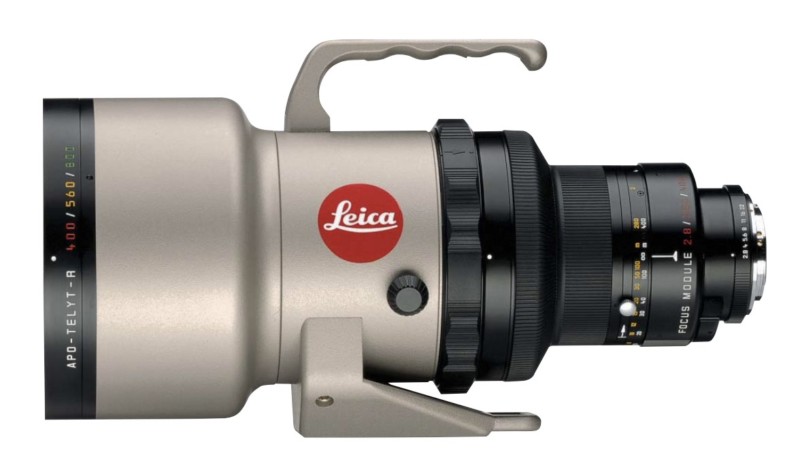
A video showcasing the incredible optical quality of the Leica APO-Telyt-R 400mm f/2.8 lens recently surfaced, and the quality that this lens exhibits (which today retails used for $15,000 used) in 4K video is mind-blowing… especially considering the footage was shot from Earth.

Recently shared by Leica Rumors, the video was shot in 2015 and uploaded in 2016 by photographer Markus Stark. He asks — and the quality of the footage makes you wonder — if this is the sharpest super-telephoto ever made.

“The video clips were filmed in August 2015 at only 290 meters above sea level,” Stark writes, citing that he shot it while camping in Germany.

The edit features some zooming and out and spinning that he added in post-production, but the video itself was shot using a Panasonic GH4 with a modified Leica 400mm f/2.8 with a 1.4x teleconverter, and two 2x Leica Apo extenders.

“I wanted [to] make the viewer feel like [they were] observing the moon from a space craft,” he continues.

Mission accomplished.


The lens itself is unique because it features apochromatic correction, which — as DPReview notes — is unusual for a super-telephoto lens. The lens, which is no longer in production, features 10 elements in 8 groups and is extremely heavy: it weighs 13 pounds. Originally introduced in 1996 as part of Leica’s APO-Telyt Module system, the lens was designed to be used with Leica-R SLR cameras and all the lenses in the system were made to be modular and allow the photographer to combine them to create different focal lengths. This design let Stark use the two 2x extenders, for example.

DPReview shared an image that shows the full Leica APO-Telyt-R Module System in this older, low-resolution chart:

As the publication describes, the system included two Leica Heads and three Leica Focus Modules which could be combined to create six different manual focus super-telephoto prime lenses. The 400/560/800 is the larger head and is what was used to create the video above.

In the long telephoto range, the module system produces extraordinarily clear pictures with high contrast and accuracy in detail rendition and color reproduction. And because even the smallest mechanical weaknesses can significantly reduce the performance, especially in this range of focal lengths, the Leica module system is fabricated and assembled with extremely tight tolerances.

The Leica APO-Telyt-R Module System ceased production in 2009 but at the time, the entire module system could be purchased for around $39,000 for those looking to grab it before it was gone. Seeing the lens combined with a GH4 to make a video of this quality probably wasn’t on the minds of Leica’s lens designers back when the system was first introduced, but they would surely be happy to see that the quality of footage produced thanks to the lens is still top-tier.

28.3.21

Shooting Affordable Medium Format Polaroids


There are areas of photography that are revered by many photographers, two of them are medium format and Polaroid. However, combining the two has become tremendously expensive in recent years. Perhaps now there's a solution.

I have a well-documented love affair with medium format. Some of it — possibly a lot of it — isn't overly logical, but I love it all the same. In the last few years, I have dipped my toe into something else that interested me and the other side of today's coin: Polaroid. I was lent a Leica Sofort and while it wasn't perhaps the best example of instant photography, it was endearing. Then my girlfriend's family found their original Polaroid similar to the famed SX-70 and I fell deeper still.

However, the idea of shooting medium format square Polaroids is very enticing indeed. It was a popular way of shooting, both creatively and for testing purposes, during the film era and Fujifilm has an adored film type called the FP-100C which was discontinued in 2016. As with all discontinued film types that are loved, their price rocketed, and now even expired packs of 10 shots will cost you $70 or more. In this video, George of NegativeFeedback experiments with a cheaper way using a Zinstax Polaroid back for the Mamiya RZ67 which can use Instax film at a much cheaper price per shot. If you want to see a video showing exactly how it all works, here you are:


9.1.21

70-Year-Old Photos Found on Ancient Leica Film Roll Spark Global Hunt

The Leica III camera that presumably shot the photos.


A camera collector recently discovered photos on a roll of film shot with a vintage Leica camera. The images, which seem to show a couple’s travels through Europe, are estimated to have been shot around 70 years ago, and they’ve sparked a worldwide hunt for information about the couple and the locations.


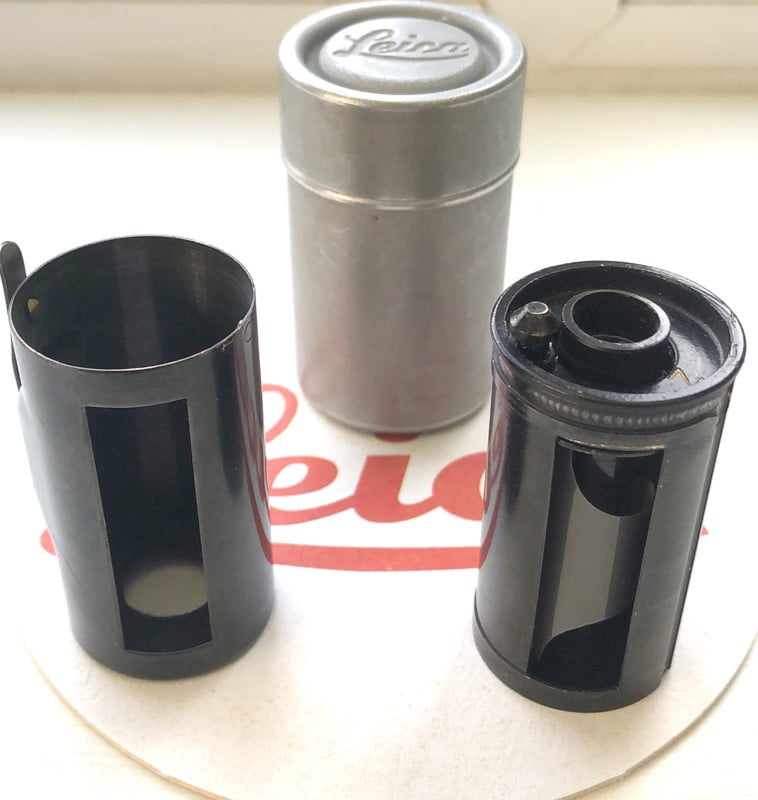
Nearly 7 years ago, Irish camera collector William Fagan purchased a Leica III camera that dates back to 1935. The camera came with film protected in a Leica FILCA cassette, which Fagan set aside until this summer when he finally got around to developing it.

The FILCA B that held the photos for over half a century.

Fagan took the 70-year-old Perutz film to Mella Travers, who owns The Darkroom in Dublin to see if any photos could be recovered from it. The two carefully developed the film through a one-hour stand process with a diluted developer and were delighted when clear images emerged.


00:0201:40
This Day in History


Fagan shared his findings on his friend Mike Evans’s publication Macfilos back in September, stating that 22 exposed frames were found on the 36-shot roll, and that 20 of them were usable.

The photos show a nicely-dressed pair — a young woman and an older man.

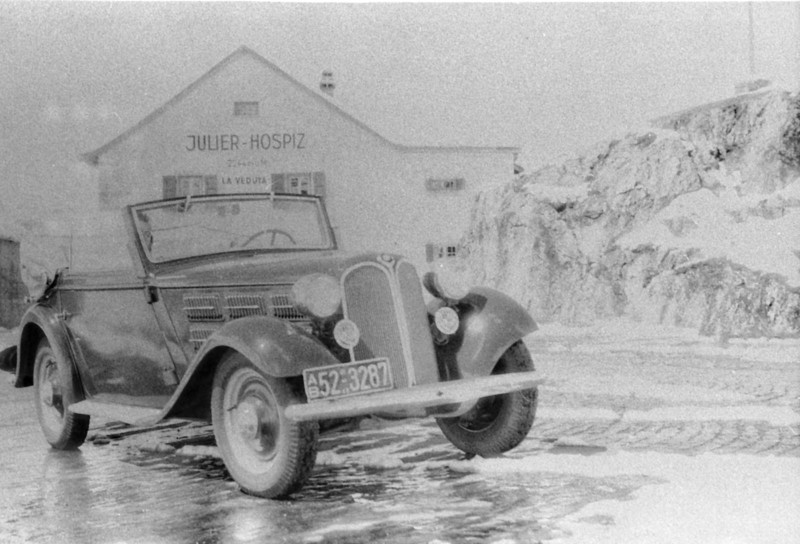
A mid-1930s BMW 315 Cabriolet can be seen in some of the photos, apparently used by the couple to travel to various scenic spots across Europe. Although a car registration plate is clearly seen, records of it may no longer exist.

Fagan is now on a quest to locate the couple or the family of the couple. Publications across the world have since picked up the story, and the crowdsourcing has led to a good amount of information and identification.


The Julier Hospiz still exists.


Tipsters helped identify this street (left) in Bellagio in Northern Italy, which Fagan confirmed using Google Street View (right).


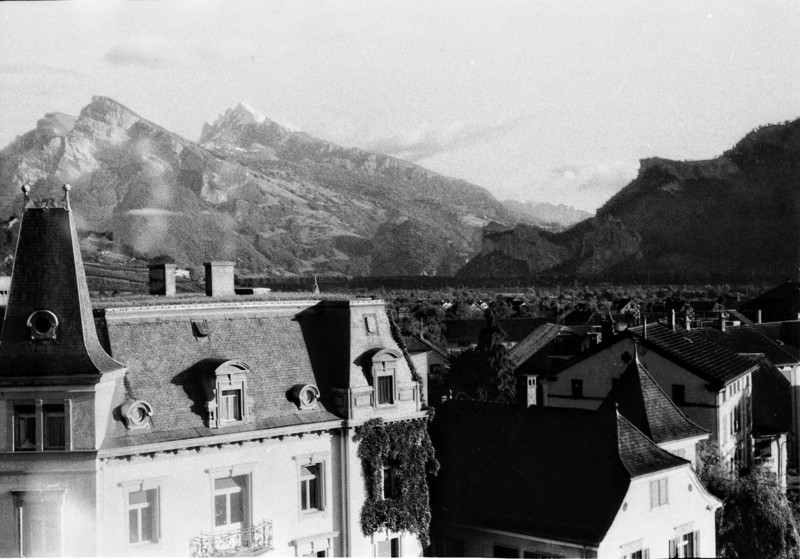
Sleuths helped figure out that this was shot from the 4th floor of Hotel Tamina in Switzerland’s Bad Ragaz.

“[W]e now have detailed knowledge of the journey and the places the couple stayed—including the remarkable calculation of the floor of a particular hotel they occupied for at least one night,” writes Evans in a follow-up article on Macfilos. 

“A forensic examination of old photographs of Bahnhofplatz in Zurich, where the adventure began, places the journey in 1950 or 1951.”


Here are the other photos found on the roll:

The identities of the pair seen in the photographs is still a mystery that Internet sleuths around the world are now working to solve.

“While we’re not expecting to get the name of the dachshund, we still hope to pin down the people,” Evans says.

If you have any information about the couple and/or photos, you can contact Fagan and Evans at info@macfilos.com.

Image credits: Photographs courtesy William Fagan